

THE GARDEN TREE FIELD GUIDE
What tree is in your garden?
Start with its shape. Look closer at the clues. Discover how to care for it.
Explore the main UK native species and familiar introduced trees, with seasonal views, identification details and practical pruning guidance.
Explore 75 trees ↓ONE ENGLISH OAK · THREE SEASONS
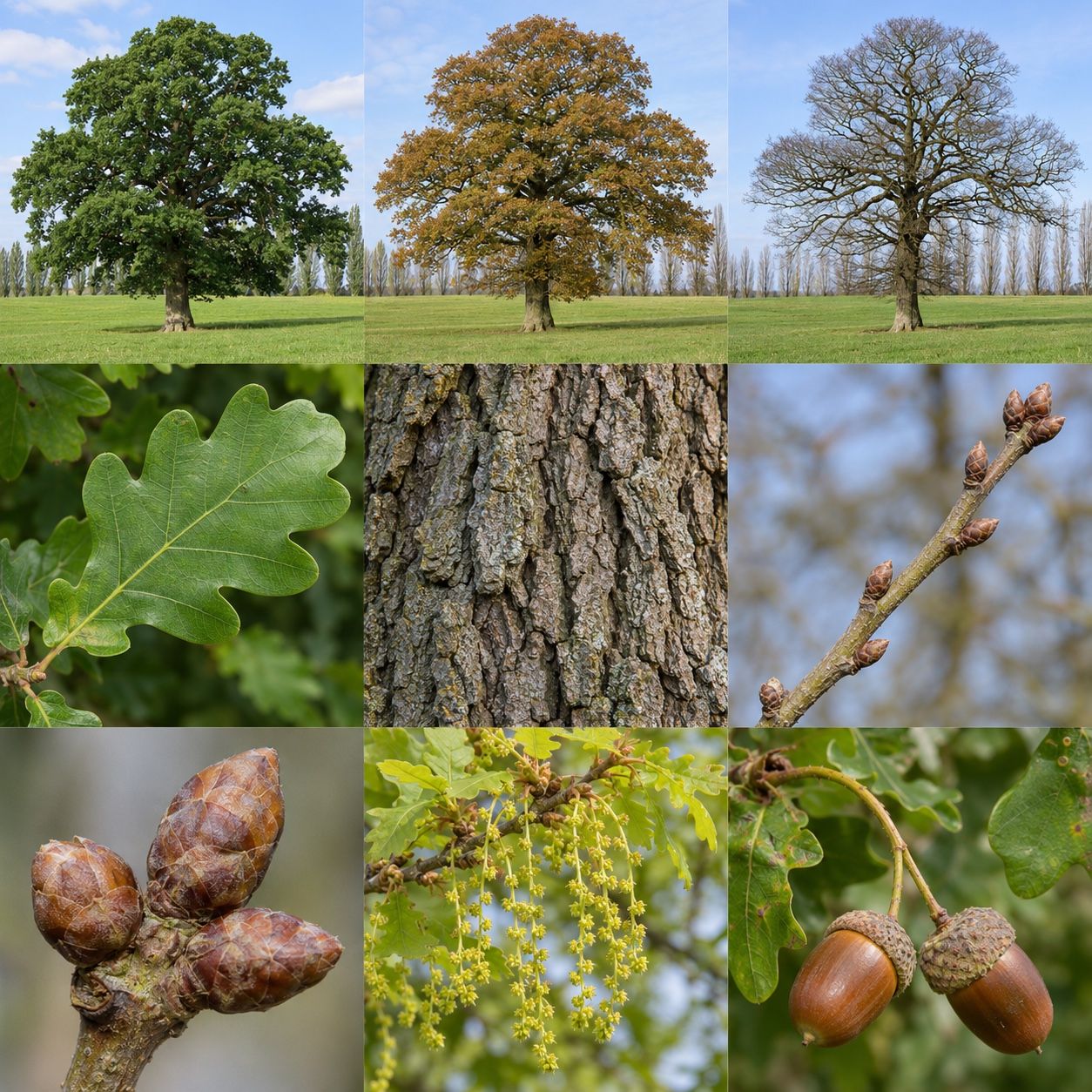
A broad, rounded canopy with heavy spreading branches.
Leaves turn ochre and brown; stalked acorns fall beneath the crown.
Thick, twisting limbs form a wide, open silhouette.
01 · Compare the shapeSummer, autumn and winter.
02 · Match several cluesLeaves, bark, twigs, buds, flowers and seeds.
03 · Plan the right careSpecies-specific advice and professional help.
FIND YOUR TREE
A closer look at your garden.
75 trees to compare · Summer view
English oak
Quercus roburRound-lobed leaves with tiny stalks; acorns on long stalks.
Open field guide →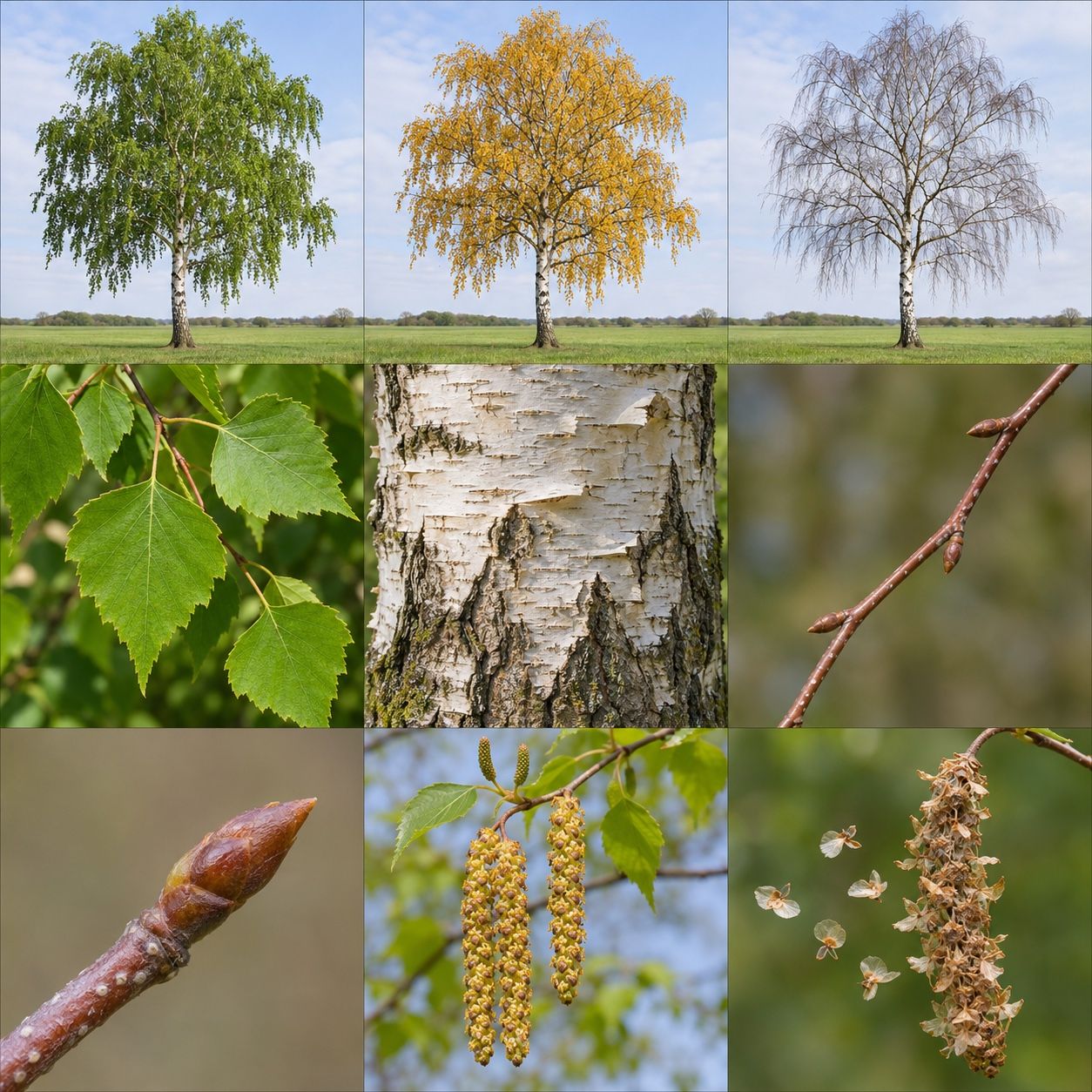
Silver birch
Betula pendulaWhite bark, triangular leaves and hairless, drooping twigs.
Open field guide →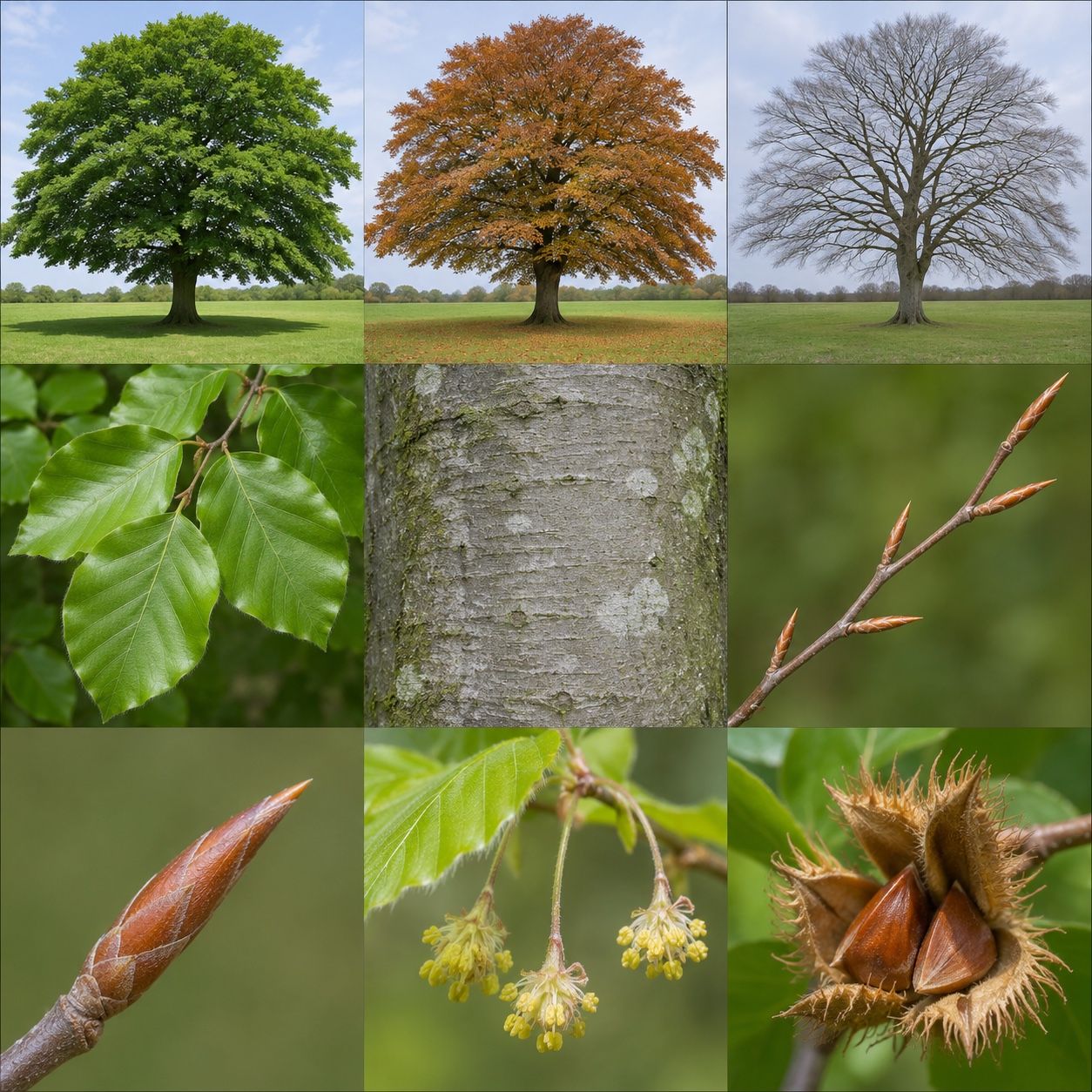
Common beech
Fagus sylvaticaSmooth grey bark and exceptionally long, pointed buds.
Open field guide →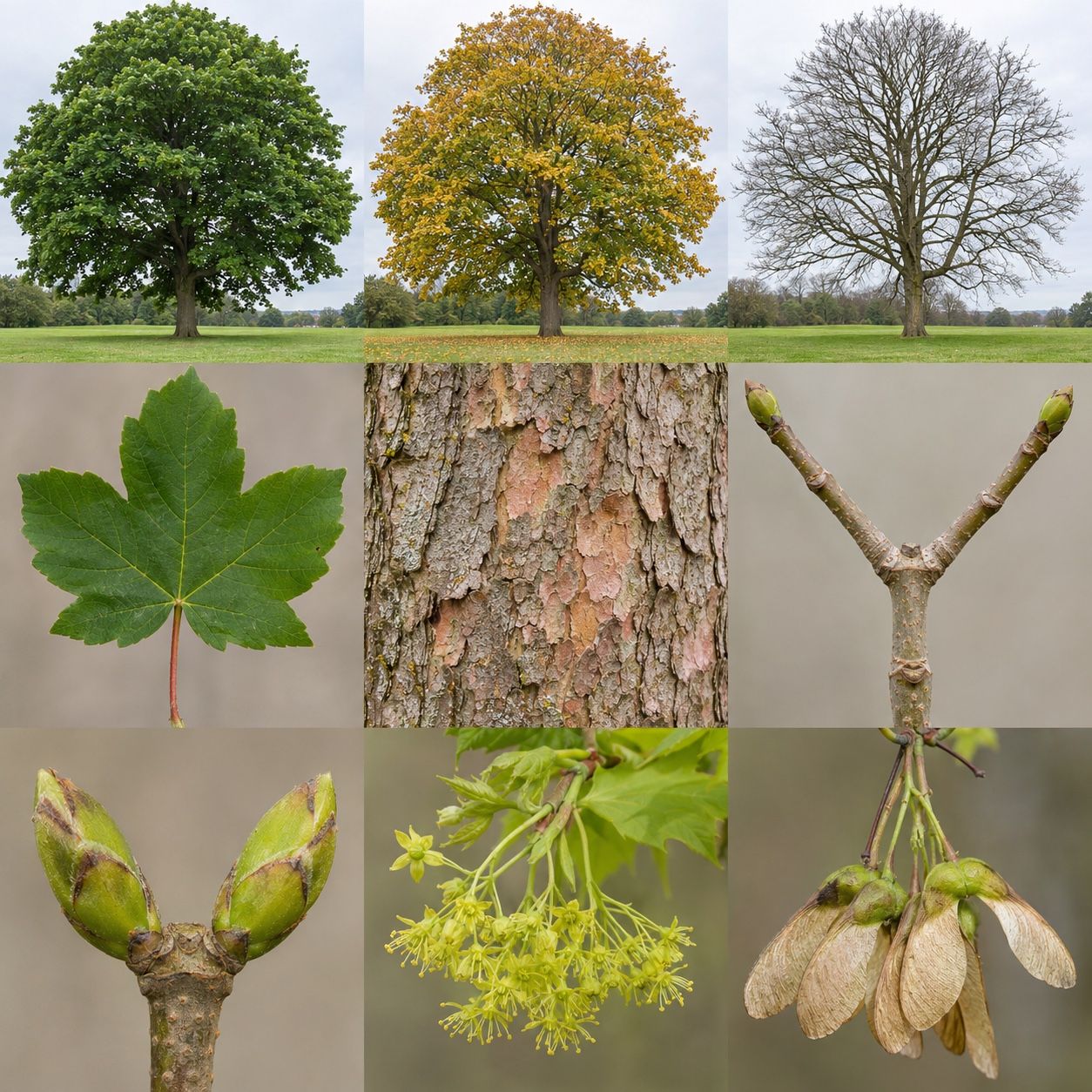
Sycamore
Acer pseudoplatanusGreen opposite buds and broad, toothed maple leaves.
Open field guide →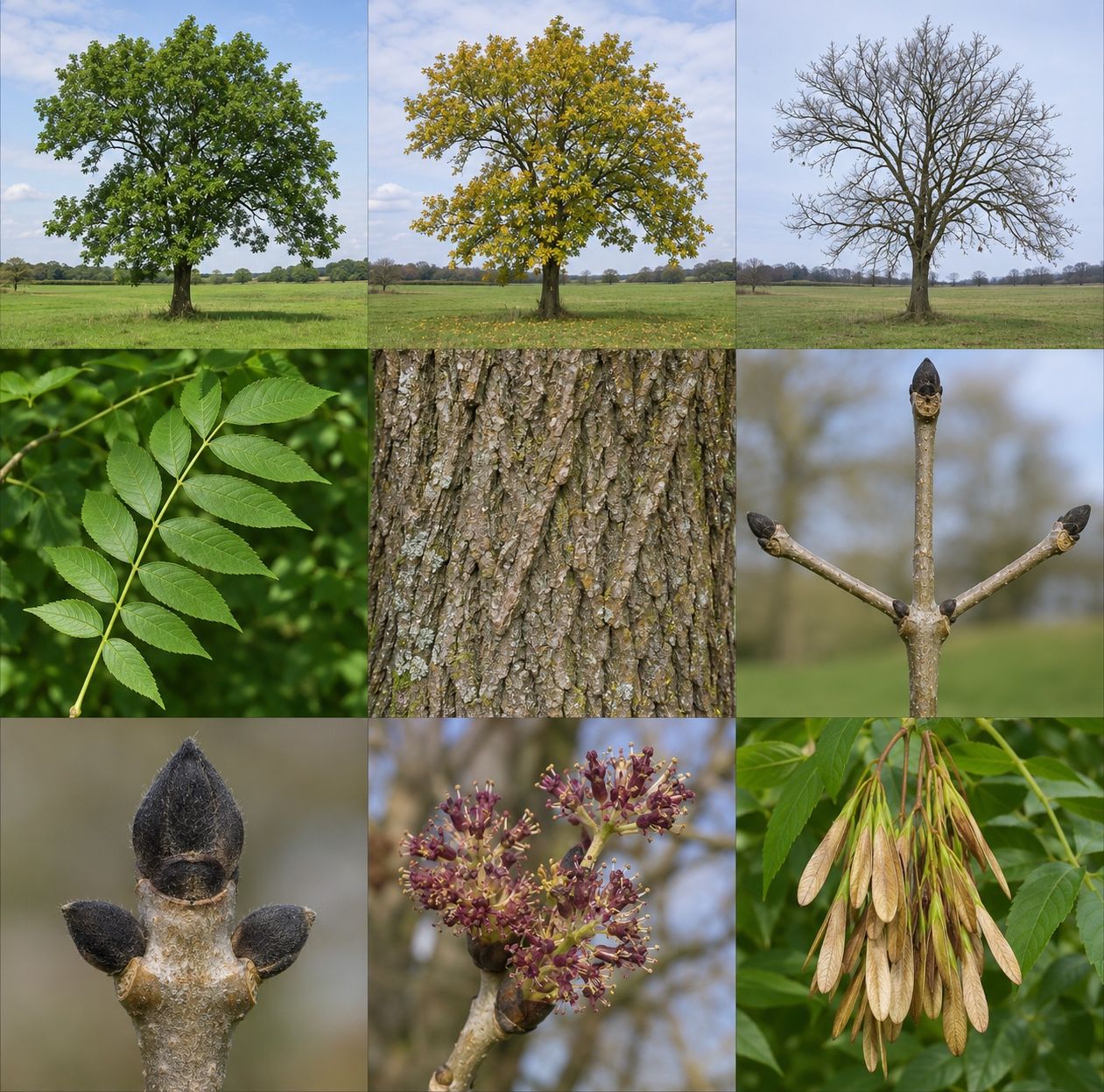
Ash
Fraxinus excelsiorOpposite, soot-black buds are the strongest winter clue.
Open field guide →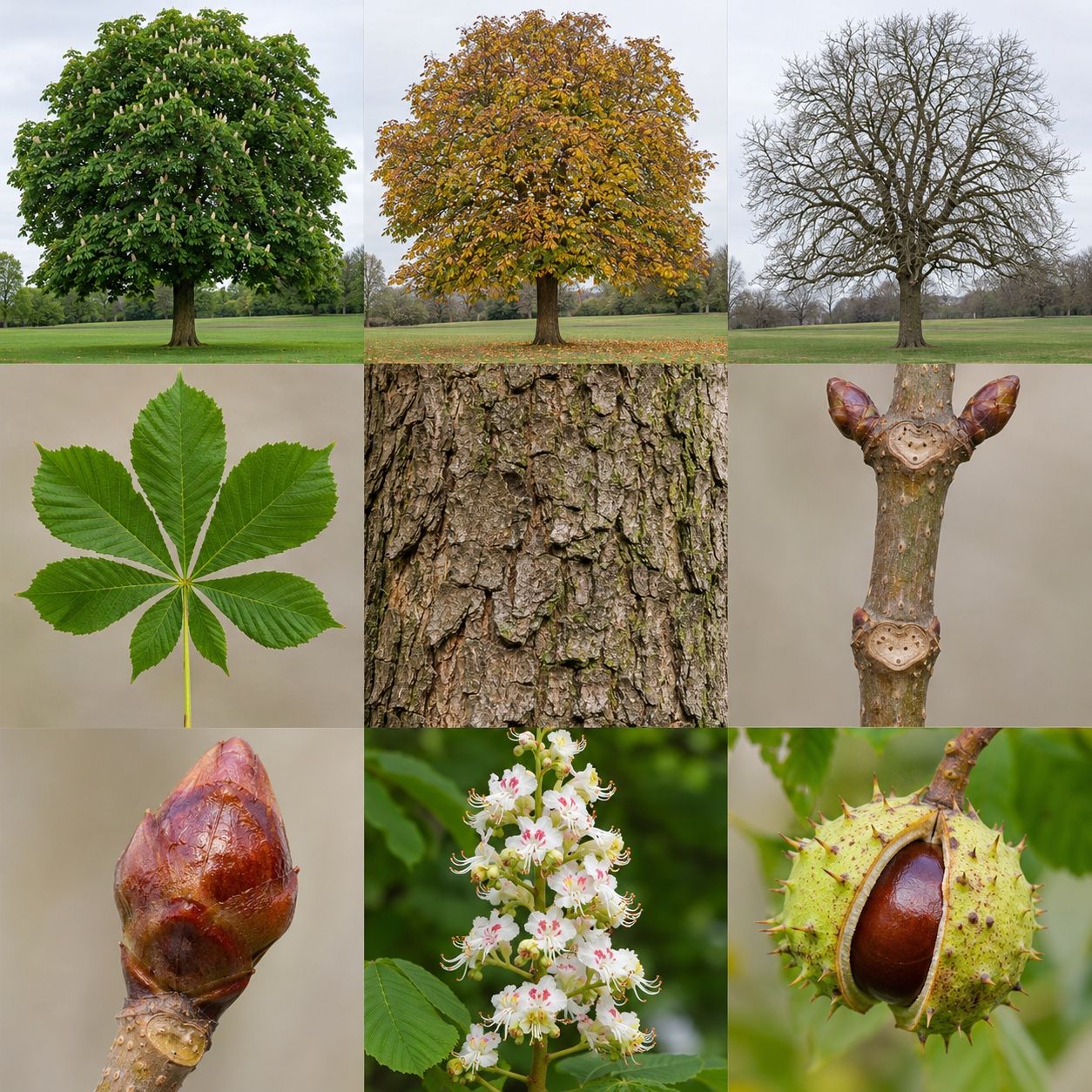
Horse chestnut
Aesculus hippocastanumGiant sticky buds and hand-shaped compound leaves.
Open field guide →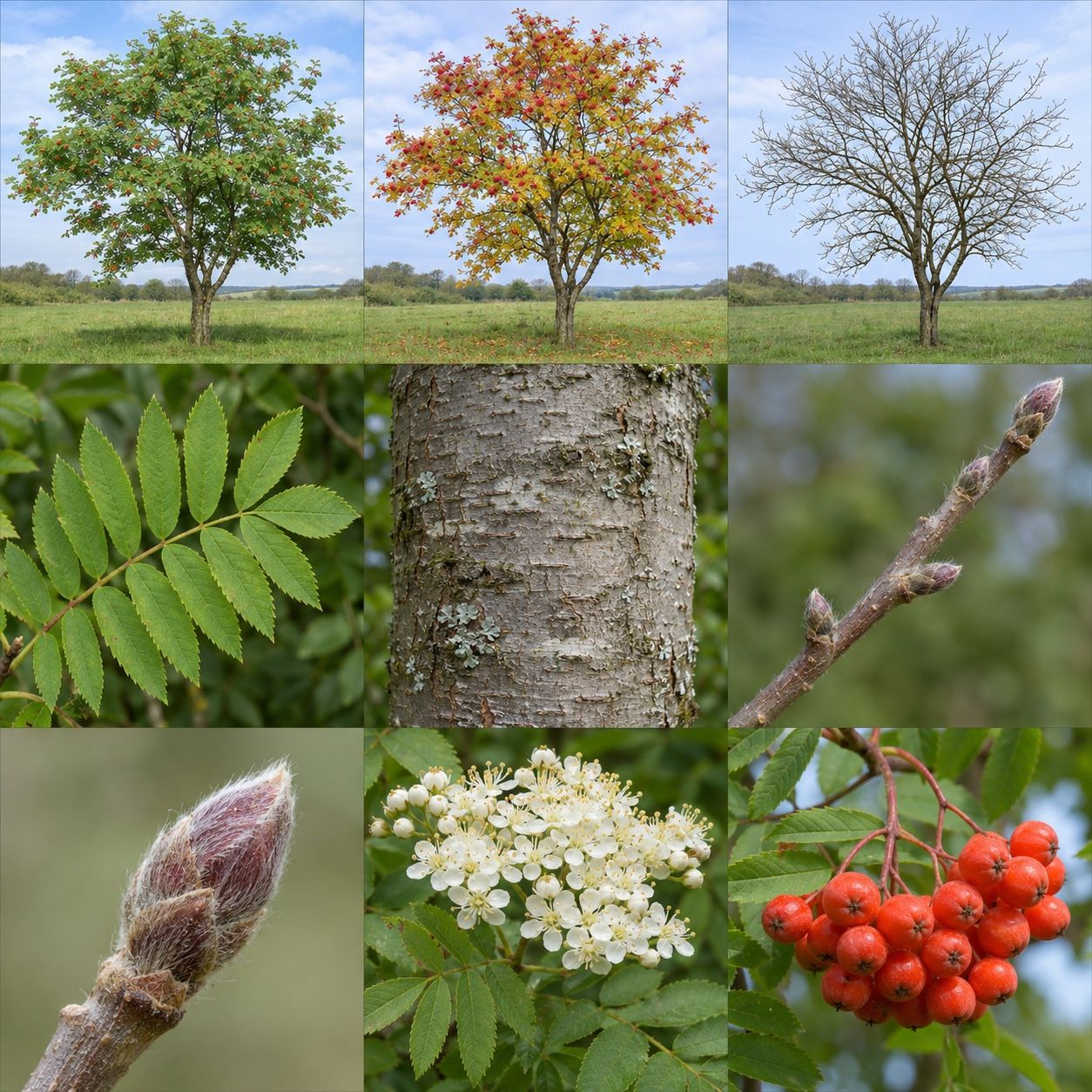
Rowan
Sorbus aucupariaFeather-like leaves, red berries and furry winter buds.
Open field guide →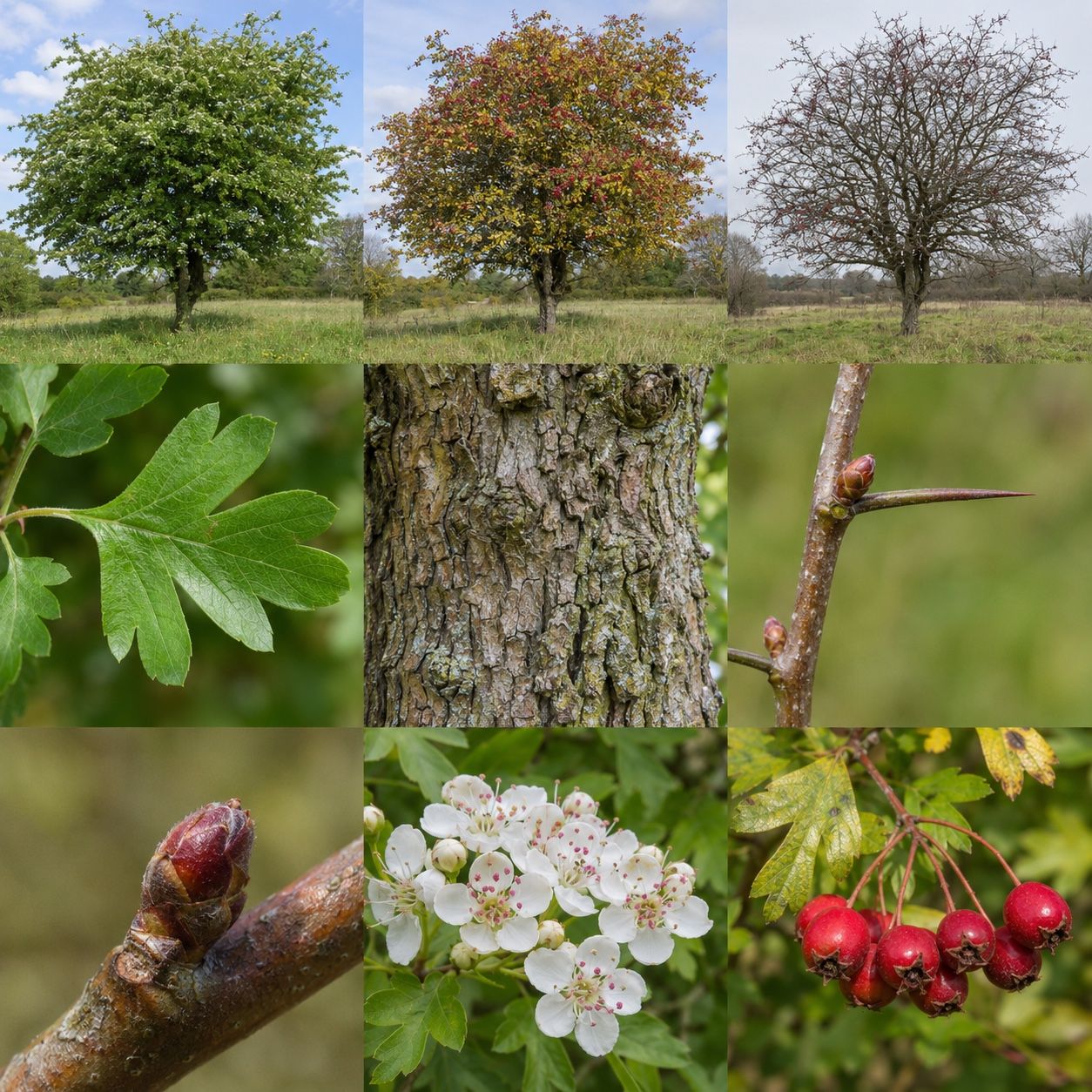
Hawthorn
Crataegus monogynaDeeply cut leaves; red fruits usually contain one stone.
Open field guide →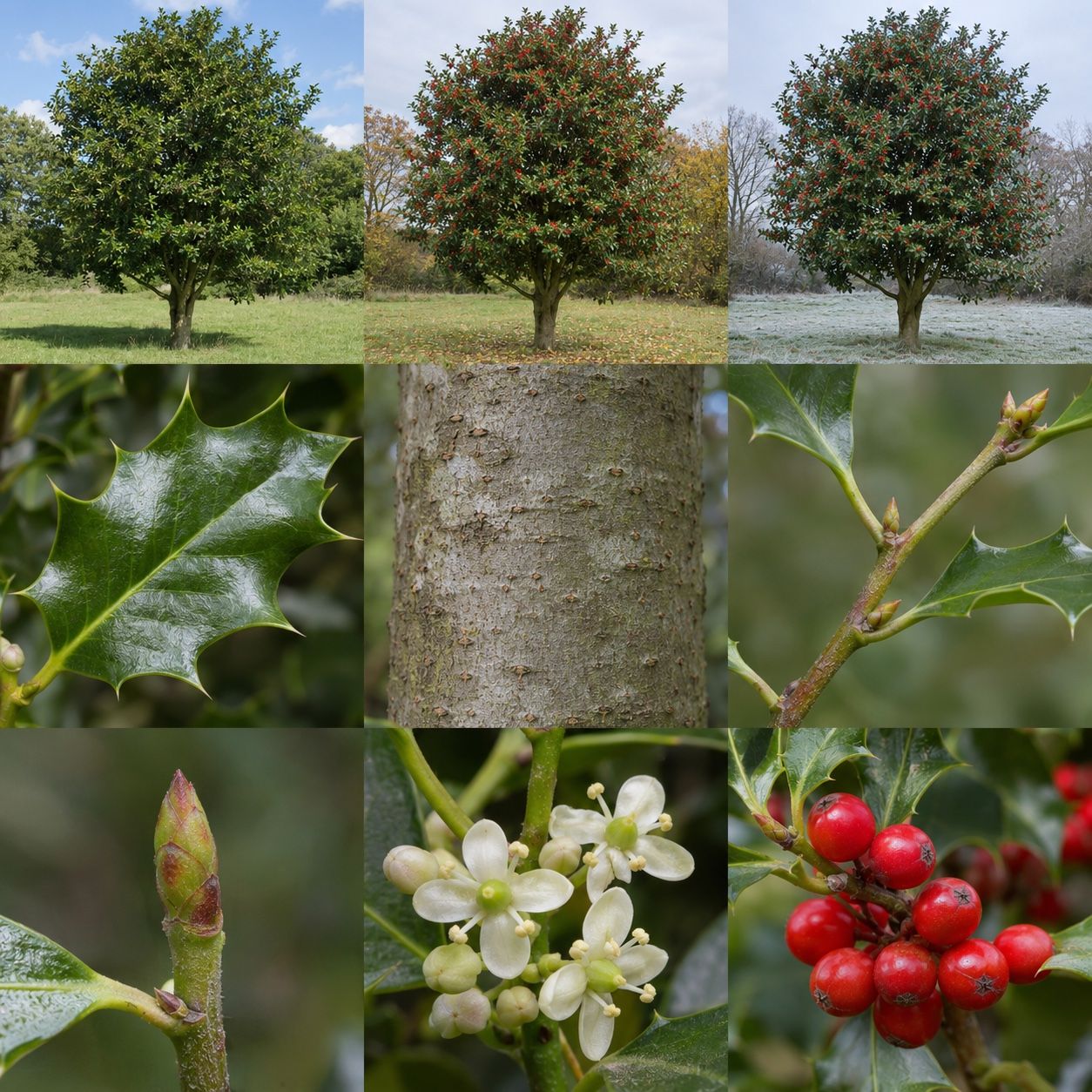
Holly
Ilex aquifoliumGlossy leathery leaves; some are prickly, some smooth.
Open field guide →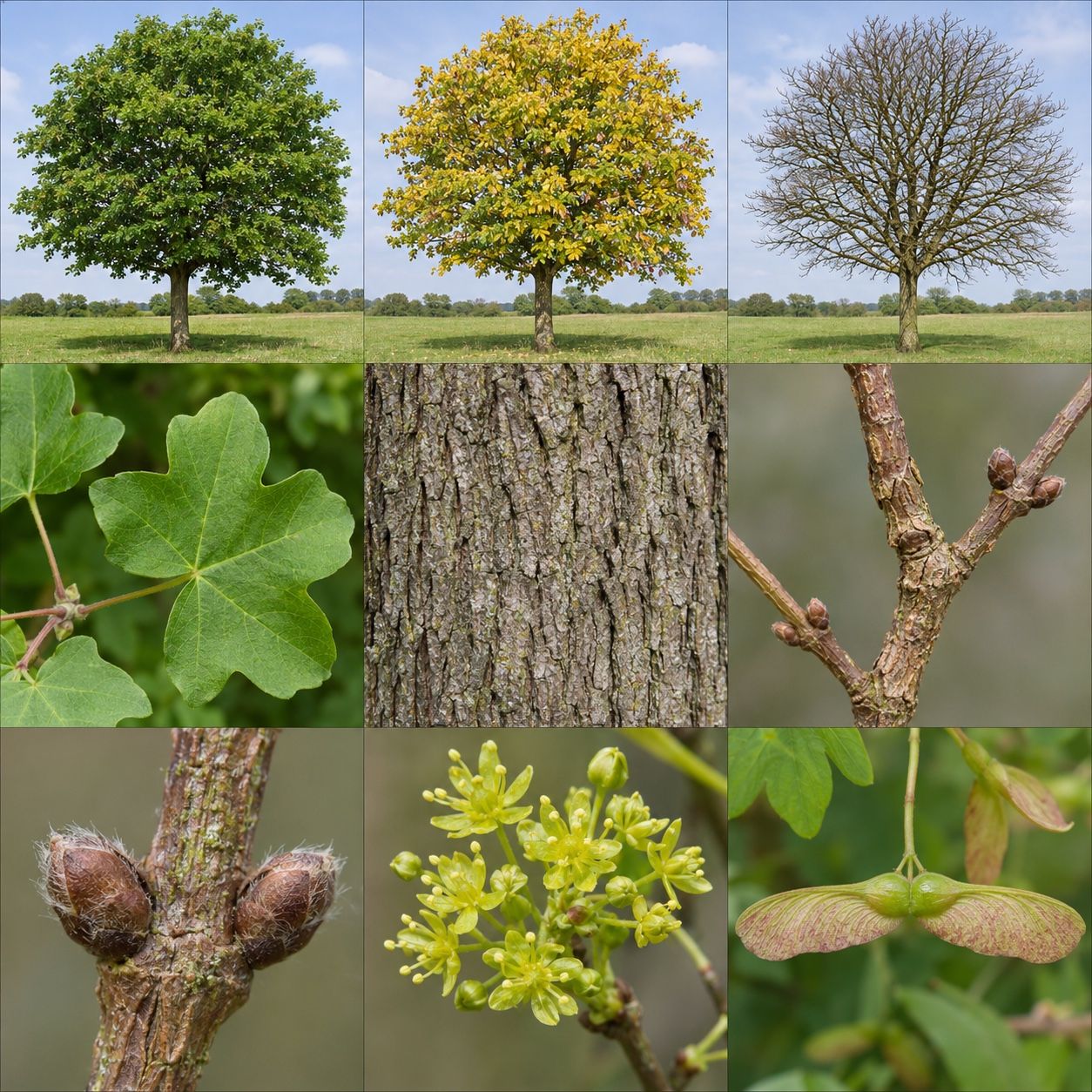
Field maple
Acer campestreSmall, blunt-lobed leaves; paired seeds spread almost flat.
Open field guide →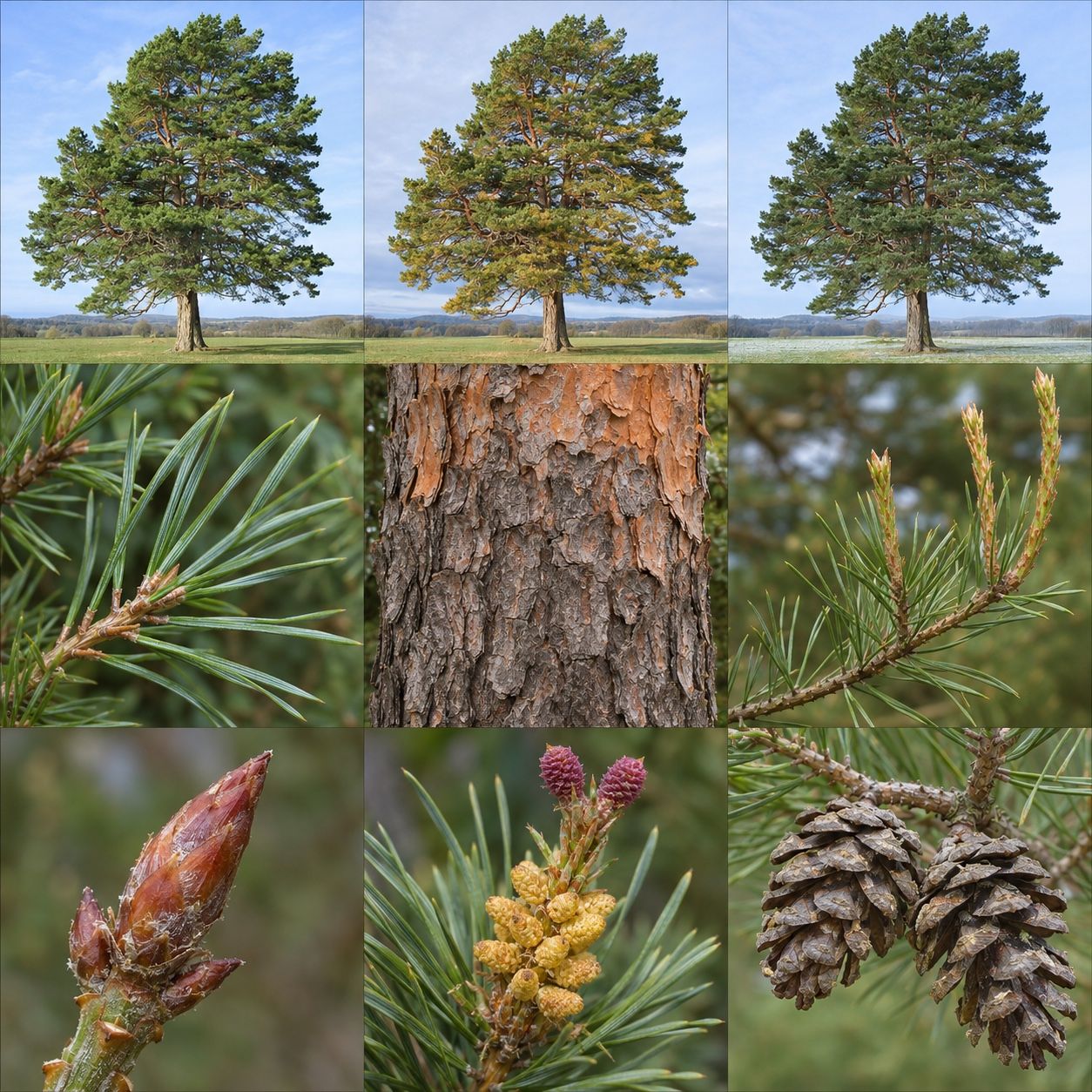
Scots pine
Pinus sylvestrisPaired blue-green needles and orange bark high on the trunk.
Open field guide →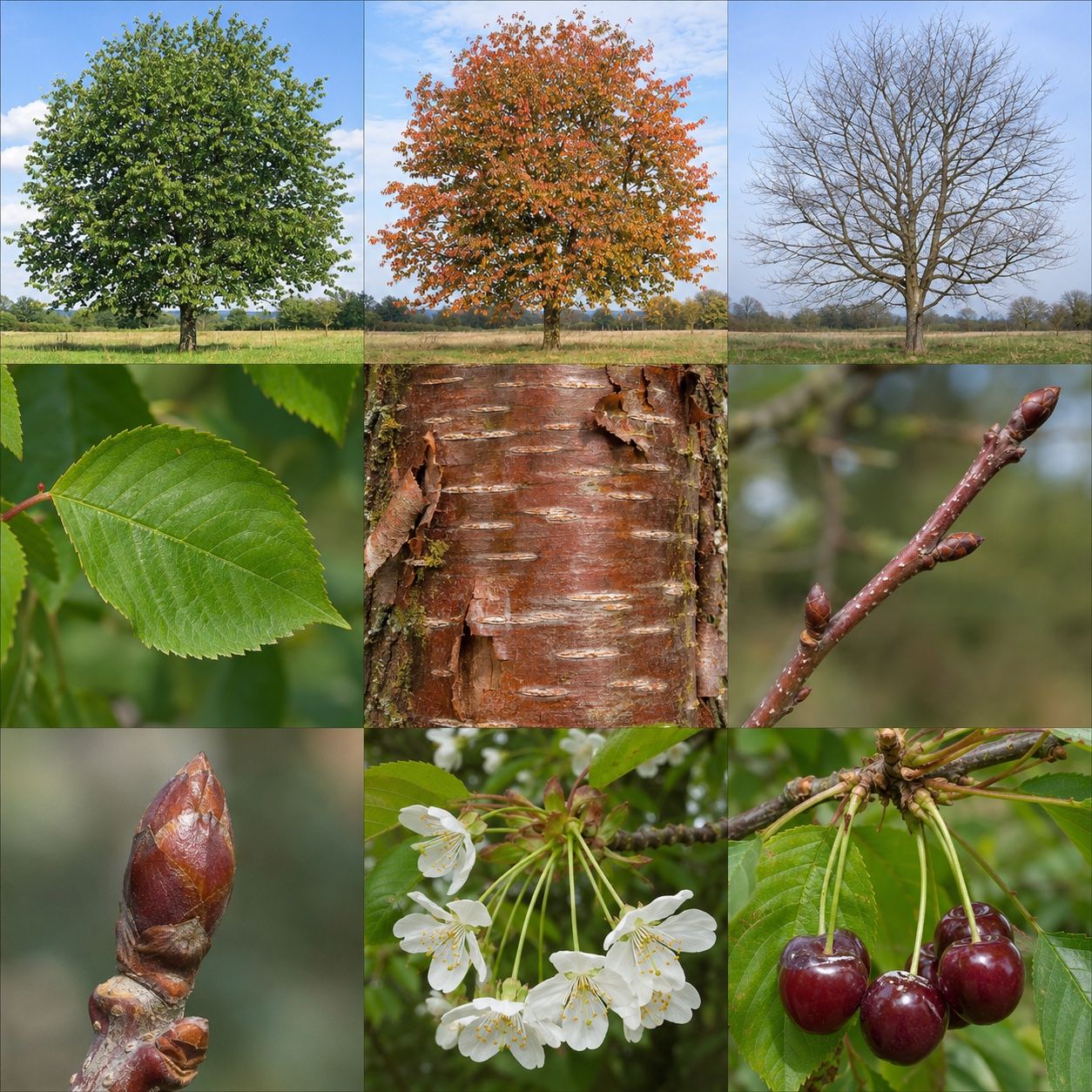
Wild cherry
Prunus aviumTwo red stalk glands and shiny bark with horizontal bands.
Open field guide →Images show typical features, not scale. Trees vary with age, cultivar, pruning and growing conditions. Compare several written clues and the linked photographic references. Never use this guide to decide whether a plant is edible.
IS YOUR TREE LOOKING DIFFERENT?
Know the warning signs.
Leaf spots, crown thinning and bleeding bark can have different causes. Our guide explains common problems and when to seek advice.
Explore pests & diseases →Concerned about ash dieback?
Understand symptoms, crown-health classes and the options for managing an affected tree.
Read the ash dieback guide →Browse all trees A–Z
Every species has a complete field-guide page.
- Alder buckthorn
- Ash
- Aspen
- Atlas cedar
- Bay
- Bay willow
- Bird cherry
- Blackthorn
- Cedar of Lebanon
- Cherry laurel
- Cherry plum
- Cider gum
- Common alder
- Common beech
- Common box
- Common dogwood
- Common juniper
- Common laburnum
- Common lime
- Common plum
- Common walnut
- Common whitebeam
- Cultivated apple
- Cultivated pear
- Douglas fir
- Downy birch
- Elder
- English elm
- English oak
- European larch
- False acacia
- Field maple
- Goat willow
- Golden weeping willow
- Grey willow
- Guelder rose
- Hawthorn
- Hazel
- Holly
- Holm oak
- Hornbeam
- Horse chestnut
- Japanese flowering cherry
- Japanese maple
- Large-leaved lime
- Lawson cypress
- Leyland cypress
- London plane
- Midland hawthorn
- Monkey puzzle
- Native black poplar
- Northern red oak
- Norway maple
- Norway spruce
- Portugal laurel
- Purging buckthorn
- Rowan
- Saucer magnolia
- Scots pine
- Sessile oak
- Silver birch
- Sitka spruce
- Small-leaved lime
- Snowy mespilus
- Spindle
- Sweet chestnut
- Sycamore
- Tulip tree
- Western red cedar
- White willow
- Wild cherry
- Wild crab apple
- Wild service tree
- Wych elm
- Yew