

Leaves & needles
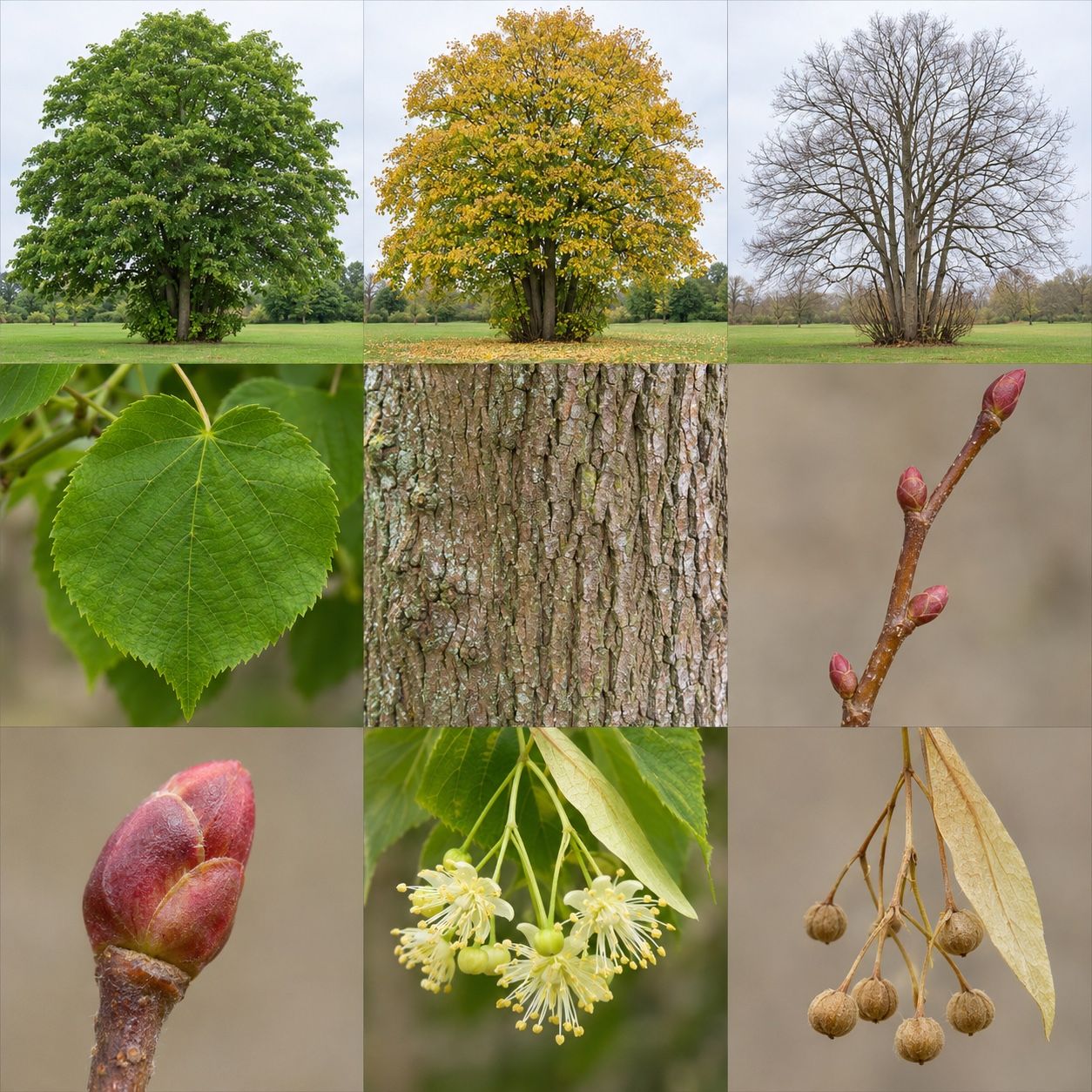
Heart-shaped leaves with an uneven base; pale cream hair tufts occur where veins meet beneath.
Tilia × europaea
A hybrid of the two native limes, widely planted in avenues and parks and capable of occurring naturally.
THROUGH THE YEAR
Large dense crown, often with a skirt of shoots at the base.
Heart-shaped leaves turn yellow; bracted fruit clusters can remain.
Broad branching framework, red buds and numerous basal shoots.
Typical open-grown form. Leaf fall varies with weather and location; young or clipped trees may retain dead leaves. Pruned, sheltered and young trees can look different.
LOOK A LITTLE CLOSER
Heart-shaped leaves with an uneven base; pale cream hair tufts occur where veins meet beneath.
Pale grey-brown ridged bark; older trunks often carry burrs and abundant basal shoots.
Slender brown or reddish shoots with alternate buds; basal shoots can form a dense skirt.
Red-pink, unevenly rounded buds with two or three visible scales, resembling small boxing gloves.
Scented pale yellow-white flowers hang in small clusters beneath a narrow, leaf-like bract in summer.
Small round or oval, slightly ribbed nutlets hang from the persistent pale bract.
Images show typical features and are not to scale. Confirm several features using the reference sources below.
CARE WITH PURPOSE
Allow extensive crown and rooting space. Protect soil from compaction; water young trees. Sticky honeydew beneath the canopy is often caused by aphids.
Remove obstructing basal shoots selectively. Preserve a sound crown; maintain an existing pollard to an agreed cycle rather than abruptly starting one on a large tree.
Mid-summer–mid-winter; often August or November–December
Highlighted months are an indicative window for the work described, not a reason to prune every year. An unshaded month is not an absolute ban.
Timing must suit the tree's health, weather, wildlife and legal protection. Avoid severe frost, drought and vulnerable new leaf growth. Mature trees, major branches and suspected defects need professional assessment.
Aphid honeydew is a nuisance but does not automatically mean the tree needs treatment or pruning.
Guide researched November 2026. Identification remains provisional until several features agree. UK native means native in some part of the UK, not necessarily your area.
Before work in England, check tree preservation orders, conservation-area restrictions and wildlife protection. Official tree protection guidance ↗