
Mostly intact crown
ASH DIEBACK · ENGLAND
Ash dieback: what to look for and what to do
Ash dieback is caused by the fungus Hymenoscyphus fraxineus. There is currently no known cure. It can damage or kill ash trees, but an affected tree may still be worth retaining where risks can be managed.
Guidance checked 14 November 2026
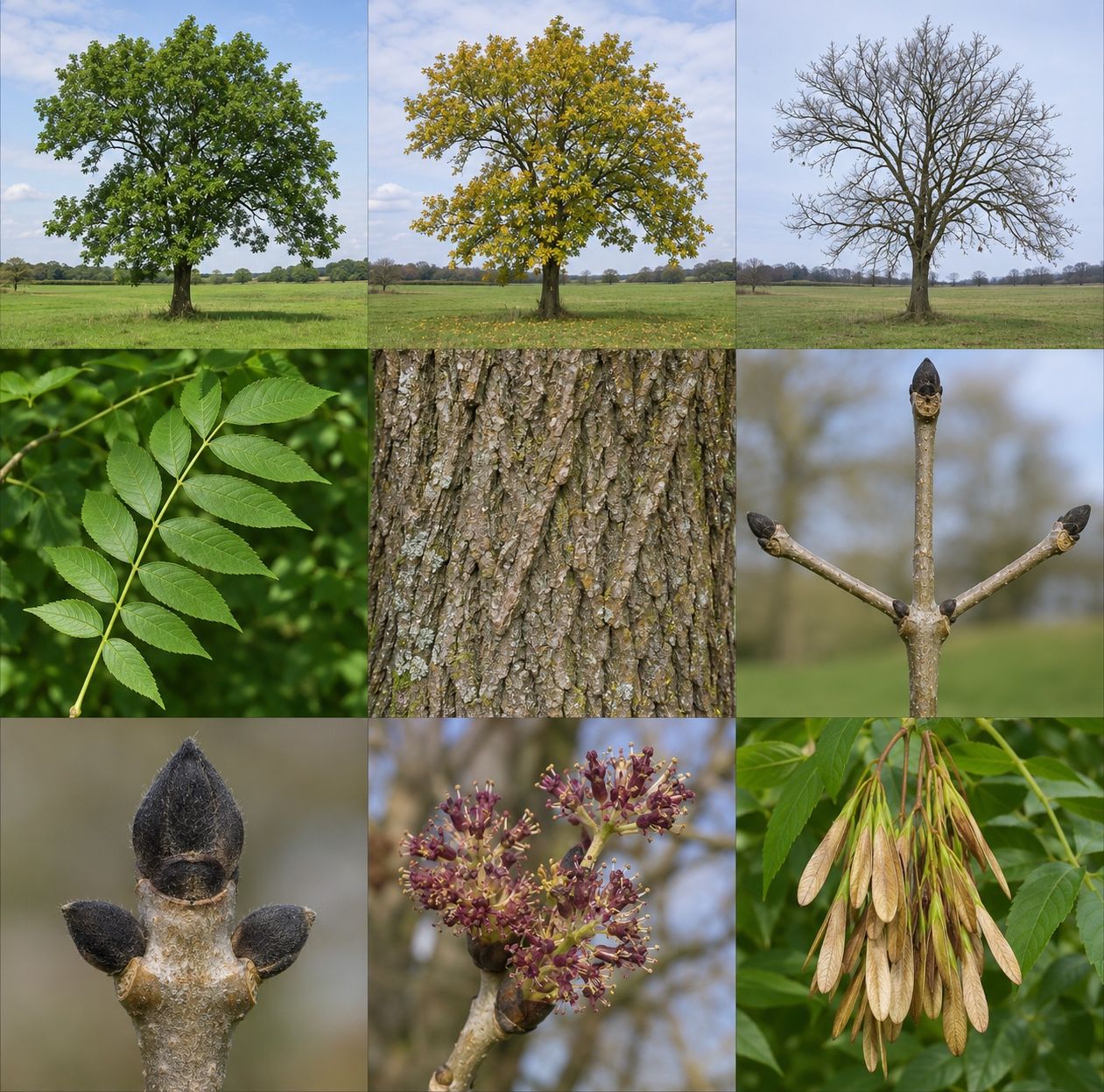
Typical ash form for identification; this image does not show a disease stage.
Check that your tree is ash →Signs to look for
- Leaves and young shoots blackening or wilting during summer.
- Early leaf loss and dying branches that leave gaps in the crown.
- Dark, sometimes diamond-shaped bark lesions around branch junctions.
- Lesions near the trunk base, which deserve professional attention.
Foliage symptoms are easiest to assess from July to September, before normal autumn changes become confusing.
Not every bare branch means ash dieback
Late spring leaf emergence and hanging clusters of dark ash seeds can be normal. Appearance alone cannot confirm the disease.
Drought, waterlogging, damaged roots and other disorders can also thin the crown.
PROGRESSION & CROWN CONDITION
Understanding the “stages” of ash dieback
Decline varies with the tree and its surroundings; there is no reliable timetable for an individual ash. Young trees may deteriorate quickly, while some mature trees persist longer. Damage at the trunk base can occur even when the crown still looks relatively healthy.
Four crown-health classes
These classes describe the approximate proportion of crown remaining at inspection. They are snapshots of crown condition, not a sequence every tree follows.
Approximate crown remaining
Noticeable crown loss
Substantial crown loss
Very little crown remaining
A crown class cannot establish safety or prescribe felling. Seek professional assessment for concerning decline, especially classes 3 and 4; the trunk, roots and surroundings also matter.
Check, record and review
Record each ash tree's position, nearby paths and buildings, and visible defects. Photograph the crown from the same position during regular summer checks, ideally late July to early August. Keep dated notes. Prioritise trees near frequently used areas and ask a qualified tree professional to set an appropriate inspection interval.
Affected ash needs specialist handling
Diseased ash can become brittle and lose strength, particularly with secondary decay. Branches or trunks may fail during work. Do not climb or attempt tree surgery yourself: affected trees need experienced, appropriately trained professionals and a suitable working method.
Remove mud and plant debris from footwear and equipment, then clean them before visiting another garden or woodland.
Keeping a tree or arranging work
Retain where appropriate
Keep healthier ash where it is safe: some may tolerate infection and contribute to future generations. Suitable deadwood can also support wildlife.
Assess the actual risk
Ask a qualified, insured professional to assess the tree and its location. Monitoring, selective pruning or removal may be appropriate, depending on its condition and the consequences of failure.
Plan replacement planting
If removal is needed, choose replacement trees suited to the space and soil; varied planting helps reduce future losses.
Check before carrying out work
Before work, check tree protection, conservation-area requirements, wildlife constraints and any felling permission needed. Ash dieback does not itself authorise felling. Garden exemptions from forestry licensing do not remove other protections.
Reporting suspected ash dieback
In Great Britain, TreeAlert asks for ash dieback reports from previously unrecorded areas: check its distribution-map advice first. A report supports disease monitoring; arrange local professional advice separately for concerns about a tree's safety.
For a report, take clear photographs showing the whole tree, the affected part and a close view of symptoms, only where safe.
Check TreeAlert reporting guidance ↗Current sources and review date
This guide was checked against the sources below on 14 November 2026. Forestry Commission Operations Note 46a was updated on 4 August 2026 to add an accessible inspection checklist; that update did not announce a new treatment. The crown classes are from The Tree Council’s June 2020 guide.
- Forestry Commission: Operations Note 46a ↗
- Forestry Commission: Managing ash dieback in England ↗
- Forest Research: Ash dieback ↗
- The Tree Council: Ash dieback disease — a guide for tree owners ↗
- Forest Research: TreeAlert FAQs ↗
- Forest Research: Preparing a TreeAlert report ↗
General homeowner information for England. Symptoms, a photograph or a crown class cannot establish an individual tree’s safety. Site-specific advice is needed.