

Leaves & needles
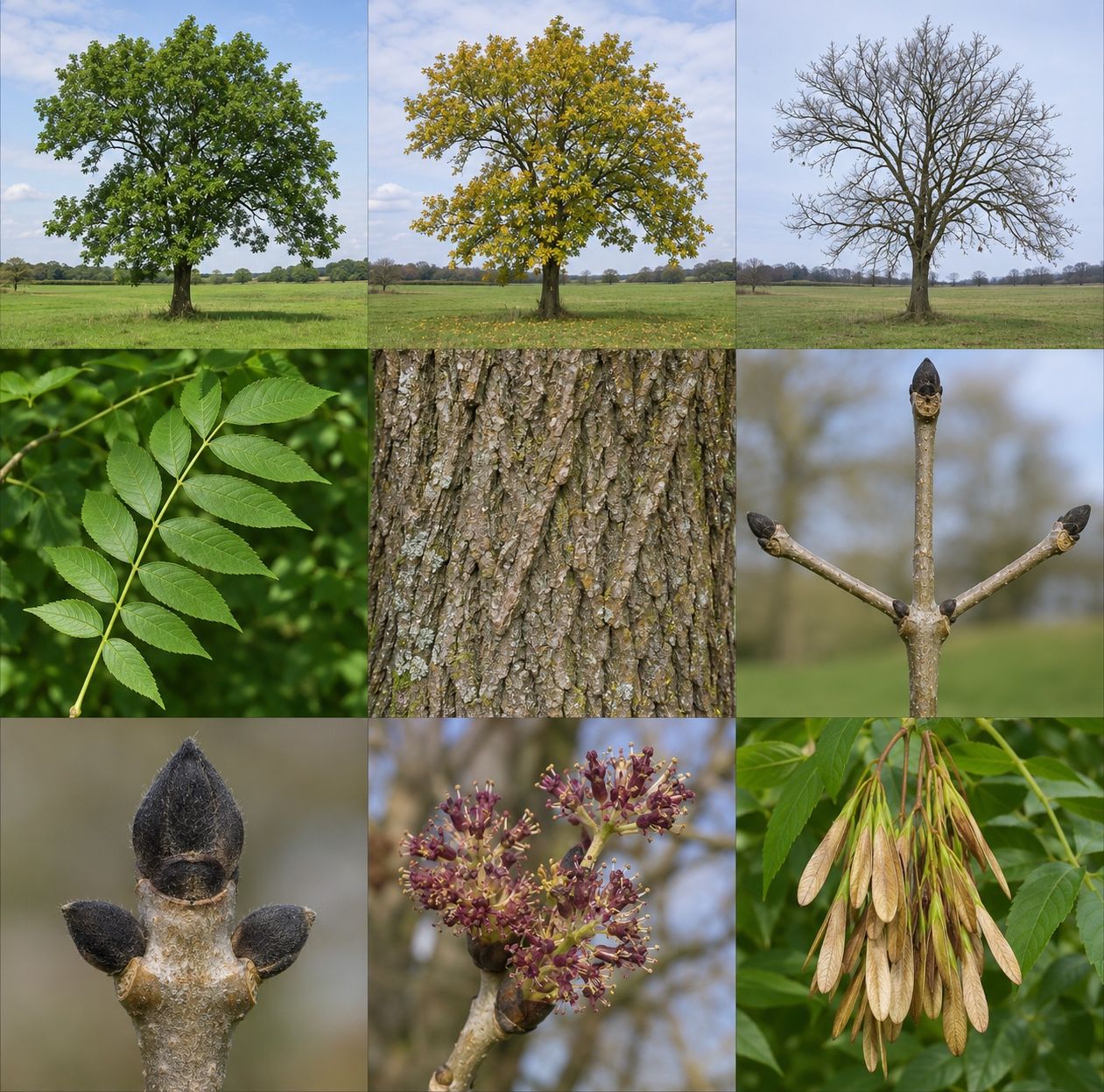
Usually 7–13 toothed leaflets on one stalk; complete leaves grow in opposite pairs.
Fraxinus excelsior
A tall, open-crowned native tree whose opposite black buds make winter identification unusually straightforward.
THROUGH THE YEAR
A light, open canopy with upward-sweeping branches.
Leaves often yellow or fall while still green; winged keys may remain.
Opposite branches, black buds and sometimes hanging bunches of keys.
Typical open-grown form. Leaf fall varies with weather and location; young or clipped trees may retain dead leaves. Pruned, sheltered and young trees can look different.
LOOK A LITTLE CLOSER
Usually 7–13 toothed leaflets on one stalk; complete leaves grow in opposite pairs.
Smooth grey when young; older trunks develop interlacing ridges and fissures.
Stout, grey shoots with opposite branches and conspicuous black buds.
Velvety black buds, with a larger terminal bud and paired side buds.
Small purple flower clusters appear before leaves and have no showy petals.
Long single-winged keys hang in bunches, often persisting into winter.
Typical flowering: Mar, Apr, May. Weather and location change timing.
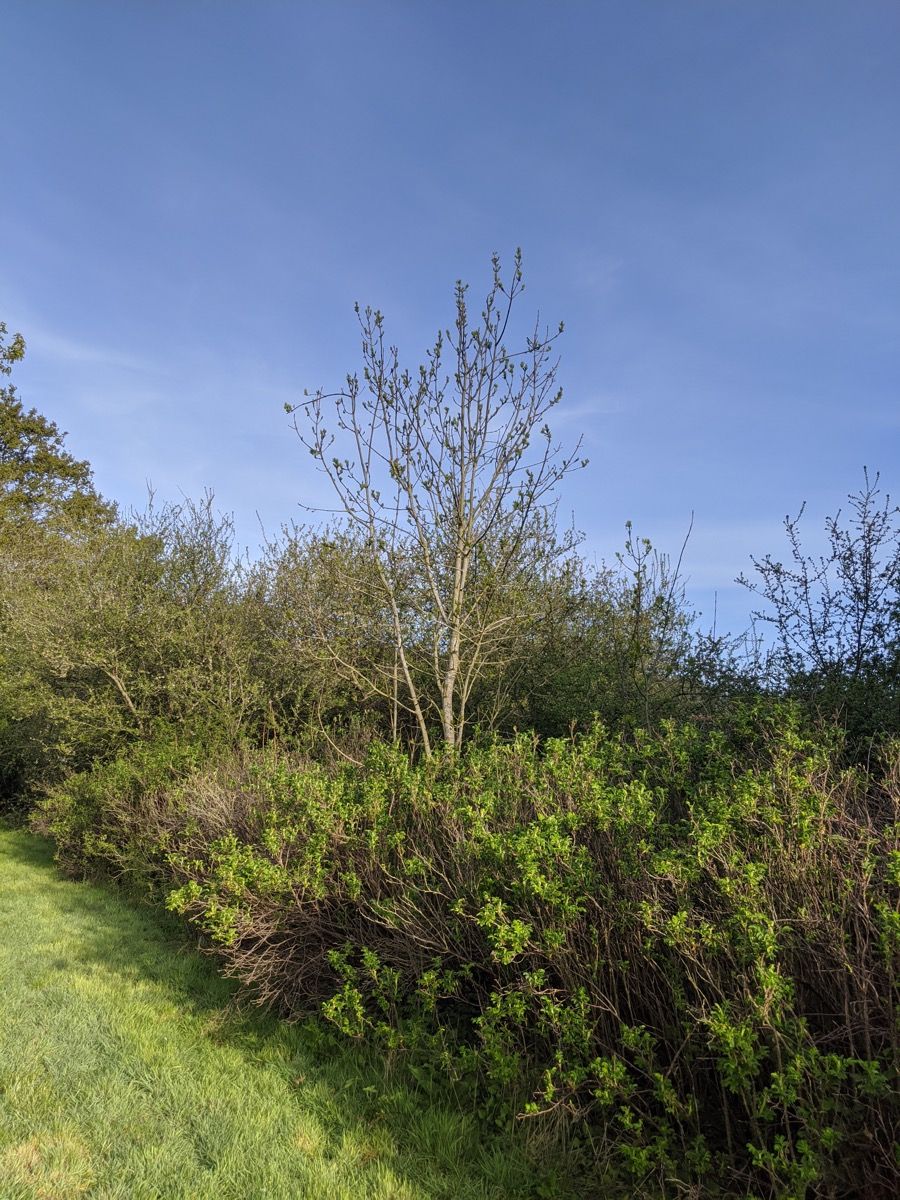
Bourne, South Kesteven, Lincolnshire, England, United Kingdom
A young common ash above a hedgerow near Bourne in spring.
Fraxinus excelsior — Bob Harvey / Geograph, via Wikimedia Commons · CC BY-SA 2.0 · Original photograph ↗Images show typical features and are not to scale. Confirm several features using the reference sources below.
CARE WITH PURPOSE
Retain healthy ash where practical and monitor canopy condition. Protect roots and avoid drought stress in young trees.
Have declining ash assessed before work. Brittle branches and ash dieback change the work method; pruning cannot cure the disease.
June–August for assessed routine work
Highlighted months are an indicative window for the work described, not a reason to prune every year. An unshaded month is not an absolute ban.
Timing must suit the tree's health, weather, wildlife and legal protection. Avoid severe frost, drought and vulnerable new leaf growth. Mature trees, major branches and suspected defects need professional assessment.
Ash dieback can make branches dangerously brittle; leave climbing and cutting to trained professionals.
Guide researched November 2026. Identification remains provisional until several features agree. UK native means native in some part of the UK, not necessarily your area.
Before work in England, check tree preservation orders, conservation-area restrictions and wildlife protection. Official tree protection guidance ↗