

Leaves & needles
Oval, with a wavy, mostly untoothed edge; young leaves have silky hairs along the margin.
Fagus sylvatica
A large native tree of southern Britain, with a dense dome of foliage and smooth, pale-grey bark.
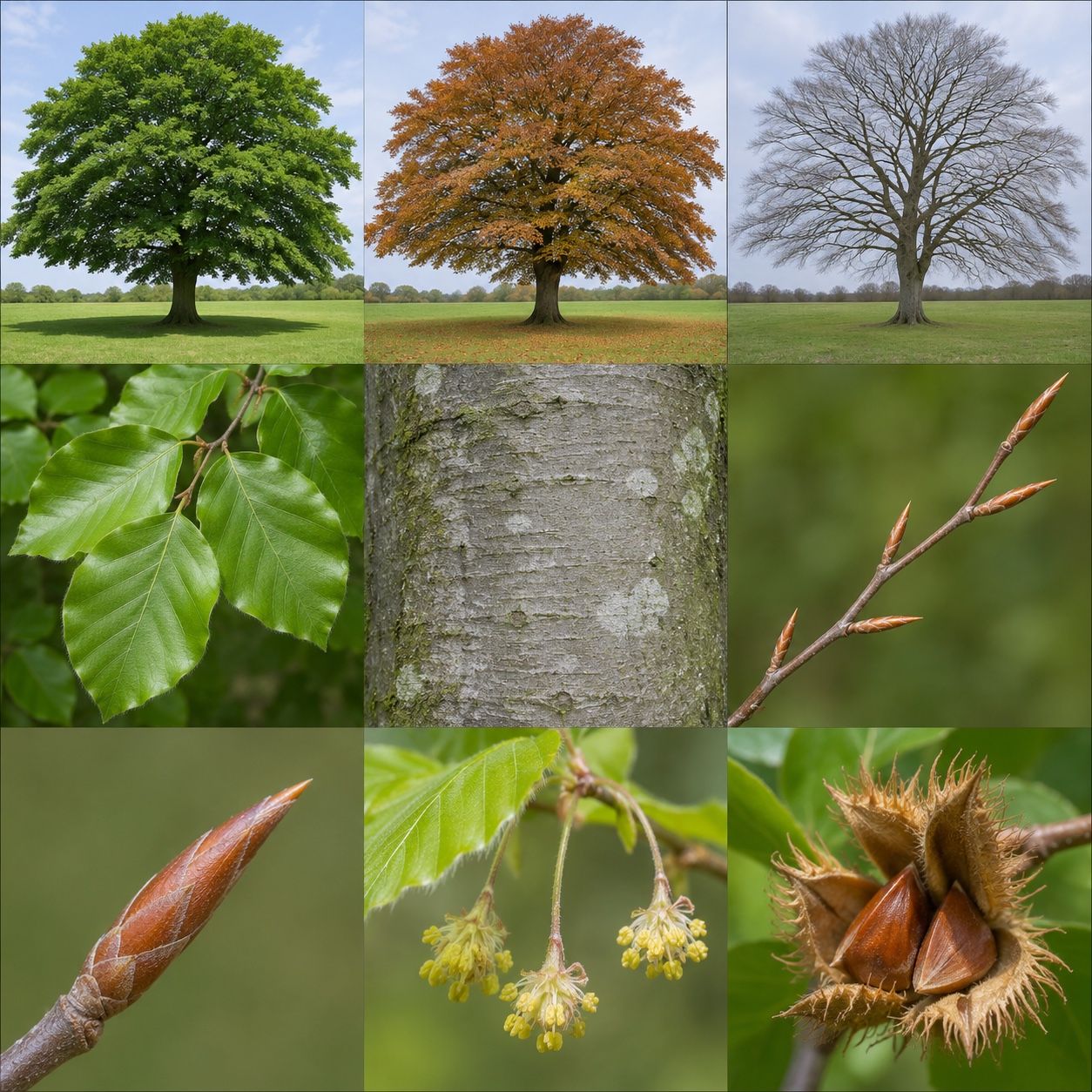
THROUGH THE YEAR
A broad, dense dome casting deep shade.
Foliage turns copper and bronze; young growth can retain dry leaves.
Fine branching and long pointed buds; hedges often retain copper leaves.
Typical open-grown form. Leaf fall varies with weather and location; young or clipped trees may retain dead leaves. Pruned, sheltered and young trees can look different.
LOOK A LITTLE CLOSER
Oval, with a wavy, mostly untoothed edge; young leaves have silky hairs along the margin.
Smooth, thin, silver-grey bark remains fairly unbroken even on large trunks.
Slender brown shoots with alternate buds held away from the twig.
Long, narrow, copper-brown buds taper to a sharp point like miniature spears.
Male flowers form small hanging tassels; paired female flowers develop near shoot tips.
Triangular brown nuts, usually paired, are enclosed in a spiny four-part husk.
Typical flowering: Apr, May. Weather and location change timing.
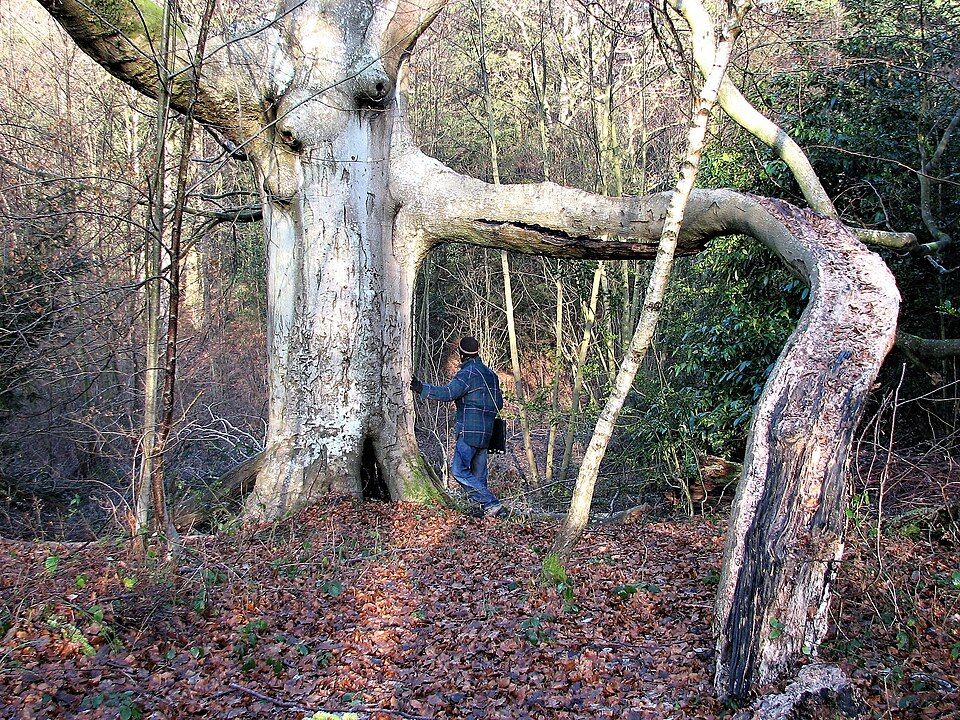
Hargate Forest, Frant, East Sussex, England, UK
An ancient common beech in Hargate Forest, showing its smooth trunk and substantial old branches.
Ancient beech tree in Hargate Forest — Patrick Roper / Geograph, Ancient beech tree in Hargate Forest · CC BY-SA 2.0 · Original photograph ↗Images show typical features and are not to scale. Confirm several features using the reference sources below.
CARE WITH PURPOSE
Choose well-drained soil. Avoid waterlogging, compaction and abrupt exposure of previously shaded bark; its shallow root zone needs protection.
Keep intervention light: mature beech resents hard reduction. Formative work when young reduces the need for large later cuts.
June–August for light tree pruning
Highlighted months are an indicative window for the work described, not a reason to prune every year. An unshaded month is not an absolute ban.
Timing must suit the tree's health, weather, wildlife and legal protection. Avoid severe frost, drought and vulnerable new leaf growth. Mature trees, major branches and suspected defects need professional assessment.
Guide researched November 2026. Identification remains provisional until several features agree. UK native means native in some part of the UK, not necessarily your area.
Before work in England, check tree preservation orders, conservation-area restrictions and wildlife protection. Official tree protection guidance ↗