

Leaves & needles
Small oval, finely toothed leaves, glossy green or purple in ornamental cultivars.
Prunus cerasifera
An early-flowering plum frequently seen in hedges, streets and gardens, including purple-leaved cultivars.
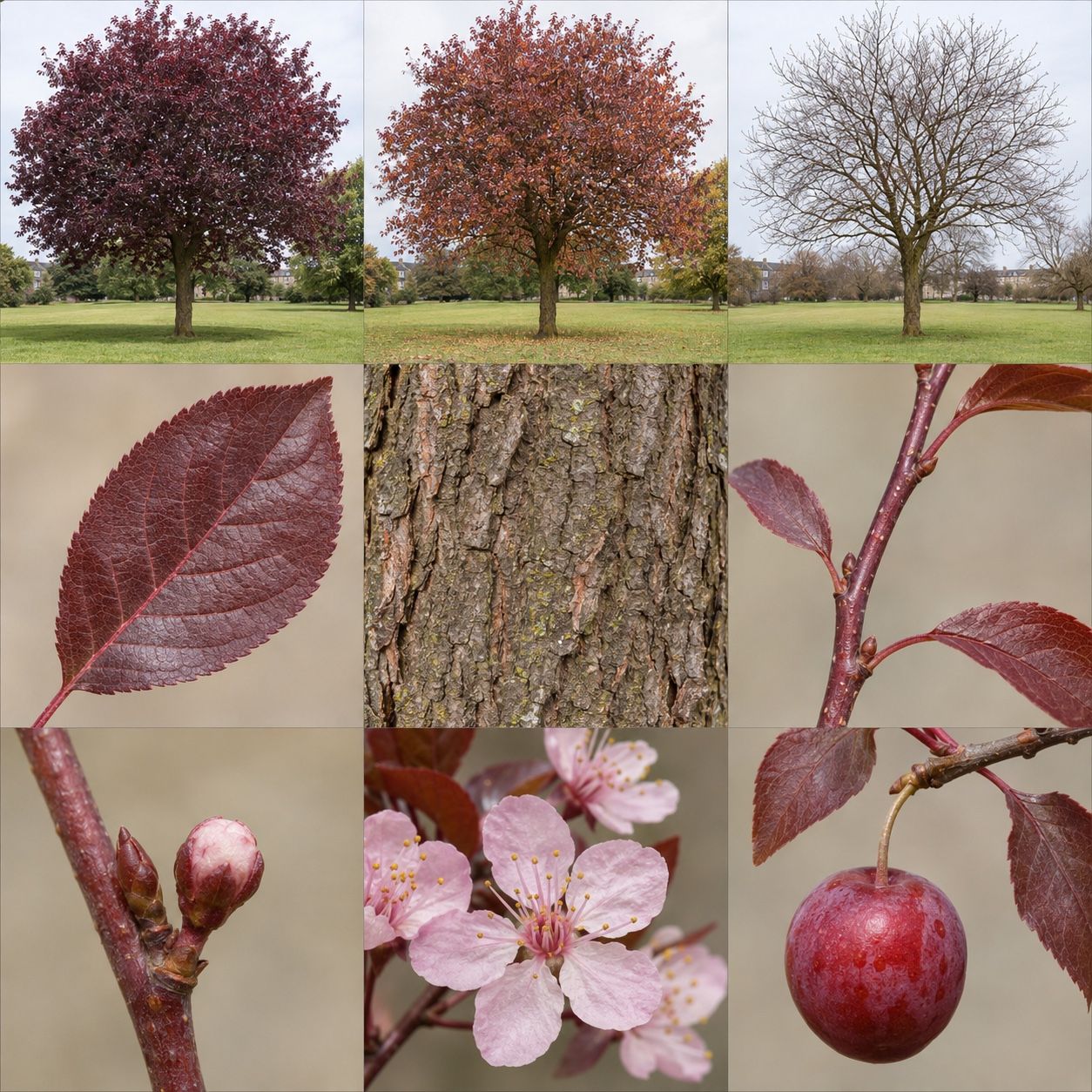
THROUGH THE YEAR
Rounded green or purple-leaved crown, sometimes carrying small plums.
Green forms yellow; purple forms often fade to bronze.
Fine bare crown with small buds; blossom can open very early.
Typical open-grown form. Leaf fall varies with weather and location; young or clipped trees may retain dead leaves. Pruned, sheltered and young trees can look different.
LOOK A LITTLE CLOSER
Small oval, finely toothed leaves, glossy green or purple in ornamental cultivars.
Dark grey-brown bark develops fissures with age.
Slender green or reddish young shoots become brown; some forms have short thorny shoots.
Small alternate buds; flower buds are rounder than the narrow leaf buds.
Usually single white flowers in late winter or early spring; purple-leaved forms often have pale pink blossom.
Small rounded yellow, red or purple plums contain one hard stone; cropping varies.
Images show typical features and are not to scale. Confirm several features using the reference sources below. Images show a purple-leaved garden form. Green-leaved cherry plums also occur.
CARE WITH PURPOSE
Give sun and well-drained soil. Remove unwanted rootstock suckers on grafted specimens; support young trees without leaving tight ties.
Keep work light and use small selective cuts in dry summer weather. Preserve useful flowering wood and avoid winter pruning.
June–July for established trees
Highlighted months are an indicative window for the work described, not a reason to prune every year. An unshaded month is not an absolute ban.
Timing must suit the tree's health, weather, wildlife and legal protection. Avoid severe frost, drought and vulnerable new leaf growth. Mature trees, major branches and suspected defects need professional assessment.
Silver leaf and bacterial canker make unnecessary large cuts undesirable.
Guide researched November 2026. Identification remains provisional until several features agree. UK native means native in some part of the UK, not necessarily your area.
Before work in England, check tree preservation orders, conservation-area restrictions and wildlife protection. Official tree protection guidance ↗