

Leaves & needles
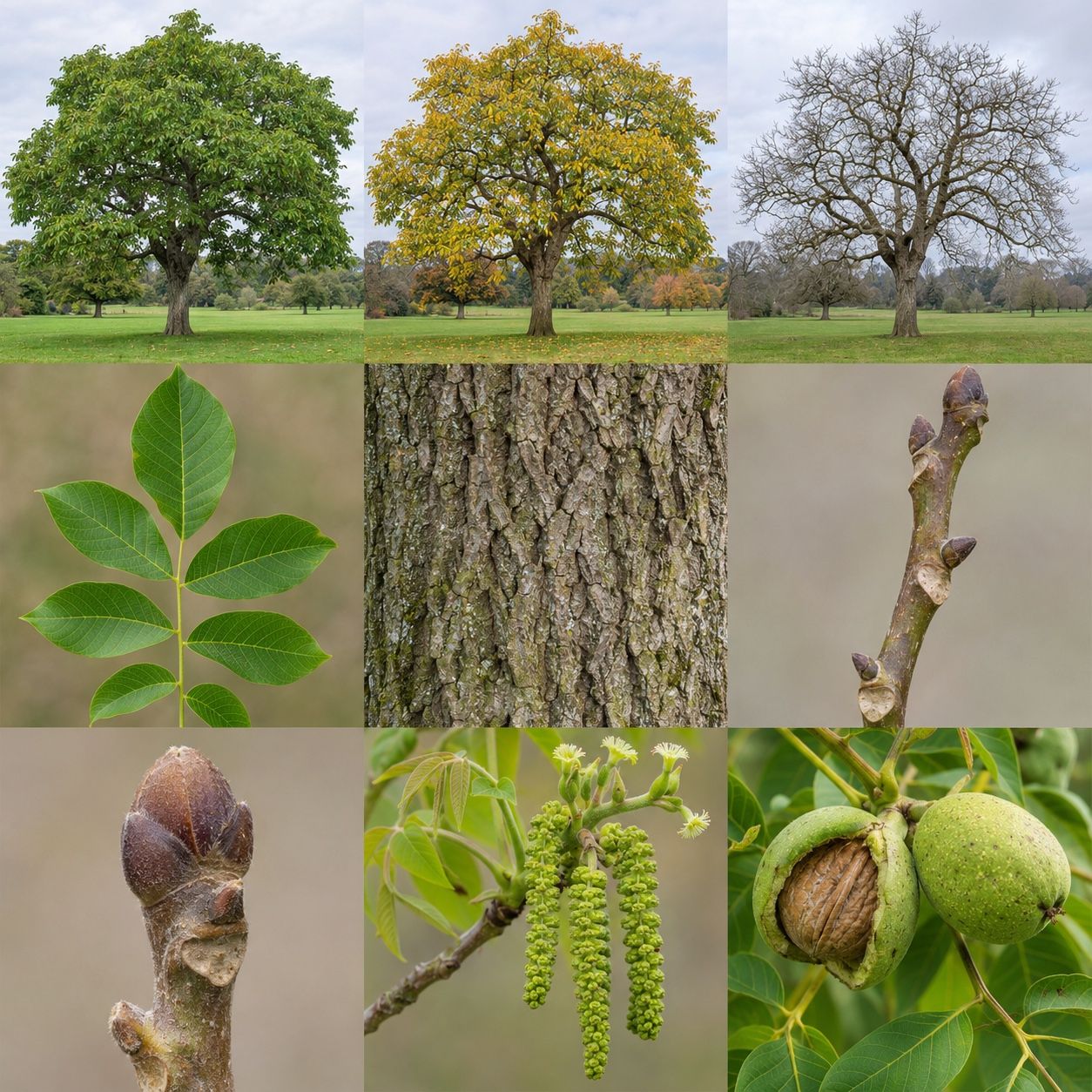
Usually five to nine broad, mostly smooth-edged leaflets; the terminal leaflet is largest.
Juglans regia
A broad garden tree with large compound leaves and nuts inside green husks.
THROUGH THE YEAR
Open spreading crown with bold compound leaves.
Yellowing foliage and round green-husked nuts.
Heavy curving branches, stout twigs and dark buds.
Typical open-grown form. Leaf fall varies with weather and location; young or clipped trees may retain dead leaves. Pruned, sheltered and young trees can look different.
LOOK A LITTLE CLOSER
Usually five to nine broad, mostly smooth-edged leaflets; the terminal leaflet is largest.
Grey bark starts smooth, then forms broad, interlacing ridges.
Stout green-brown shoots with alternate buds and large leaf scars.
Squat, dark brown or purplish buds; rounded terminal buds are prominent.
Drooping male catkins and small female flowers at shoot tips, both on the same tree.
Round green husks contain the ridged, hard-shelled walnuts.
Images show typical features and are not to scale. Confirm several features using the reference sources below.
CARE WITH PURPOSE
Prefers fertile, well-drained soil and a warm, spacious position. Avoid frost pockets and disturbance around established roots.
Prune as little as possible. Remove selected small crossing or damaged branches; major reduction needs specialist assessment.
July–August, avoiding the spring sap rise
Highlighted months are an indicative window for the work described, not a reason to prune every year. An unshaded month is not an absolute ban.
Timing must suit the tree's health, weather, wildlife and legal protection. Avoid severe frost, drought and vulnerable new leaf growth. Mature trees, major branches and suspected defects need professional assessment.
Sap bleeding is a particular concern if pruned at unsuitable times.
Guide researched November 2026. Identification remains provisional until several features agree. UK native means native in some part of the UK, not necessarily your area.
Before work in England, check tree preservation orders, conservation-area restrictions and wildlife protection. Official tree protection guidance ↗