

Leaves & needles
Small leaves with deep, irregular lobes reaching well towards the midrib.
Crataegus monogyna
A native thorny tree or hedgerow shrub with deeply lobed leaves, white spring blossom and red autumn haws.
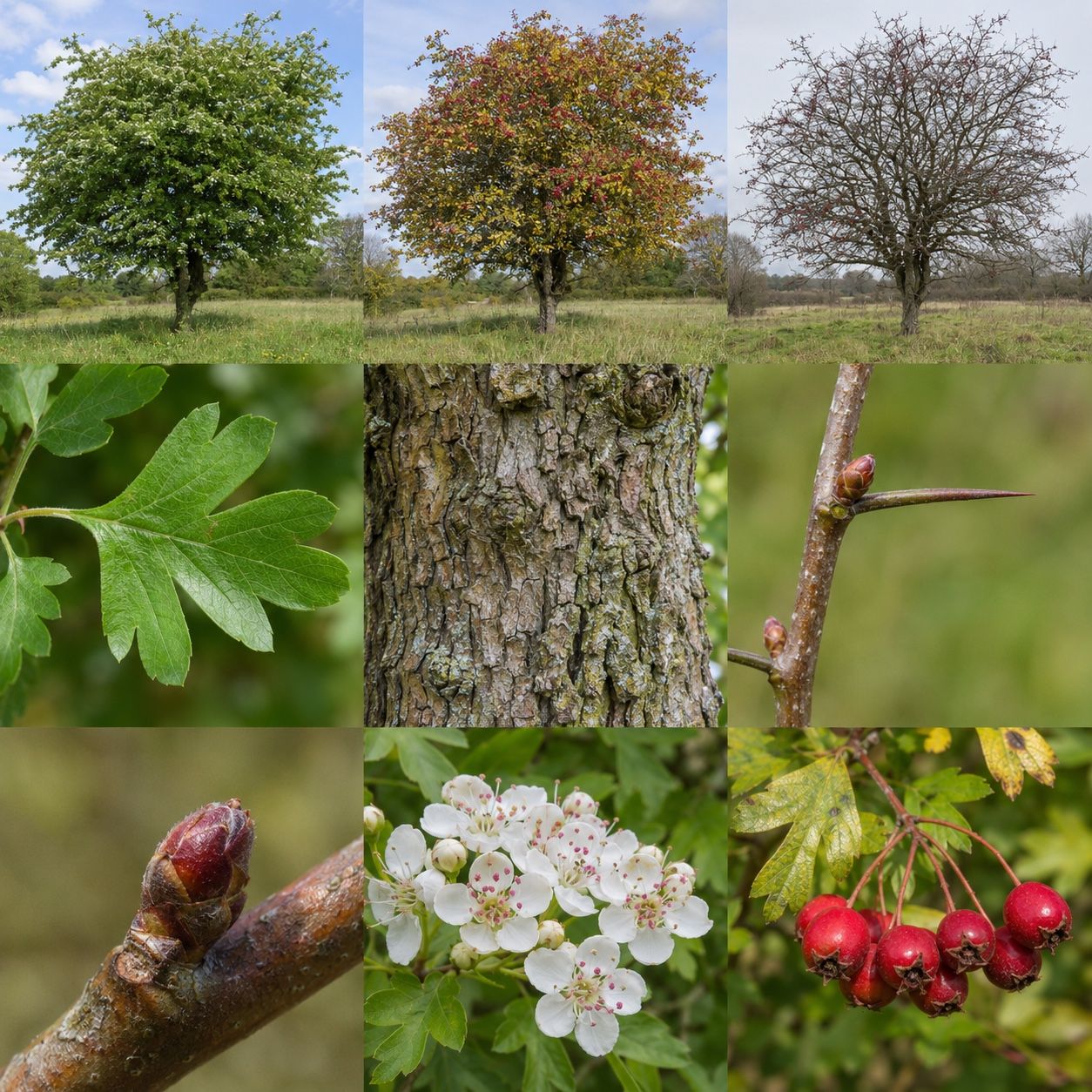
THROUGH THE YEAR
A dense, rounded crown of small lobed leaves.
Red haws stand out as leaves turn yellow or brown.
A tightly branched, thorny outline; some haws may remain.
Typical open-grown form. Leaf fall varies with weather and location; young or clipped trees may retain dead leaves. Pruned, sheltered and young trees can look different.
LOOK A LITTLE CLOSER
Small leaves with deep, irregular lobes reaching well towards the midrib.
Grey-brown, becoming fissured and knotted on older trunks.
Slender brown shoots with sharp thorns; buds often sit at the thorn base.
Small reddish-brown, rounded buds, usually separate from the thorn itself.
White, sometimes pink-tinged, five-petalled flowers form flat clusters; usually one style per flower.
Small red haws usually contain one stone.
Typical flowering: May, Jun. Weather and location change timing.
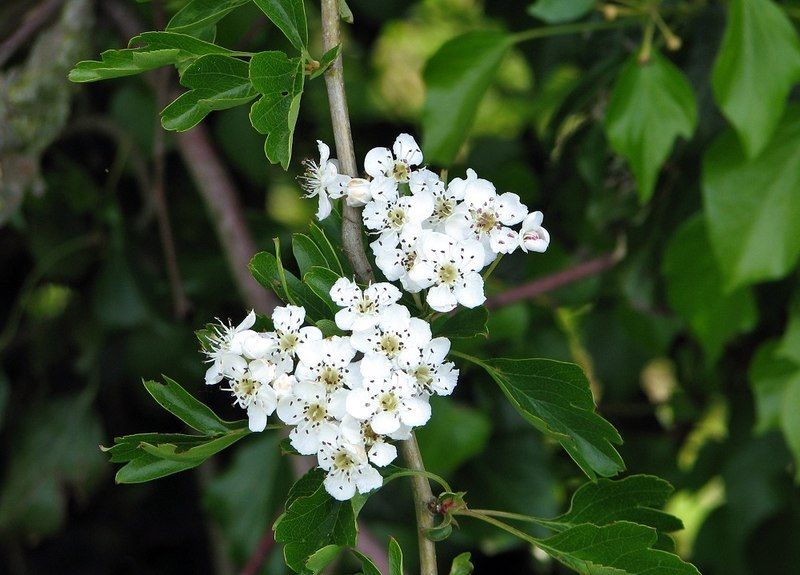
Surlingham, Norfolk, England, United Kingdom
White hawthorn blossom and lobed leaves at Surlingham.
Hawthorn blossom (Crataegus monogyna) — Hawthorn blossom (Crataegus monogyna) by Evelyn Simak / Geograph · CC BY-SA 2.0 · Original photograph ↗Images show typical features and are not to scale. Confirm several features using the reference sources below.
CARE WITH PURPOSE
Very adaptable, including to exposed sites and many well-drained soils. Retain flowers and fruit for garden wildlife.
Thin or shape lightly when needed. Repeated hedge clipping removes flowers and fruit; winter work can be timed after berries are eaten.
December–February for routine shaping
Highlighted months are an indicative window for the work described, not a reason to prune every year. An unshaded month is not an absolute ban.
Timing must suit the tree's health, weather, wildlife and legal protection. Avoid severe frost, drought and vulnerable new leaf growth. Mature trees, major branches and suspected defects need professional assessment.
Guide researched November 2026. Identification remains provisional until several features agree. UK native means native in some part of the UK, not necessarily your area.
Before work in England, check tree preservation orders, conservation-area restrictions and wildlife protection. Official tree protection guidance ↗