

Leaves & needles
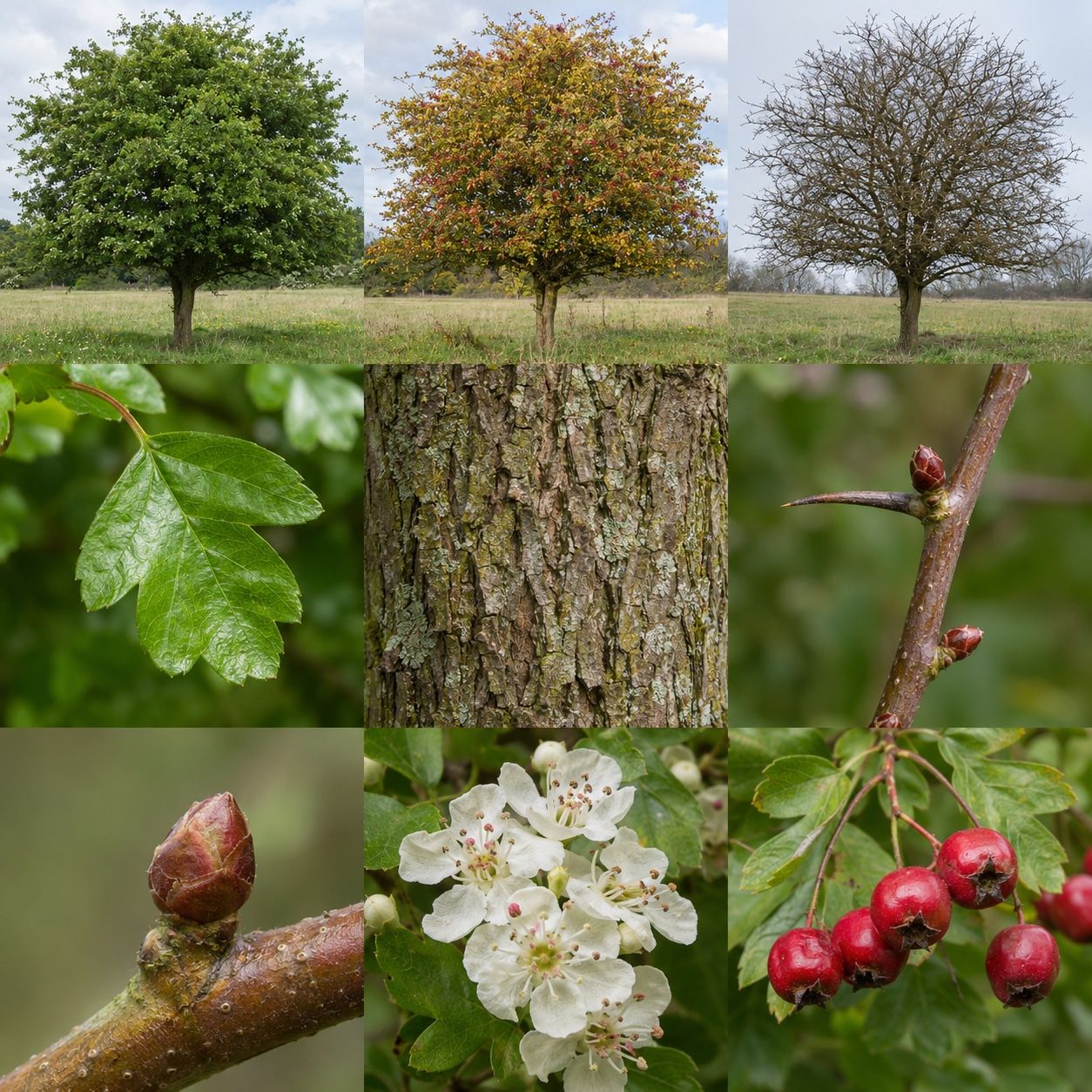
Small, glossy leaves with three to five shallow lobes, mainly towards the tip.
Crataegus laevigata
A native woodland hawthorn with more shallowly lobed leaves, also represented by familiar pink-flowered garden cultivars.
THROUGH THE YEAR
A dense, rounded crown; leaves are less deeply cut than common hawthorn.
Red haws appear among yellowing leaves.
Close branching and thorns create a dense silhouette.
Typical open-grown form. Leaf fall varies with weather and location; young or clipped trees may retain dead leaves. Pruned, sheltered and young trees can look different.
LOOK A LITTLE CLOSER
Small, glossy leaves with three to five shallow lobes, mainly towards the tip.
Grey-brown and increasingly fissured on mature stems.
Brown thorn-bearing shoots; buds occur alternately and beside the thorn bases.
Small, rounded reddish-brown buds with overlapping scales.
White to pink flowers form clusters, usually with two or three styles.
Red haws usually contain two or three stones.
Typical flowering: Apr, May, Jun. Weather and location change timing.
Images show typical features and are not to scale. Confirm several features using the reference sources below.
CARE WITH PURPOSE
Tolerates partial shade and heavier soils if not persistently waterlogged. Allow room for a naturally broad, thorny crown.
Use limited shaping and remove selected crossing shoots. Preserve flowering wood where blossom and berries are wanted.
December–February for routine shaping
Highlighted months are an indicative window for the work described, not a reason to prune every year. An unshaded month is not an absolute ban.
Timing must suit the tree's health, weather, wildlife and legal protection. Avoid severe frost, drought and vulnerable new leaf growth. Mature trees, major branches and suspected defects need professional assessment.
Guide researched November 2026. Identification remains provisional until several features agree. UK native means native in some part of the UK, not necessarily your area.
Before work in England, check tree preservation orders, conservation-area restrictions and wildlife protection. Official tree protection guidance ↗