
Leaves & needles
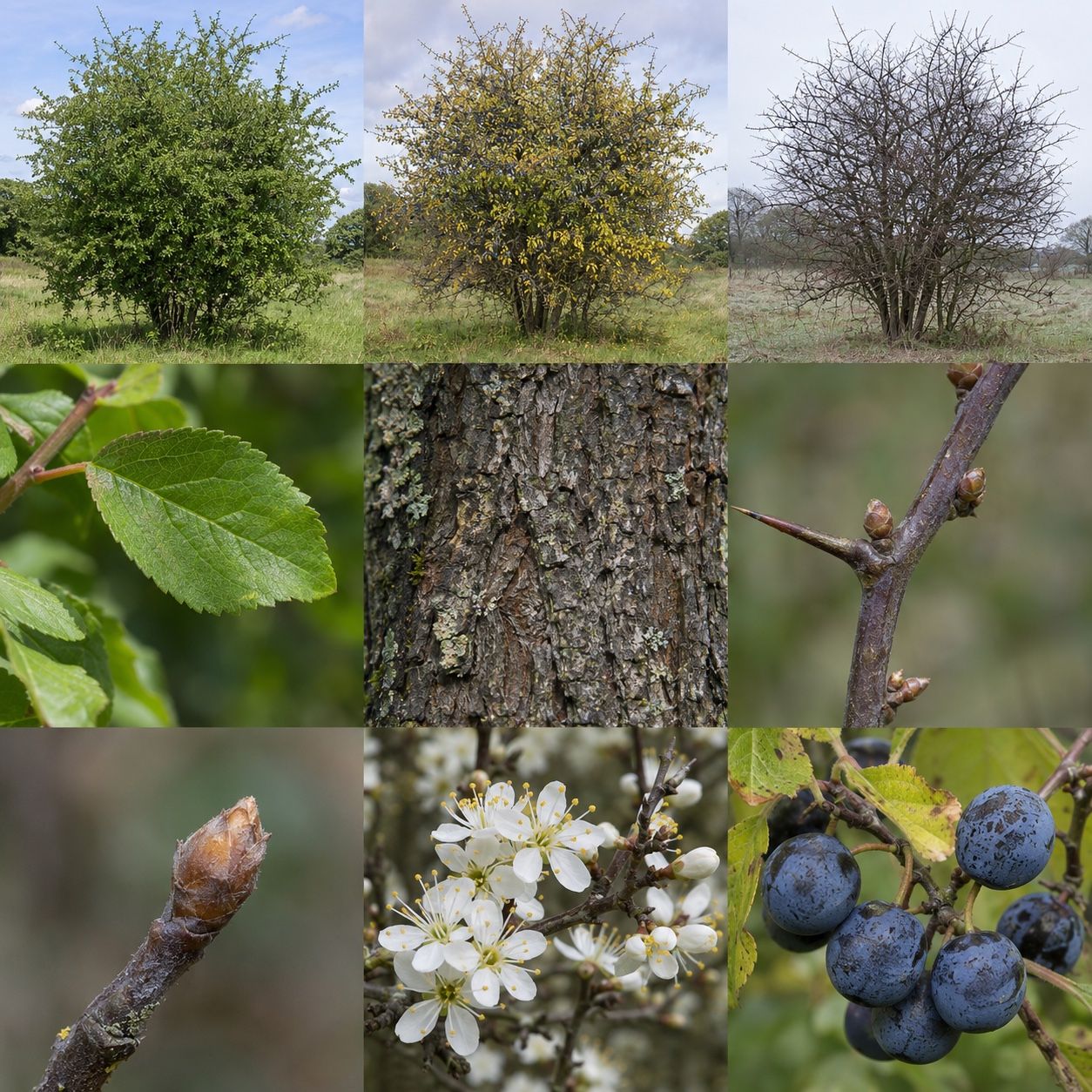
Small oval leaves with toothed edges, a tapered base and a short pointed tip.
Prunus spinosa
A dense native thorny shrub or small tree, with white flowers before leaves and blue-black sloes in autumn.
THROUGH THE YEAR
A dense thicket of small leaves and hard, pointed thorns.
Blue-black sloes remain as leaves yellow and fall.
An intricate dark, spiny silhouette, sometimes still carrying sloes.
Typical open-grown form. Leaf fall varies with weather and location; young or clipped trees may retain dead leaves. Pruned, sheltered and young trees can look different.
LOOK A LITTLE CLOSER
Small oval leaves with toothed edges, a tapered base and a short pointed tip.
Dark grey-brown to almost black, smooth on younger stems and rougher with age.
Dark, sharply spined shoots; buds can occur along the thorns.
Small, rounded brown buds on alternate positions and short shoots.
Small white flowers cover bare dark twigs before the leaves emerge.
Round blue-black sloes have a waxy bloom and a single stone.
Typical flowering: Mar, Apr. Weather and location change timing.
Images show typical features and are not to scale. Confirm several features using the reference sources below.
CARE WITH PURPOSE
Hardy and adaptable on well-drained ground. Give suckering stems room or manage their spread at the edge of the planting.
Prune only where necessary, selecting small stems rather than shearing the entire shrub. Summer cuts reduce the risk of silver leaf infection.
June–August in dry weather
Highlighted months are an indicative window for the work described, not a reason to prune every year. An unshaded month is not an absolute ban.
Timing must suit the tree's health, weather, wildlife and legal protection. Avoid severe frost, drought and vulnerable new leaf growth. Mature trees, major branches and suspected defects need professional assessment.
Strong thorns require care; autumn and winter cutting increases silver leaf risk.
Guide researched November 2026. Identification remains provisional until several features agree. UK native means native in some part of the UK, not necessarily your area.
Before work in England, check tree preservation orders, conservation-area restrictions and wildlife protection. Official tree protection guidance ↗