Leaves & needles
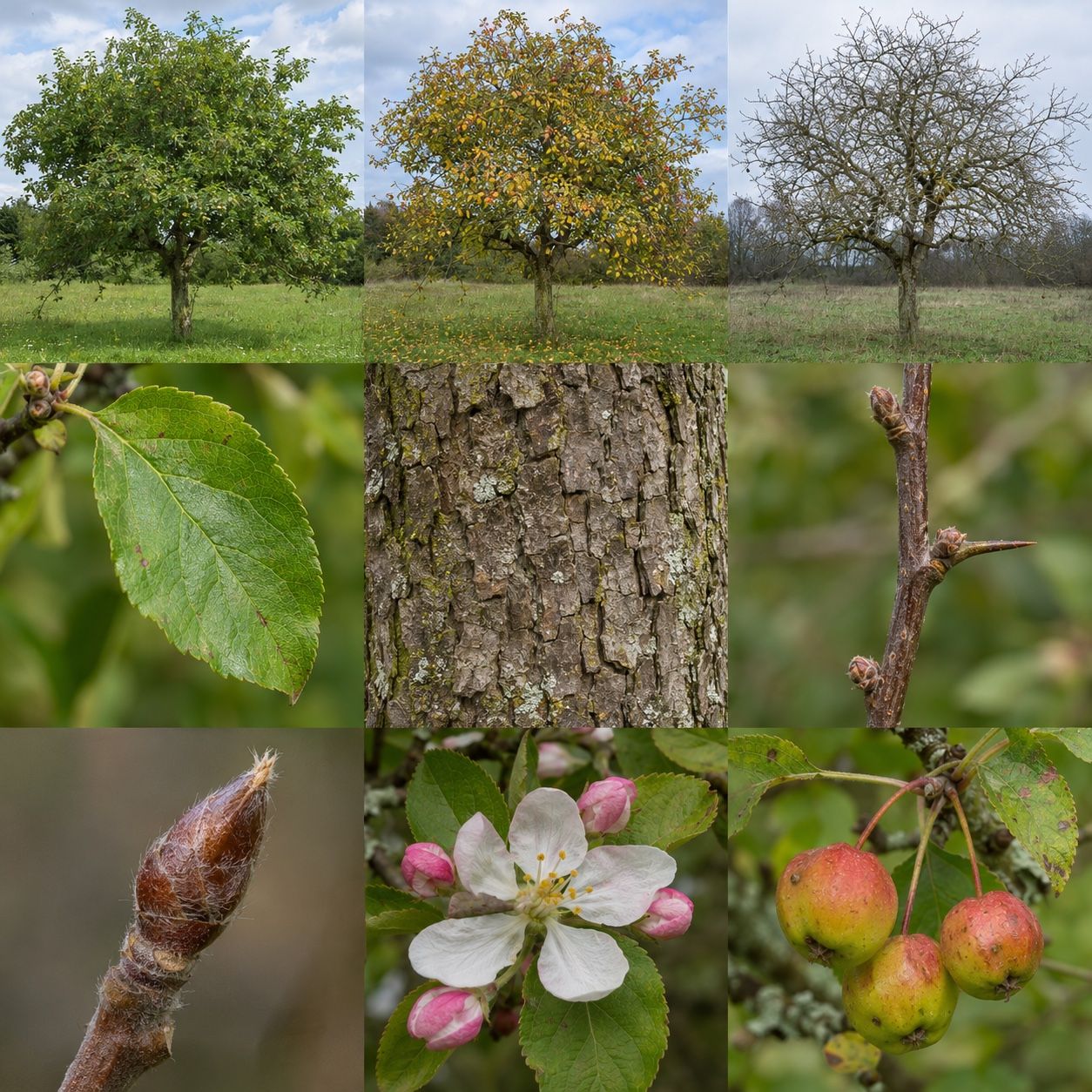
Oval, finely toothed leaves, generally much less hairy beneath than many cultivated apples.
Malus sylvestris
A small native apple tree with spring blossom and small yellow-green fruits; many garden crab apples are cultivated hybrids.
THROUGH THE YEAR
A broad, irregular crown with developing small apples.
Yellowing leaves and small fruits, sometimes remaining after leaf fall.
A spreading framework, short spurs and occasional persistent apples.
Typical open-grown form. Leaf fall varies with weather and location; young or clipped trees may retain dead leaves. Pruned, sheltered and young trees can look different.
LOOK A LITTLE CLOSER
Oval, finely toothed leaves, generally much less hairy beneath than many cultivated apples.
Grey-brown, becoming cracked and scaly on older trunks.
Brown shoots, sometimes thorn-like; short fruiting spurs are common.
Pointed brown buds, with fine down especially near the tips.
Pink buds open to white or pink-tinged, five-petalled blossom.
Small yellow-green apples, often blushed red, contain a central core of seeds.
Typical flowering: Apr, May. Weather and location change timing.
Images show typical features and are not to scale. Confirm several features using the reference sources below.
CARE WITH PURPOSE
Fertile, moisture-retentive but drained soil suits it. Water while establishing and leave some fallen fruit where wildlife can use it.
Open only congested areas and retain productive short spurs. Avoid severe reduction, which encourages vigorous upright shoots.
December–February while dormant
Highlighted months are an indicative window for the work described, not a reason to prune every year. An unshaded month is not an absolute ban.
Timing must suit the tree's health, weather, wildlife and legal protection. Avoid severe frost, drought and vulnerable new leaf growth. Mature trees, major branches and suspected defects need professional assessment.
A small-fruited apple is not automatically the native species: cultivated apples hybridise readily.
Guide researched November 2026. Identification remains provisional until several features agree. UK native means native in some part of the UK, not necessarily your area.
Before work in England, check tree preservation orders, conservation-area restrictions and wildlife protection. Official tree protection guidance ↗