
Leaves & needles
Round to broadly oval, softly hairy and double-toothed, with a pointed tip and heart-shaped base.
Corylus avellana
A native small tree or multi-stemmed shrub, with soft round leaves, winter catkins and autumn nuts.
THROUGH THE YEAR
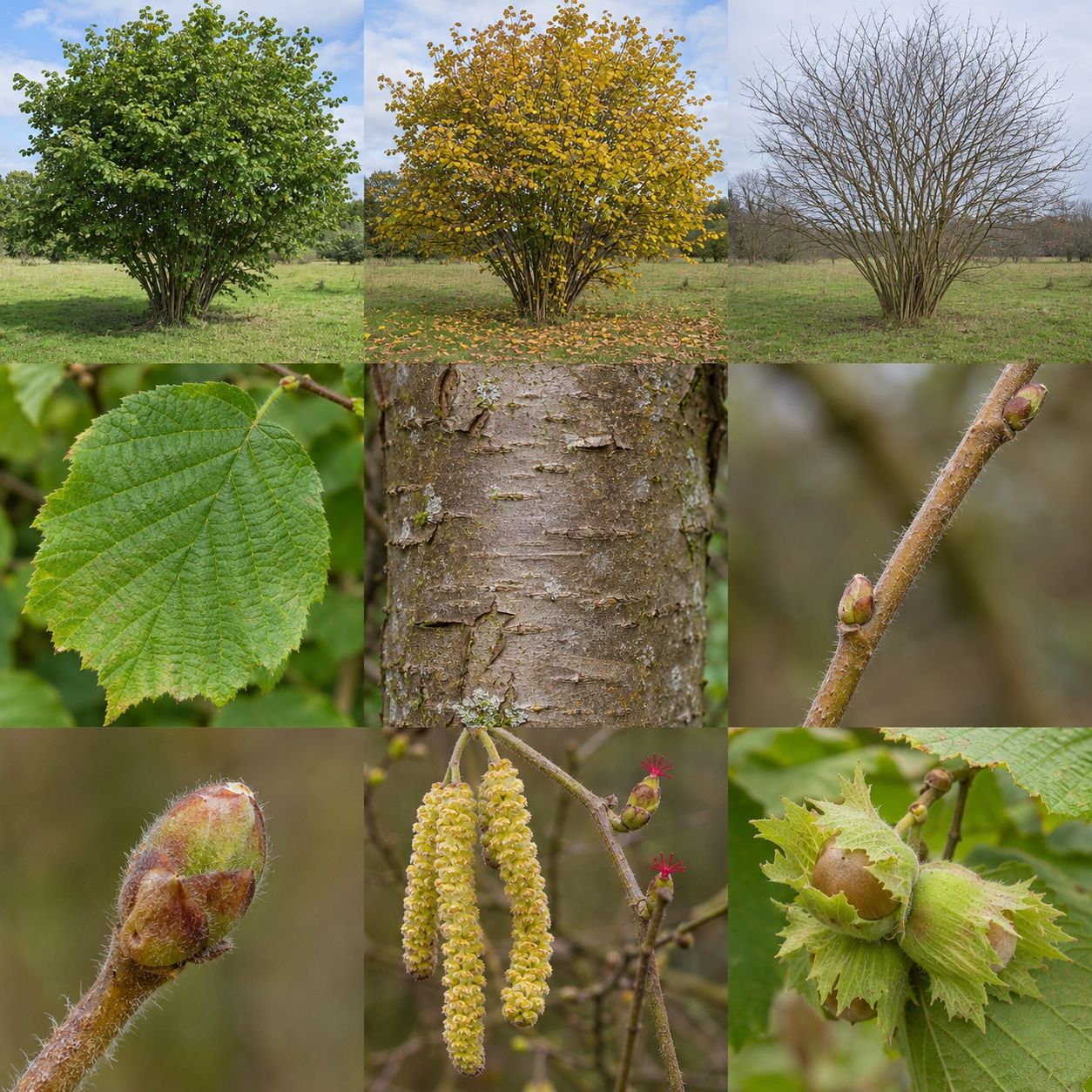
A broad, leafy clump or small rounded tree.
Leaves turn yellow; nuts sit in frilly leafy husks.
Many slender stems, hanging catkins and rounded buds.
Typical open-grown form. Leaf fall varies with weather and location; young or clipped trees may retain dead leaves. Pruned, sheltered and young trees can look different.
LOOK A LITTLE CLOSER
Round to broadly oval, softly hairy and double-toothed, with a pointed tip and heart-shaped base.
Smooth grey-brown, often with horizontal markings and some peeling on older stems.
Flexible, young shoots are hairy; mature stools commonly carry many straight stems.
Plump oval green-brown buds, with rounded tips and fine hairs.
Long yellow male catkins contrast with tiny red female flower styles emerging from buds.
Hard-shelled nuts grow in small clusters, each partly wrapped in a leafy husk.
Typical flowering: Jan, Feb, Mar. Weather and location change timing.
Images show typical features and are not to scale. Confirm several features using the reference sources below.
CARE WITH PURPOSE
Grows well in fertile, moist but drained soil. Allow a broad base and retain varied stem ages for habitat and nut production.
Thin selected older stems at the base. Traditional coppicing is a planned rotation; leave some mature growth if nuts and wildlife are priorities.
November–February while dormant
Highlighted months are an indicative window for the work described, not a reason to prune every year. An unshaded month is not an absolute ban.
Timing must suit the tree's health, weather, wildlife and legal protection. Avoid severe frost, drought and vulnerable new leaf growth. Mature trees, major branches and suspected defects need professional assessment.
Guide researched November 2026. Identification remains provisional until several features agree. UK native means native in some part of the UK, not necessarily your area.
Before work in England, check tree preservation orders, conservation-area restrictions and wildlife protection. Official tree protection guidance ↗