

Leaves & needles
Leathery, glossy dark-green leaves; margins can be spiny or almost smooth, especially high in the crown.
Ilex aquifolium
A native evergreen with glossy leaves and red berries on pollinated female trees, often used for hedges.
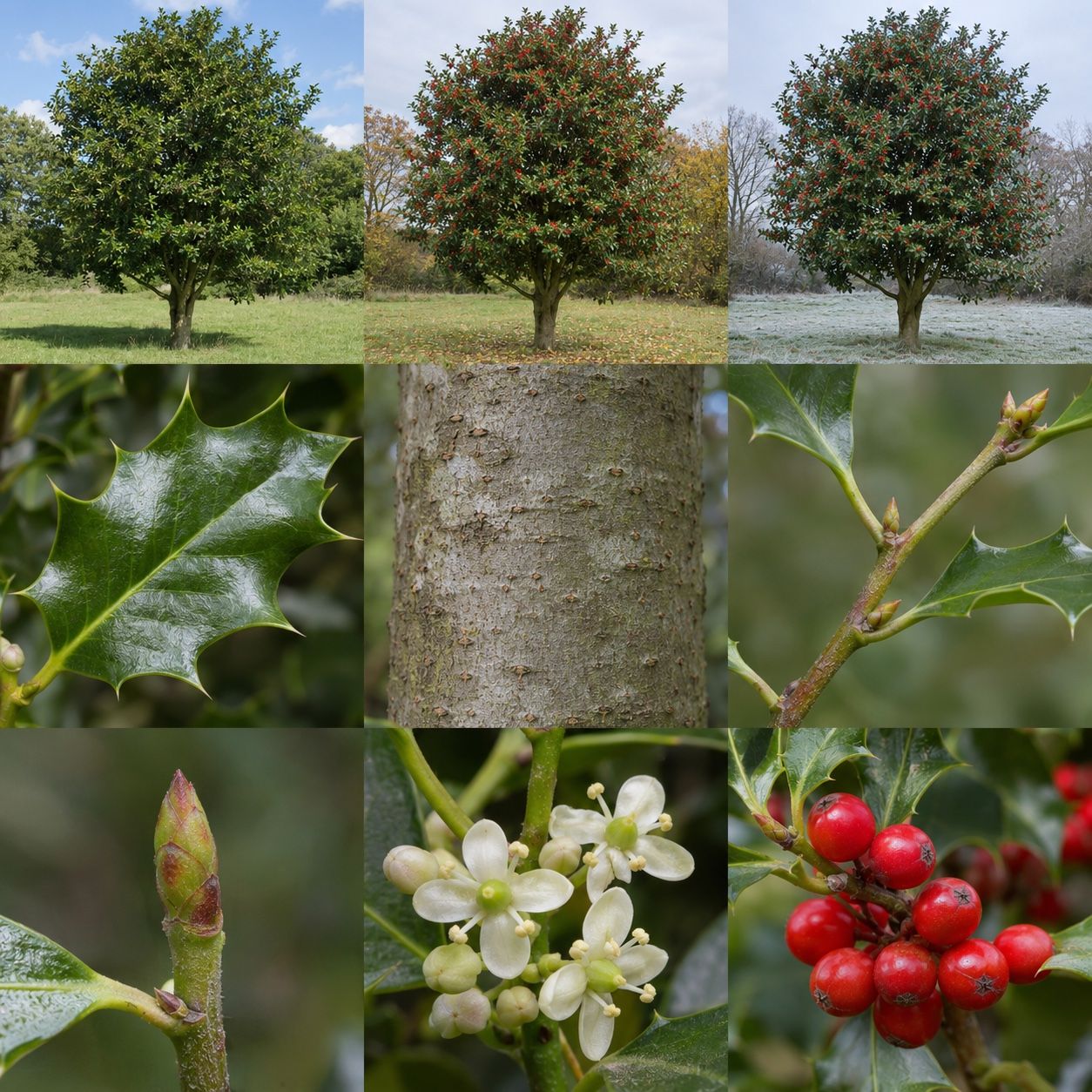
THROUGH THE YEAR
A dense conical-to-rounded crown of glossy foliage.
Leaves stay green while berries colour on female plants.
Evergreen foliage and persistent red berries on fruiting females.
Typical open-grown form. This tree keeps foliage in winter, shedding older leaves or needles gradually. Pruned, sheltered and young trees can look different.
LOOK A LITTLE CLOSER
Leathery, glossy dark-green leaves; margins can be spiny or almost smooth, especially high in the crown.
Thin, smooth grey bark, sometimes with small brown wart-like marks.
Green young stems become brown; leaves and buds alternate.
Small, pointed green-brown buds sit in leaf axils and at shoot tips.
Small white, four-petalled flowers form clusters; male and female flowers normally occur on separate plants.
Red berries form on pollinated female trees and may persist into winter.
Typical flowering: May, Jun. Weather and location change timing.
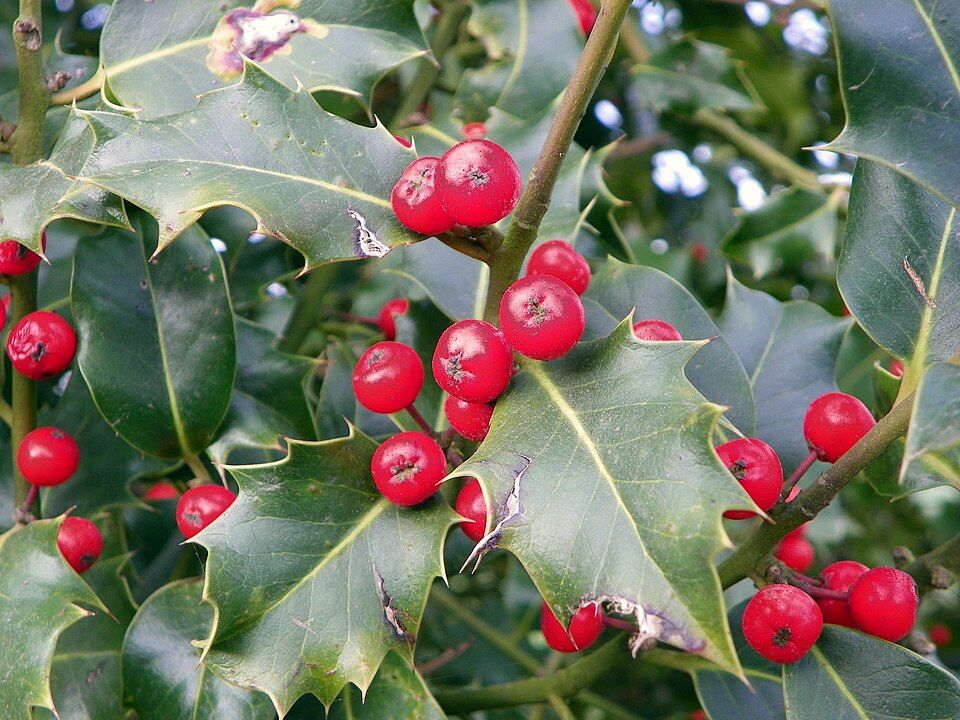
Road between Luffenhall and Hall's Green, Hertfordshire, England, UK
Spiny holly leaves and red berries beside a Hertfordshire road.
Ilex aquifolium Holly — AnemoneProjectors / Wikimedia Commons · CC BY-SA 2.0 · Original photograph ↗Images show typical features and are not to scale. Confirm several features using the reference sources below.
CARE WITH PURPOSE
Adaptable to sun or shade on well-drained soil. For berries, most female cultivars need a suitable male nearby.
Light shaping is usually sufficient. Plan more substantial renovation in stages, retaining a balanced framework and checking dense foliage for nests.
April–May for selective shaping
Highlighted months are an indicative window for the work described, not a reason to prune every year. An unshaded month is not an absolute ban.
Timing must suit the tree's health, weather, wildlife and legal protection. Avoid severe frost, drought and vulnerable new leaf growth. Mature trees, major branches and suspected defects need professional assessment.
Guide researched November 2026. Identification remains provisional until several features agree. UK native means native in some part of the UK, not necessarily your area.
Before work in England, check tree preservation orders, conservation-area restrictions and wildlife protection. Official tree protection guidance ↗