

Leaves & needles
Prickly needles occur in whorls of three, each with a broad pale stripe on the inner face.
Juniperus communis
A variable native evergreen, growing as a low shrub or upright small tree with sharply pointed needles.
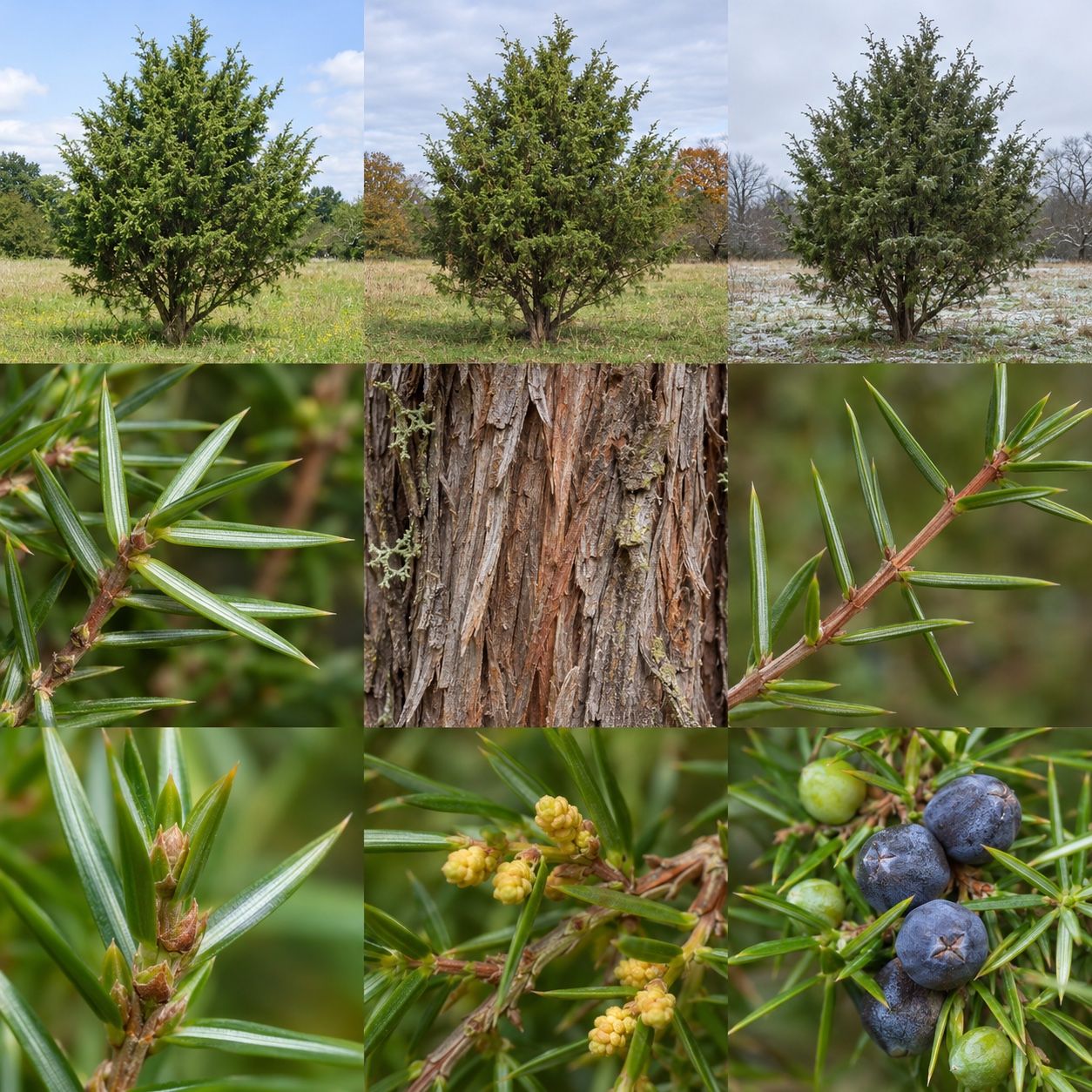
THROUGH THE YEAR
May be upright and columnar or a low, spreading bush.
Evergreen foliage; berry-like cones ripen from green to blue-black.
Retains its prickly foliage and compact outline.
Typical open-grown form. This tree keeps foliage in winter, shedding older leaves or needles gradually. Pruned, sheltered and young trees can look different.
LOOK A LITTLE CLOSER
Prickly needles occur in whorls of three, each with a broad pale stripe on the inner face.
Grey-brown, peeling in narrow strips on older stems.
Slender reddish-brown, often angled shoots bearing needle whorls.
Tiny scaly buds are largely concealed among the needle bases.
Tiny yellow pollen cones and green female structures usually grow on separate plants.
Berry-like cones ripen from green to blue-black over more than one year.
Typical flowering: Apr, May. Weather and location change timing.
Images show typical features and are not to scale. Confirm several features using the reference sources below.
CARE WITH PURPOSE
Give full sun and sharply drained soil. Avoid crowding and damp, stagnant conditions; mature plants need little feeding.
Trim only small green tips if necessary. Avoid cutting back into bare old wood, which may remain permanently brown.
May–July for light tip pruning
Highlighted months are an indicative window for the work described, not a reason to prune every year. An unshaded month is not an absolute ban.
Timing must suit the tree's health, weather, wildlife and legal protection. Avoid severe frost, drought and vulnerable new leaf growth. Mature trees, major branches and suspected defects need professional assessment.
Dieback may indicate disease or poor drainage; check the cause before trimming affected plants.
Guide researched November 2026. Identification remains provisional until several features agree. UK native means native in some part of the UK, not necessarily your area.
Before work in England, check tree preservation orders, conservation-area restrictions and wildlife protection. Official tree protection guidance ↗