
Leaves & needles
Flat dark-green needles with pointed tips, arranged in two apparent rows along side shoots.
Taxus baccata
A very long-lived native evergreen with dark needles, reddish peeling bark and red seed cups on female trees.
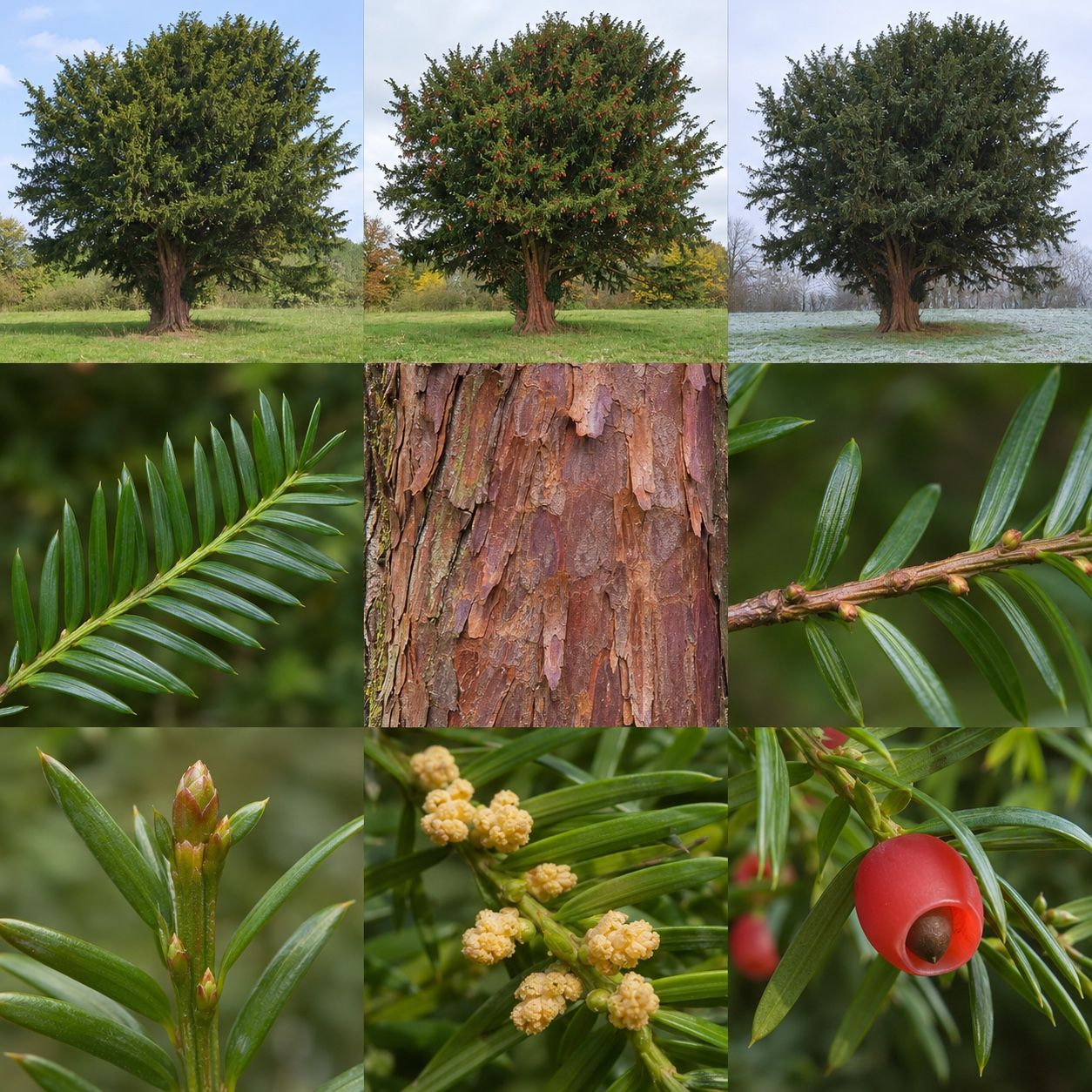
THROUGH THE YEAR
A dense dark crown, sometimes broad and low-branched.
Female trees carry red fleshy seed cups; foliage remains green.
A dark evergreen silhouette with a reddish, often fluted trunk.
Typical open-grown form. This tree keeps foliage in winter, shedding older leaves or needles gradually. Pruned, sheltered and young trees can look different.
LOOK A LITTLE CLOSER
Flat dark-green needles with pointed tips, arranged in two apparent rows along side shoots.
Reddish-brown and purplish, peeling in thin irregular flakes.
Green young shoots become brown; leaves remain attached along the sides.
Small, rounded brown-green buds at shoot tips and in leaf axils.
Small yellow pollen structures grow on male trees; female reproductive structures are tiny and green.
A single seed sits inside a fleshy red cup open at the tip; the seed is poisonous.
Typical flowering: Mar, Apr. Weather and location change timing.
Images show typical features and are not to scale. Confirm several features using the reference sources below.
CARE WITH PURPOSE
Tolerates shade and chalk but needs drainage. Avoid waterlogged roots; monitor old trees without disturbing their historic root environment.
Light trimming maintains shape. Unlike most conifers, yew can regrow from old wood, but substantial renovation should be staged and assessed.
August–September for light trimming
Highlighted months are an indicative window for the work described, not a reason to prune every year. An unshaded month is not an absolute ban.
Timing must suit the tree's health, weather, wildlife and legal protection. Avoid severe frost, drought and vulnerable new leaf growth. Mature trees, major branches and suspected defects need professional assessment.
Foliage and seeds are highly poisonous to people and animals; keep all clippings away from livestock.
Guide researched November 2026. Identification remains provisional until several features agree. UK native means native in some part of the UK, not necessarily your area.
Before work in England, check tree preservation orders, conservation-area restrictions and wildlife protection. Official tree protection guidance ↗