

Leaves & needles
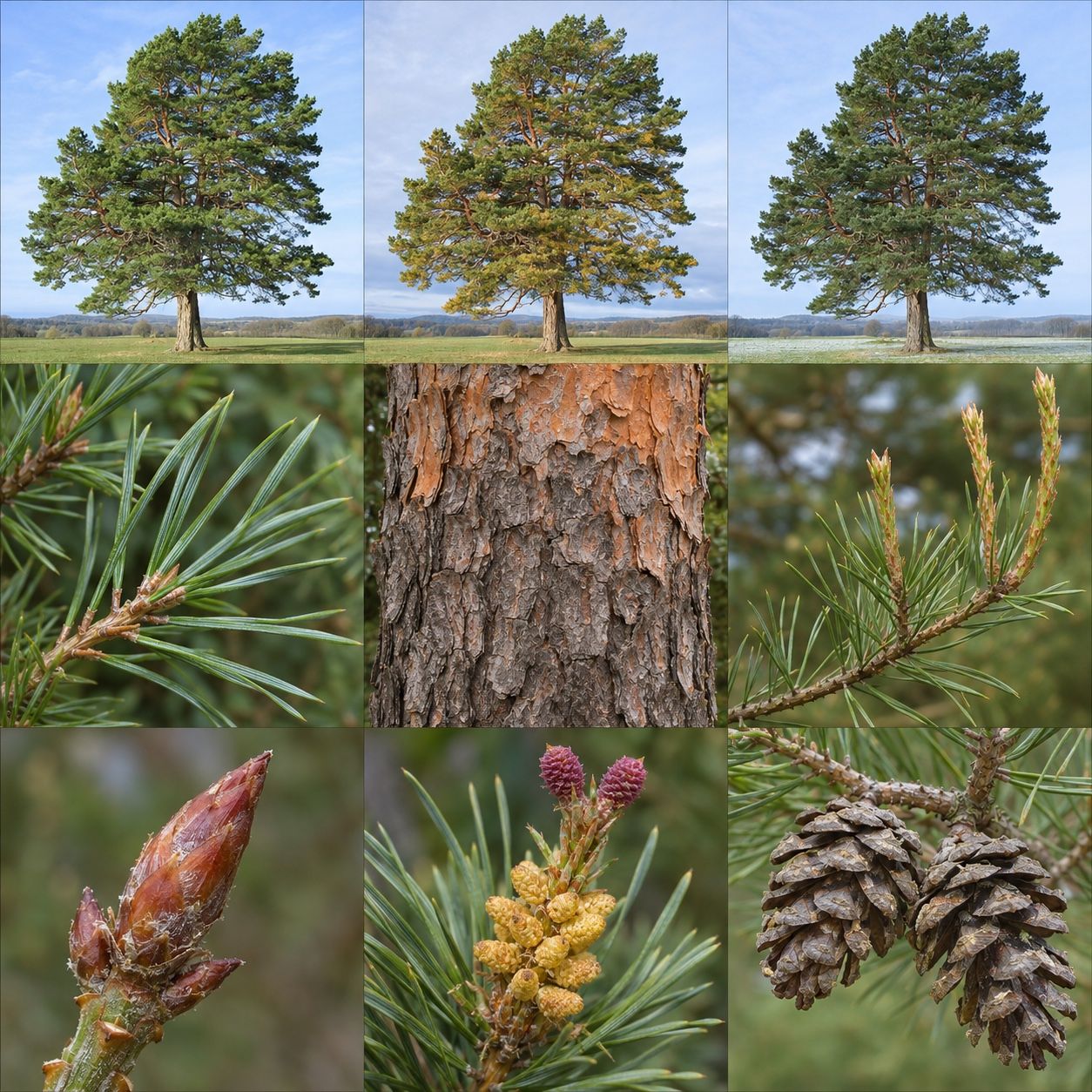
Short, slightly twisted blue-green needles grow in pairs from a shared sheath.
Pinus sylvestris
The UK’s native pine, with blue-green needles, orange upper bark and an irregular crown on mature trees.
THROUGH THE YEAR
Young trees are conical; mature trees form an open, irregular crown.
Keeps most needles; older inner needles may yellow and shed.
Evergreen crown and orange upper branches remain conspicuous.
Typical open-grown form. This tree keeps foliage in winter, shedding older leaves or needles gradually. Pruned, sheltered and young trees can look different.
LOOK A LITTLE CLOSER
Short, slightly twisted blue-green needles grow in pairs from a shared sheath.
Orange and flaky high on the trunk; darker, deeply plated bark near the base.
Green-brown, hairless shoots; new growth forms upright candles.
Pointed reddish-brown buds cluster at shoot ends; scales can show resin.
Pollen cones are yellow; small female cones are reddish-purple near new shoot tips.
Woody, grey-brown cones take about two years to mature and release winged seeds.
Typical flowering: May, Jun. Weather and location change timing.
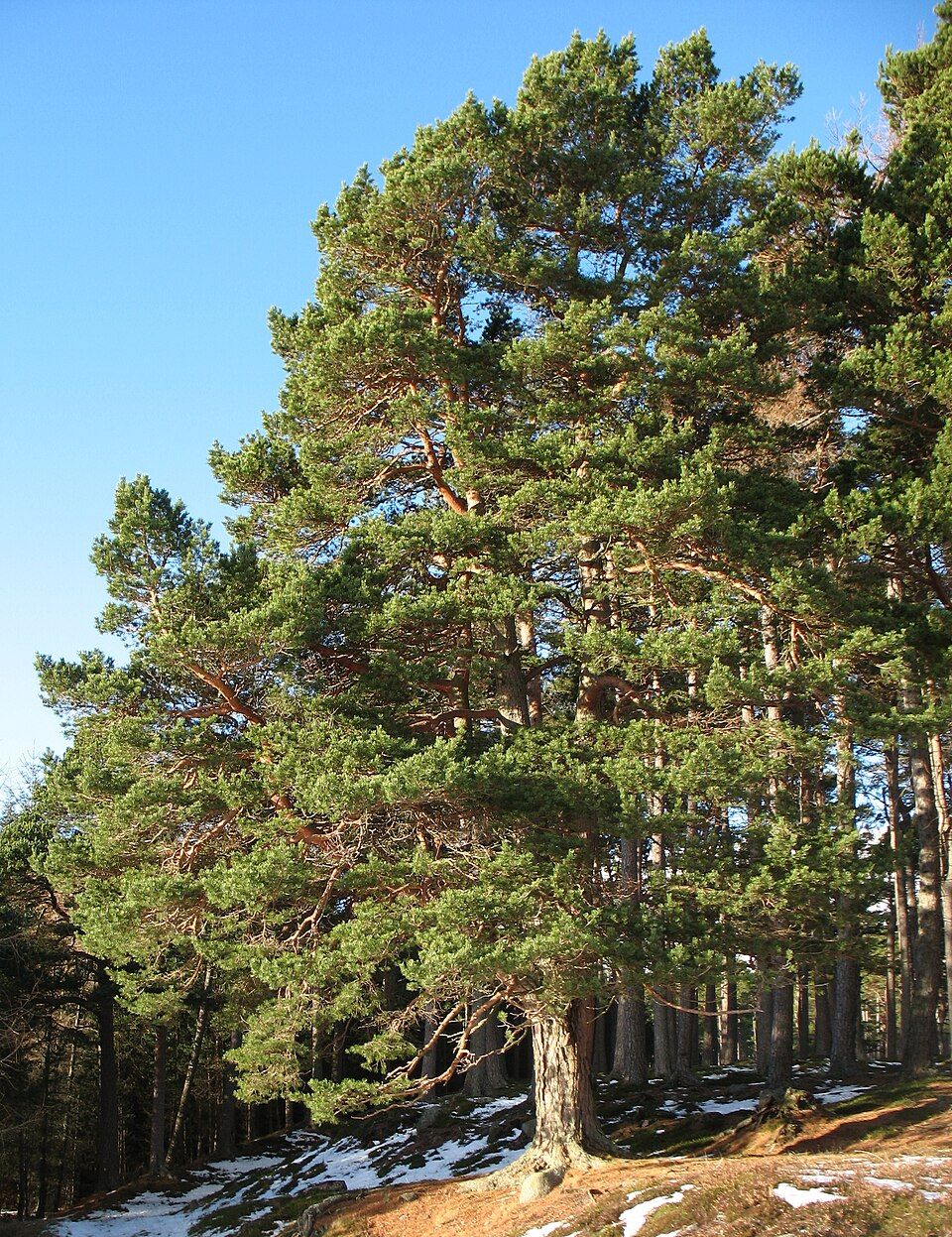
Spittal of Glenmuick, Cairngorms, Scotland, UK
Scots pine at Spittal of Glenmuick in the Cairngorms, Scotland.
Pinus sylvestris Glenmuick — Hello, I am Bruce on Flickr / Wikimedia Commons · CC BY-SA 2.0 · Original photograph ↗Images show typical features and are not to scale. Confirm several features using the reference sources below.
CARE WITH PURPOSE
Requires sun and good drainage. Avoid rich wet ground and protect the natural leader when young.
Usually leave unpruned. If needed, a specialist can manage new candles; cutting bare old wood will not reliably produce replacement shoots.
May–June for limited candle work
Highlighted months are an indicative window for the work described, not a reason to prune every year. An unshaded month is not an absolute ban.
Timing must suit the tree's health, weather, wildlife and legal protection. Avoid severe frost, drought and vulnerable new leaf growth. Mature trees, major branches and suspected defects need professional assessment.
Guide researched November 2026. Identification remains provisional until several features agree. UK native means native in some part of the UK, not necessarily your area.
Before work in England, check tree preservation orders, conservation-area restrictions and wildlife protection. Official tree protection guidance ↗