

Leaves & needles
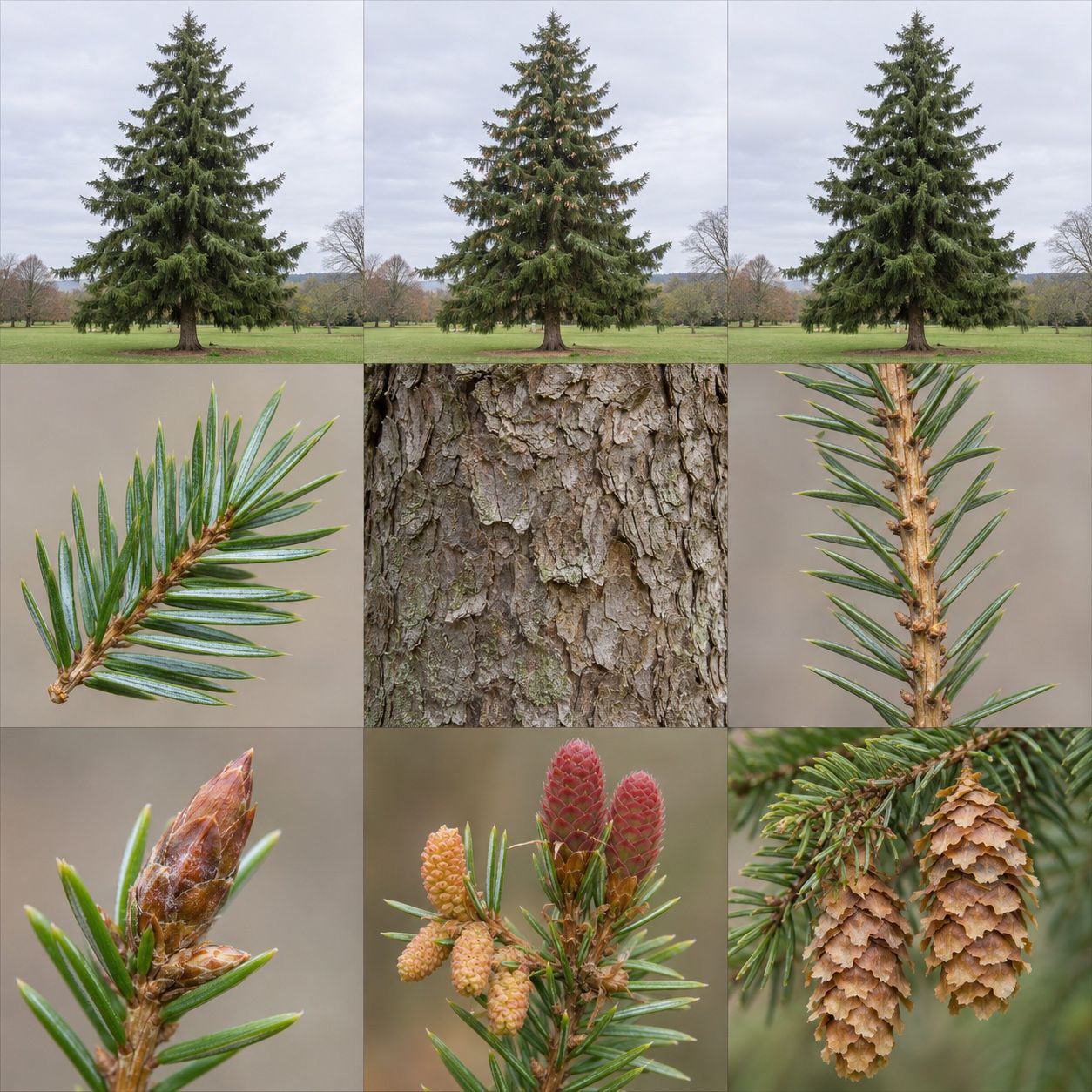
Stiff, sharply pointed, flattened needles with two pale blue-white bands beneath.
Picea sitchensis
A fast-growing forestry conifer that occasionally stands in large gardens and shelter belts.
THROUGH THE YEAR
Tall tapering crown with spreading, sometimes sweeping branches.
Evergreen; pale brown cones have thin, wavy scales.
Narrow green crown and sharp needles remain.
Typical open-grown form. This tree keeps foliage in winter, shedding older leaves or needles gradually. Pruned, sheltered and young trees can look different.
LOOK A LITTLE CLOSER
Stiff, sharply pointed, flattened needles with two pale blue-white bands beneath.
Grey-brown bark flakes into thin irregular scales.
Pale brown shoots have woody pegs beneath each needle.
Small brown, scaly buds, often pointed at shoot ends.
No true flowers: small male pollen cones and reddish upright young seed cones appear in spring.
Pale brown hanging cones have thin, papery scales with wavy or toothed edges.
Images show typical features and are not to scale. Confirm several features using the reference sources below.
CARE WITH PURPOSE
Needs substantial space and reliable soil moisture. Suits cool, wetter climates; avoid treating it as a compact ornamental conifer.
Little routine pruning. Retain the leader and arrange inspection of damaged limbs.
April–August if needed
Highlighted months are an indicative window for the work described, not a reason to prune every year. An unshaded month is not an absolute ban.
Timing must suit the tree's health, weather, wildlife and legal protection. Avoid severe frost, drought and vulnerable new leaf growth. Mature trees, major branches and suspected defects need professional assessment.
Its needles are sharp; inspect fallen foliage without gripping it tightly.
Guide researched November 2026. Identification remains provisional until several features agree. UK native means native in some part of the UK, not necessarily your area.
Before work in England, check tree preservation orders, conservation-area restrictions and wildlife protection. Official tree protection guidance ↗