

Leaves & needles
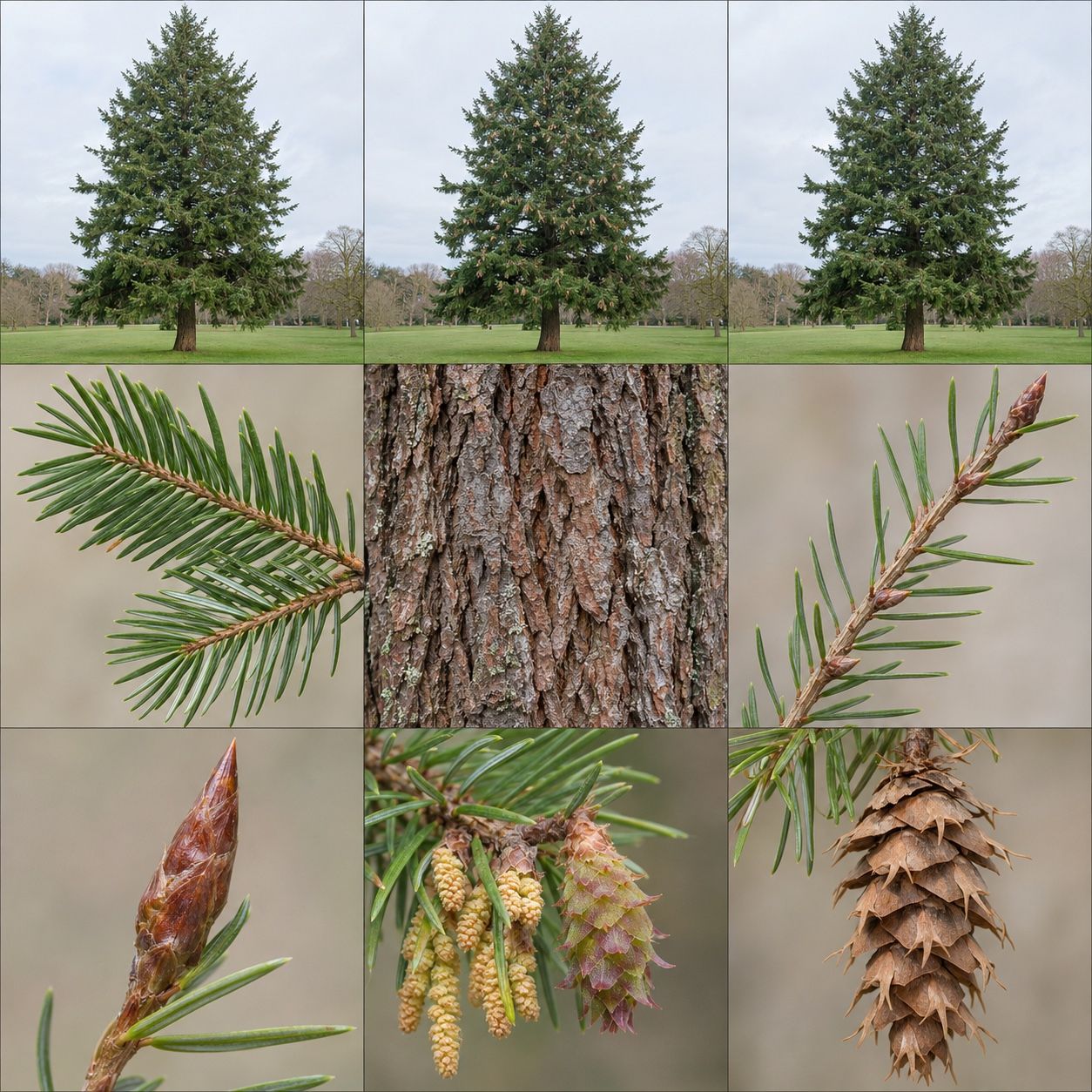
Soft, flat, single needles, green above with pale bands beneath.
Pseudotsuga menziesii
A towering evergreen with soft needles and distinctive three-pronged bracts on its cones.
THROUGH THE YEAR
Tall straight trunk and broadly conical evergreen crown.
Remains green; cones hang with three-pointed bracts protruding.
Long pointed buds and evergreen needles aid identification.
Typical open-grown form. This tree keeps foliage in winter, shedding older leaves or needles gradually. Pruned, sheltered and young trees can look different.
LOOK A LITTLE CLOSER
Soft, flat, single needles, green above with pale bands beneath.
Young bark has resin blisters; older bark becomes thick and deeply ridged.
Slender shoots lack the conspicuous woody pegs of spruce.
Long, narrow, sharply pointed reddish-brown buds, resembling small beech buds.
No true flowers: small pollen cones and green-to-red young seed cones appear in spring.
Hanging cones have distinctive three-pronged bracts projecting between the scales.
Images show typical features and are not to scale. Confirm several features using the reference sources below.
CARE WITH PURPOSE
Allow ample space in deep, moist, well-drained ground. Best away from severe exposure; protect newly planted roots from drying.
Preserve the leading shoot and natural outline. Remove damaged branches only as needed.
April–August for planned light work
Highlighted months are an indicative window for the work described, not a reason to prune every year. An unshaded month is not an absolute ban.
Timing must suit the tree's health, weather, wildlife and legal protection. Avoid severe frost, drought and vulnerable new leaf growth. Mature trees, major branches and suspected defects need professional assessment.
A woodland-sized tree may rapidly outgrow a small garden.
Guide researched November 2026. Identification remains provisional until several features agree. UK native means native in some part of the UK, not necessarily your area.
Before work in England, check tree preservation orders, conservation-area restrictions and wildlife protection. Official tree protection guidance ↗