

Leaves & needles
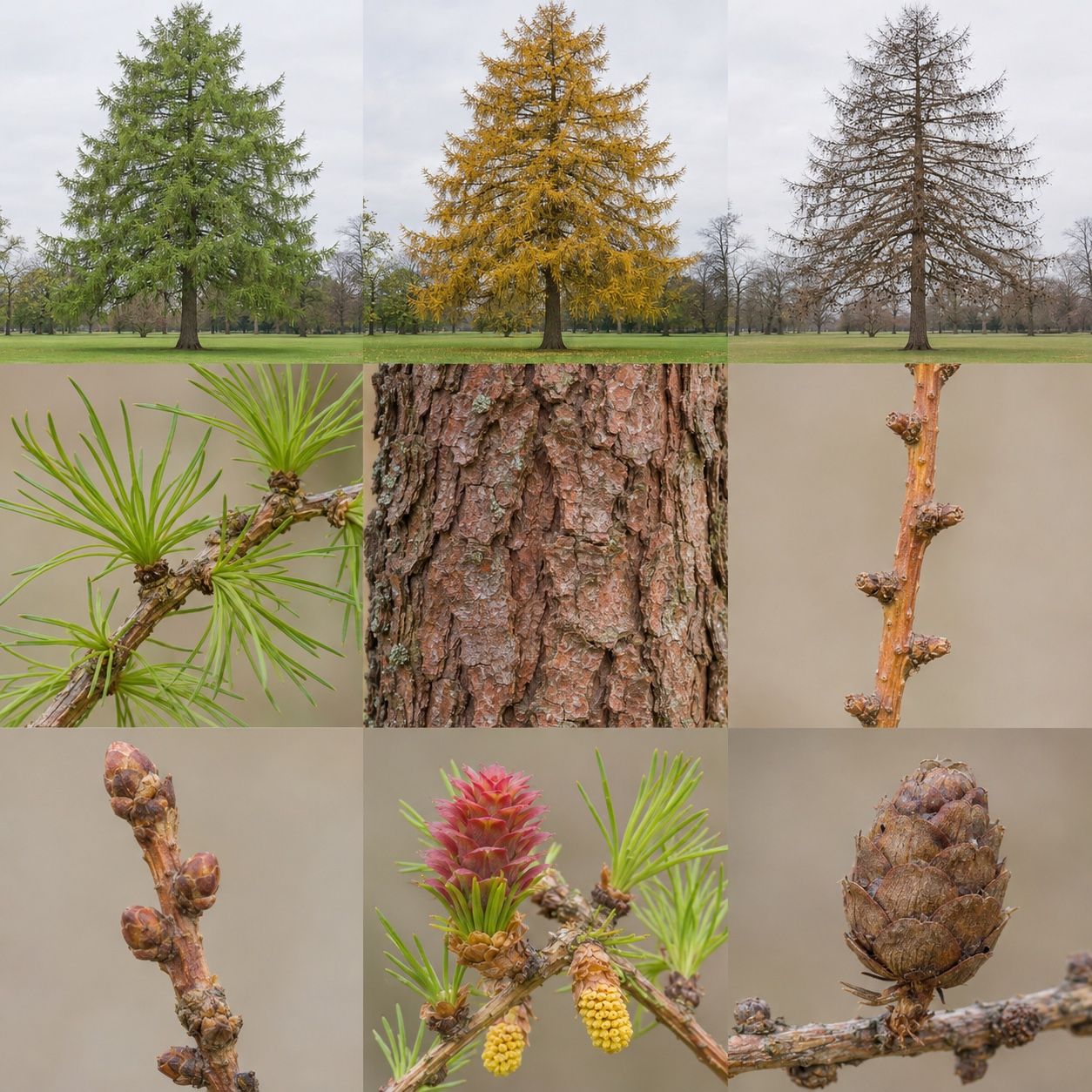
Soft green needles form tufts on short woody spurs; long shoots also carry single needles.
Larix decidua
A deciduous conifer: its soft needles turn gold and fall each autumn.
THROUGH THE YEAR
Airy conical crown with soft, bright green needles.
Golden-yellow needles fall from the tree.
Bare branches retain woody spurs and small upright cones.
Typical open-grown form. Leaf fall varies with weather and location; young or clipped trees may retain dead leaves. Pruned, sheltered and young trees can look different.
LOOK A LITTLE CLOSER
Soft green needles form tufts on short woody spurs; long shoots also carry single needles.
Pinkish-brown bark becomes thick and deeply fissured.
Hairless amber or pinkish shoots have many short knobbly spurs.
Small rounded brown buds on short shoots; tiny cones may persist alongside them.
No true flowers: small yellow pollen cones and pink-red upright young seed cones appear in spring.
Small oval cones persist after seed release; their scales are not strongly curled outwards.
Images show typical features and are not to scale. Confirm several features using the reference sources below.
CARE WITH PURPOSE
Provide sunlight, space and freely draining soil. Avoid crowding or persistent waterlogging. Check unusual shoot dieback rather than assuming all browning is seasonal.
Normally needs no pruning. Where work is necessary, retain its central leader and use small selective cuts; assess mature limbs individually.
Late winter, before new needles emerge, for necessary light pruning
Highlighted months are an indicative window for the work described, not a reason to prune every year. An unshaded month is not an absolute ban.
Timing must suit the tree's health, weather, wildlife and legal protection. Avoid severe frost, drought and vulnerable new leaf growth. Mature trees, major branches and suspected defects need professional assessment.
Larch diseases require diagnosis; avoid moving suspect foliage or timber without advice.
Guide researched November 2026. Identification remains provisional until several features agree. UK native means native in some part of the UK, not necessarily your area.
Before work in England, check tree preservation orders, conservation-area restrictions and wildlife protection. Official tree protection guidance ↗