

Leaves & needles
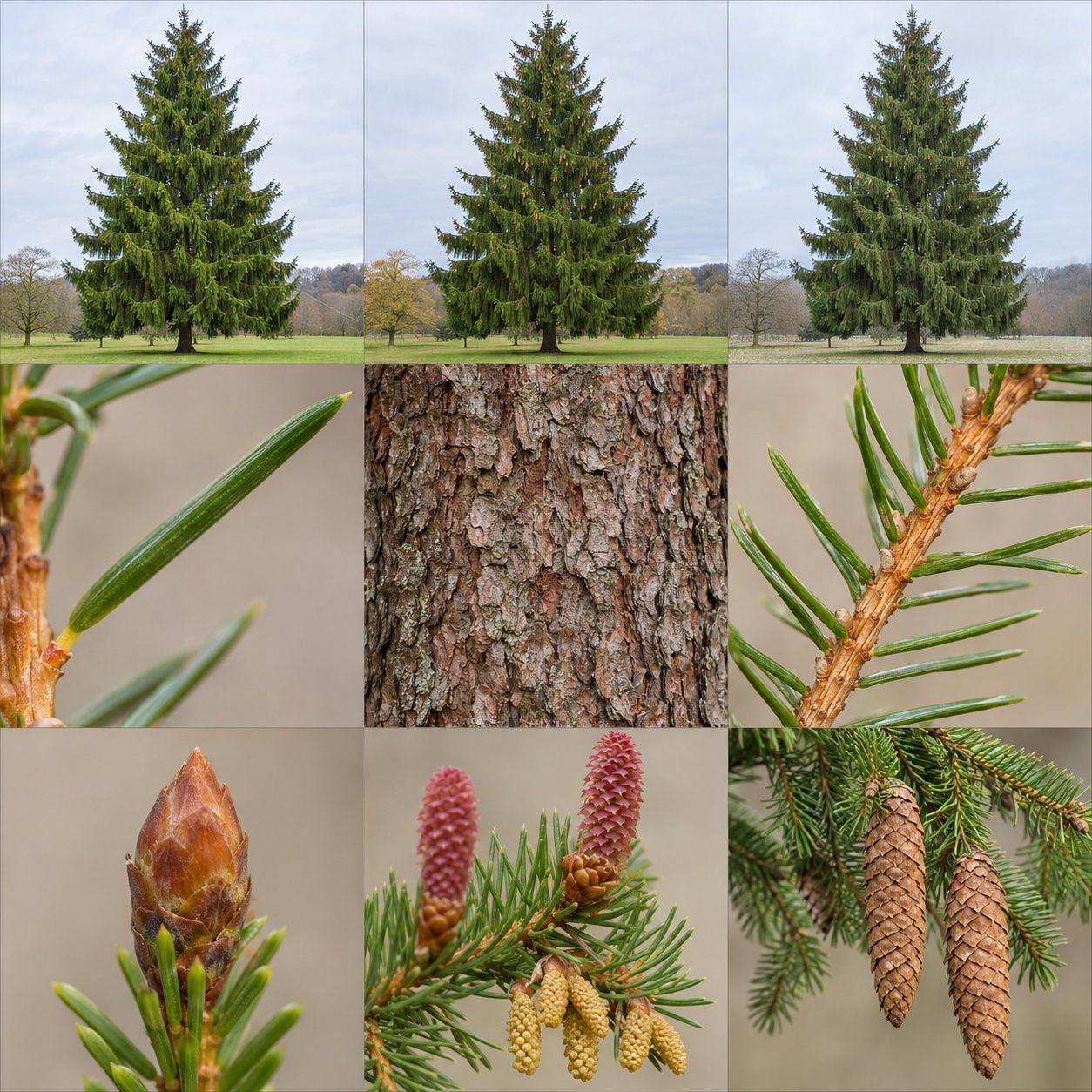
Single, pointed needles, roughly square in cross-section, carried on small woody pegs.
Picea abies
The traditional Christmas-tree species becomes a very large, tiered evergreen.
THROUGH THE YEAR
Tall cone with horizontal limbs and hanging secondary branchlets.
Remains green; long hanging cones may be visible.
Evergreen triangular outline; branchlets often hang like curtains.
Typical open-grown form. This tree keeps foliage in winter, shedding older leaves or needles gradually. Pruned, sheltered and young trees can look different.
LOOK A LITTLE CLOSER
Single, pointed needles, roughly square in cross-section, carried on small woody pegs.
Coppery grey-brown when young; later dark, cracked and scaly.
Orange-brown, hairless twigs remain rough after needles fall.
Brown, scaly, conical buds at shoot tips.
No true flowers: male pollen cones are small; young female cones often start upright and reddish.
Long brown cones hang down, with overlapping scales; winged seeds are released as cones open.
Images show typical features and are not to scale. Confirm several features using the reference sources below.
CARE WITH PURPOSE
Choose a spacious site with moist but drained soil. Heat, drought and cramped root zones can make a former Christmas tree struggle.
Usually leave specimen trees unpruned. Keep the leader; assess damaged branches individually.
April–August if necessary
Highlighted months are an indicative window for the work described, not a reason to prune every year. An unshaded month is not an absolute ban.
Timing must suit the tree's health, weather, wildlife and legal protection. Avoid severe frost, drought and vulnerable new leaf growth. Mature trees, major branches and suspected defects need professional assessment.
Bare old wood generally will not refill with foliage.
Guide researched November 2026. Identification remains provisional until several features agree. UK native means native in some part of the UK, not necessarily your area.
Before work in England, check tree preservation orders, conservation-area restrictions and wildlife protection. Official tree protection guidance ↗