
Leaves & needles
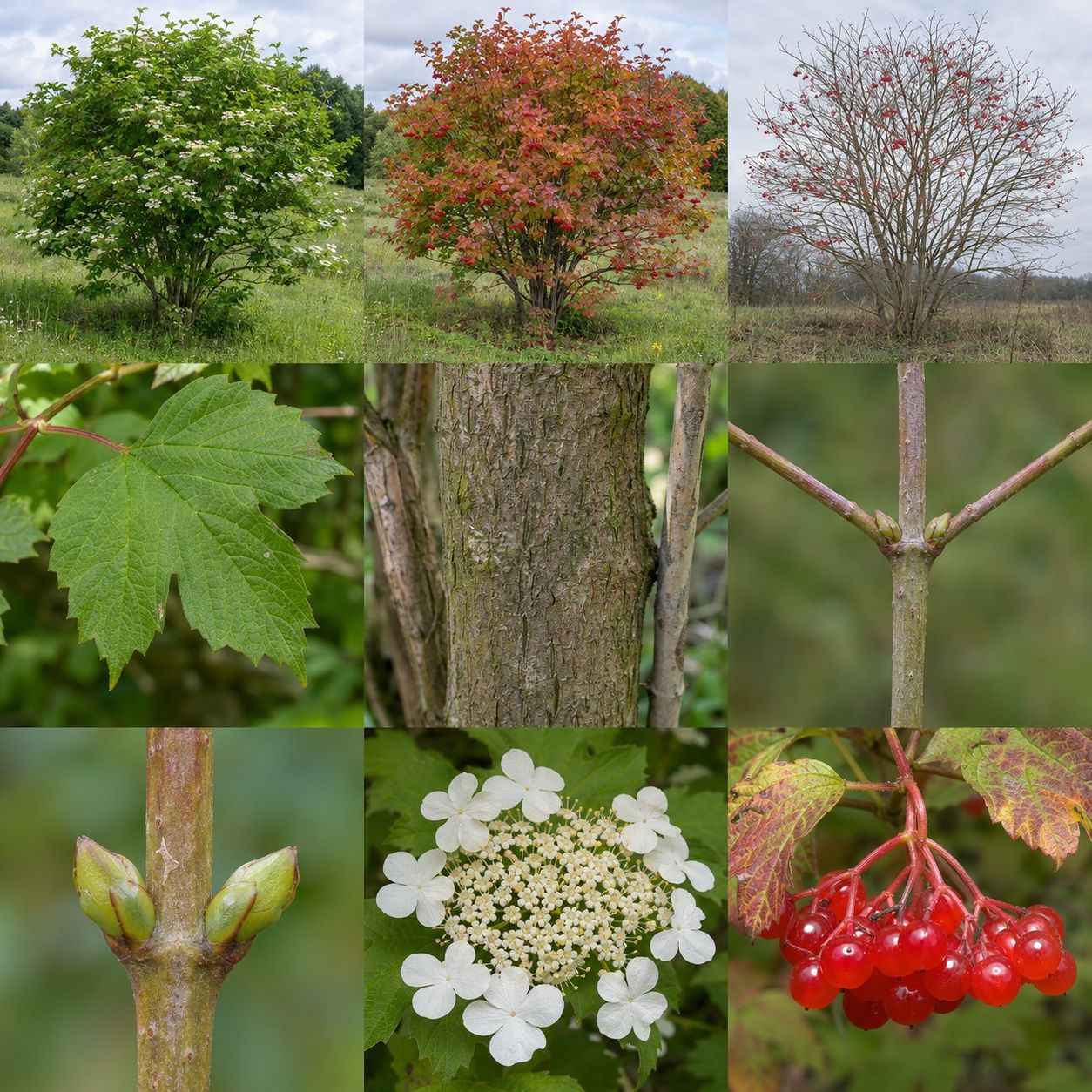
Opposite leaves with three toothed lobes; the stalk has a groove and small glands near the blade.
Viburnum opulus
A native spreading shrub with maple-like leaves, flat white flower heads and translucent red berries.
THROUGH THE YEAR
A spreading leafy shrub with white flower heads and developing fruit.
Leaves turn orange-red beside bunches of bright red berries.
Open, opposite branching; berries may remain into winter.
Typical open-grown form. Leaf fall varies with weather and location; young or clipped trees may retain dead leaves. Pruned, sheltered and young trees can look different.
LOOK A LITTLE CLOSER
Opposite leaves with three toothed lobes; the stalk has a groove and small glands near the blade.
Smooth grey-brown on young stems, roughening slightly with age.
Smooth, greyish shoots with opposite branching and no thorns.
Green, hairless buds in opposite pairs, with two scales and held close to the shoot.
Flat clusters have small fertile flowers surrounded by larger, showy sterile flowers.
Bunches of translucent red berries hang below the leaves; each fruit contains a flattened stone.
Typical flowering: May, Jun, Jul. Weather and location change timing.
Images show typical features and are not to scale. Confirm several features using the reference sources below.
CARE WITH PURPOSE
Best in reliably moist, fertile ground, including neutral and chalky soils. Avoid a dry, exposed corner where foliage may scorch.
Usually leave unpruned. Light shaping after flowering is possible, but removes potential berries; thin only selected stems when needed.
June–July, after flowering if necessary
Highlighted months are an indicative window for the work described, not a reason to prune every year. An unshaded month is not an absolute ban.
Timing must suit the tree's health, weather, wildlife and legal protection. Avoid severe frost, drought and vulnerable new leaf growth. Mature trees, major branches and suspected defects need professional assessment.
Guide researched November 2026. Identification remains provisional until several features agree. UK native means native in some part of the UK, not necessarily your area.
Before work in England, check tree preservation orders, conservation-area restrictions and wildlife protection. Official tree protection guidance ↗