

Leaves & needles
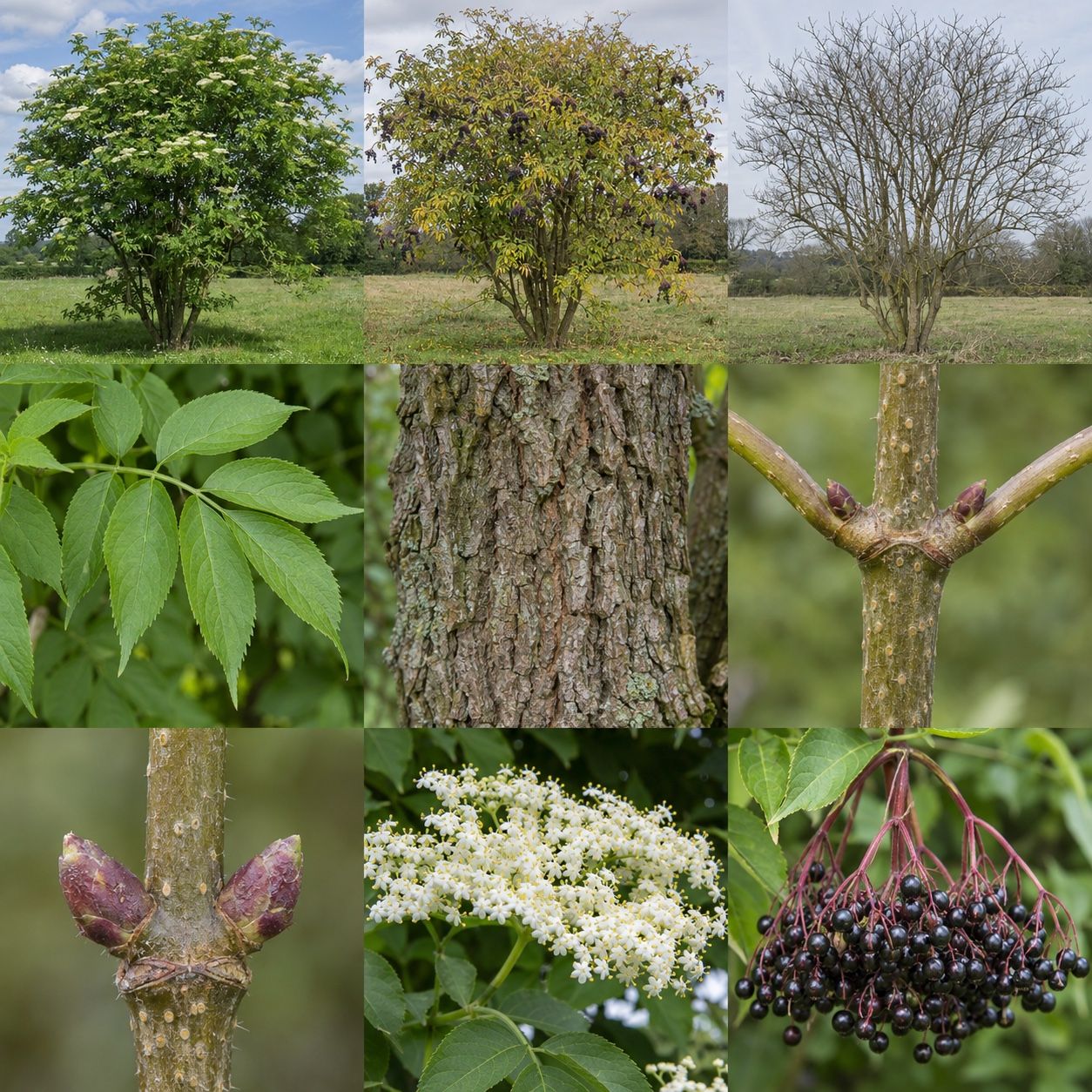
Usually five to seven toothed leaflets; whole leaves grow in opposite pairs and smell strong when bruised.
Sambucus nigra
A familiar native shrub or small tree with broad white flower heads and hanging clusters of dark berries.
THROUGH THE YEAR
A broad, loose crown with flat creamy flower heads, then developing berries.
Purple-black fruit hangs in clusters as the leaves fade.
Few, coarse branches with opposite buds and corky bark.
Typical open-grown form. Leaf fall varies with weather and location; young or clipped trees may retain dead leaves. Pruned, sheltered and young trees can look different.
LOOK A LITTLE CLOSER
Usually five to seven toothed leaflets; whole leaves grow in opposite pairs and smell strong when bruised.
Corky grey-brown bark with deep, irregular furrows on older stems.
Stout, opposite-branching shoots with conspicuous pale lenticels and a soft white pith.
Purple-brown buds in opposite pairs, sometimes beginning to open during mild winter weather.
Broad, flat clusters of tiny creamy-white flowers have a strong sweet scent.
Small purple-black berries ripen in drooping bunches on reddish stalks.
Typical flowering: May, Jun, Jul. Weather and location change timing.
Images show typical features and are not to scale. Confirm several features using the reference sources below.
CARE WITH PURPOSE
Adaptable in sun or partial shade, especially on fertile ground. Allow room for a vigorous, spreading shrub.
Remove selected older stems to renew congested growth. Hard cutting sacrifices flowers and berries, so retain enough mature stems for wildlife.
February–March before vigorous growth
Highlighted months are an indicative window for the work described, not a reason to prune every year. An unshaded month is not an absolute ban.
Timing must suit the tree's health, weather, wildlife and legal protection. Avoid severe frost, drought and vulnerable new leaf growth. Mature trees, major branches and suspected defects need professional assessment.
Identification guidance is not an edible-plant guide; avoid eating raw or unidentified plant parts.
Guide researched November 2026. Identification remains provisional until several features agree. UK native means native in some part of the UK, not necessarily your area.
Before work in England, check tree preservation orders, conservation-area restrictions and wildlife protection. Official tree protection guidance ↗