

Leaves & needles
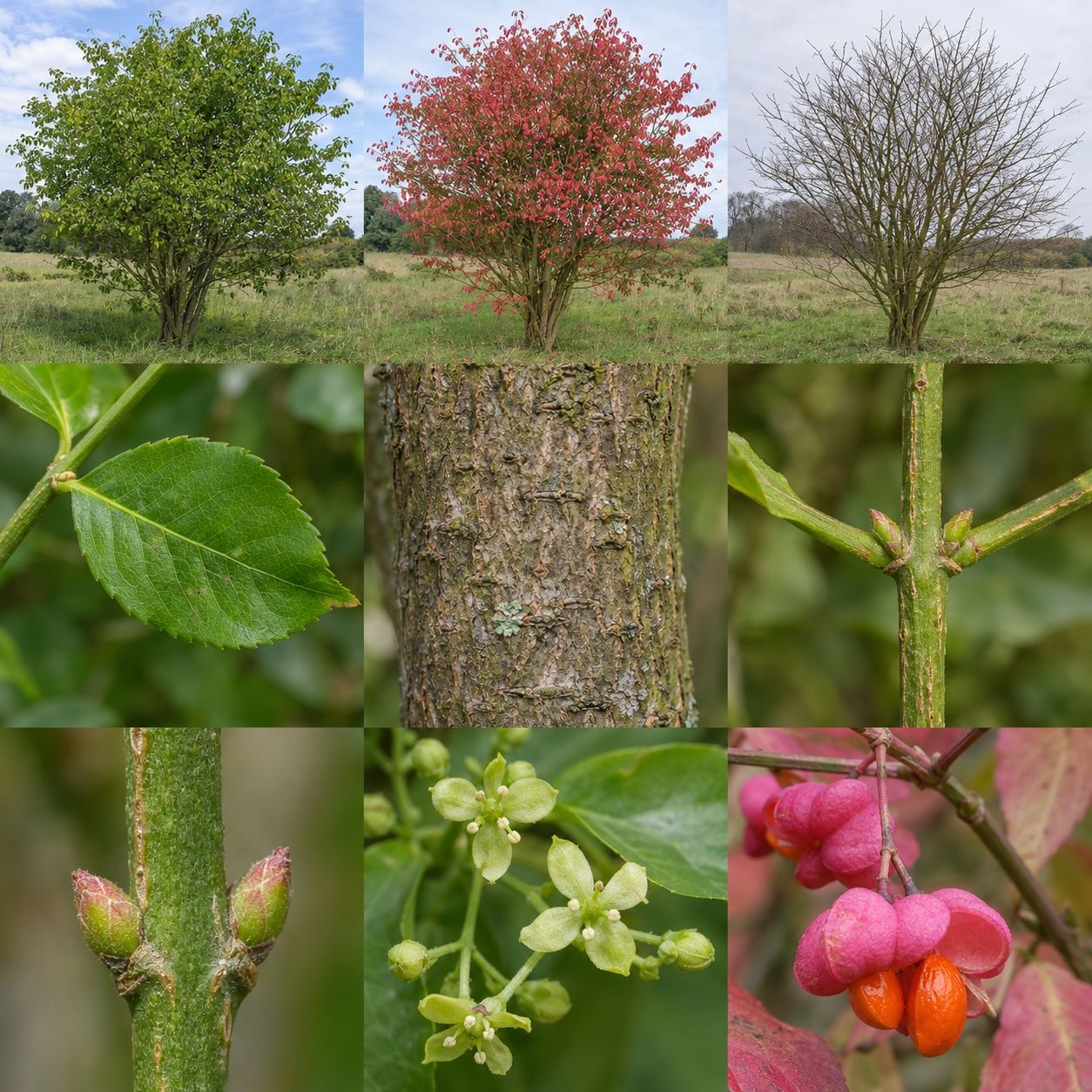
Opposite oval leaves, finely toothed, with pointed tips and a slightly glossy surface.
Euonymus europaeus
A native small tree or shrub, instantly recognisable in autumn by pink capsules revealing bright orange seeds.
THROUGH THE YEAR
An upright, lightly spreading shrub with small opposite leaves.
Leaves redden around vivid pink fruits with orange seed coverings.
Green angular twigs remain; some opened pink capsules persist.
Typical open-grown form. Leaf fall varies with weather and location; young or clipped trees may retain dead leaves. Pruned, sheltered and young trees can look different.
LOOK A LITTLE CLOSER
Opposite oval leaves, finely toothed, with pointed tips and a slightly glossy surface.
Green on young stems, later grey-brown with corky markings.
Green, angular shoots, sometimes with corky ridges.
Small green buds in opposite pairs, held closely against the angular twig.
Small greenish-white flowers with four petals occur in loose clusters.
Vivid pink capsules split to reveal seeds coated in bright orange; all are poisonous.
Typical flowering: May, Jun. Weather and location change timing.
Images show typical features and are not to scale. Confirm several features using the reference sources below.
CARE WITH PURPOSE
Thrives on well-drained soil, especially chalk or limestone. Give sun for stronger autumn colour and water young plants in dry spells.
Needs little regular work. Remove selected crossing stems and preserve the open framework that carries its autumn fruit.
November–February for light shaping
Highlighted months are an indicative window for the work described, not a reason to prune every year. An unshaded month is not an absolute ban.
Timing must suit the tree's health, weather, wildlife and legal protection. Avoid severe frost, drought and vulnerable new leaf growth. Mature trees, major branches and suspected defects need professional assessment.
The attractive fruits and seeds are poisonous; keep them away from children and pets.
Guide researched November 2026. Identification remains provisional until several features agree. UK native means native in some part of the UK, not necessarily your area.
Before work in England, check tree preservation orders, conservation-area restrictions and wildlife protection. Official tree protection guidance ↗