

Leaves & needles
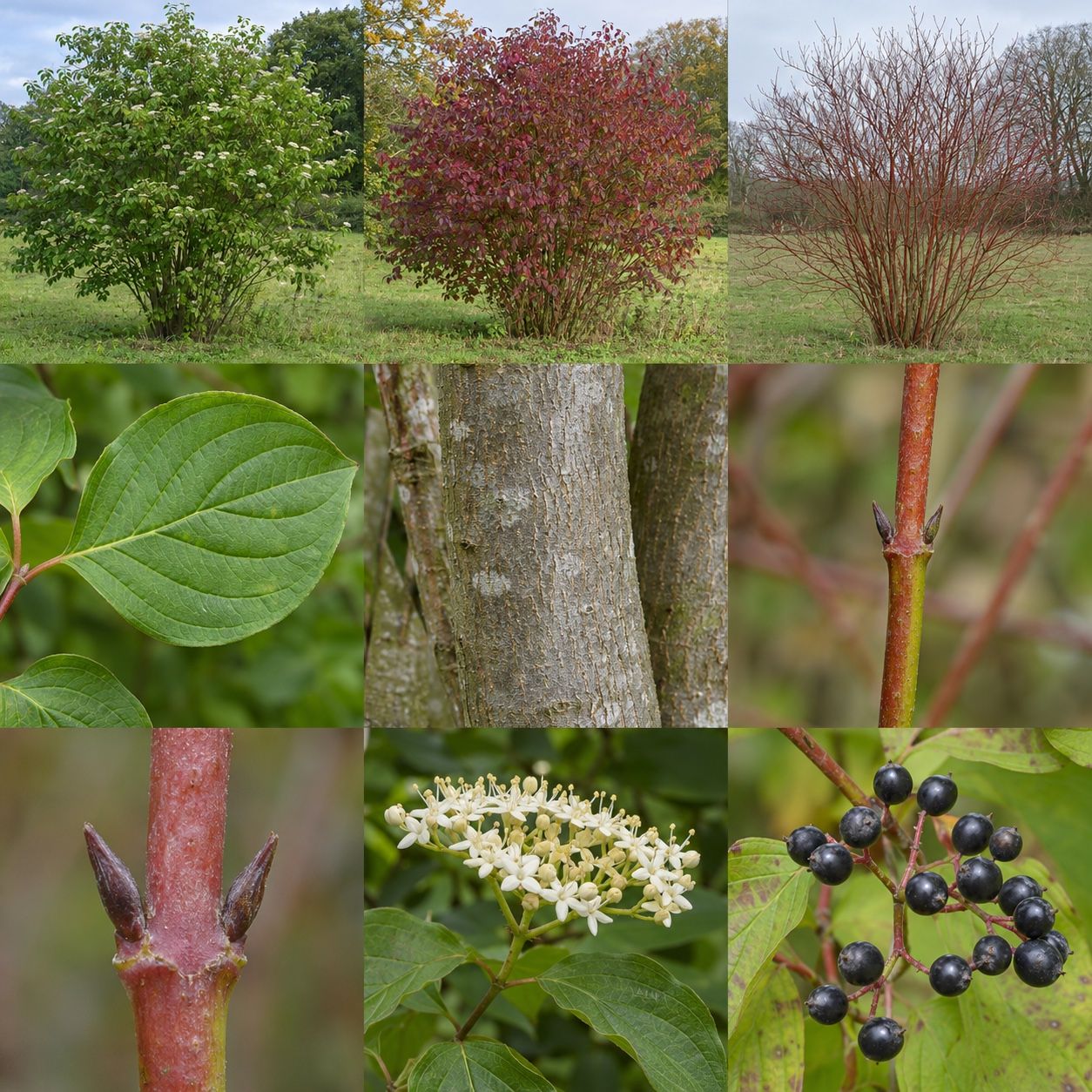
Opposite oval leaves with smooth edges and veins curving towards the tip.
Cornus sanguinea
A native shrub, occasionally a small tree, with curved leaf veins and reddish young stems in winter.
THROUGH THE YEAR
A spreading shrub with small cream flower clusters and dark berries.
Leaves turn crimson before revealing the coloured stems.
Young red shoots provide the clearest seasonal clue.
Typical open-grown form. Leaf fall varies with weather and location; young or clipped trees may retain dead leaves. Pruned, sheltered and young trees can look different.
LOOK A LITTLE CLOSER
Opposite oval leaves with smooth edges and veins curving towards the tip.
Smooth grey bark, developing shallow ridges on older stems.
Slender, smooth shoots, red on the sunny side and greener in shade.
Small, narrow dark buds in opposite pairs, appearing almost bristle-like.
Small creamy-white, four-petalled flowers form flat-topped clusters.
Small black berry-like fruits form in clusters, each containing a stone.
Typical flowering: May, Jun. Weather and location change timing.
Images show typical features and are not to scale. Confirm several features using the reference sources below.
CARE WITH PURPOSE
Adaptable, including to damp and lime-rich soils. Sun produces stronger stem colour; keep newly planted shrubs watered.
For winter stem colour, renew selected older stems in early spring. Frequent hard renewal reduces flowering and berries; natural shrubs need less work.
March–April for stem renewal
Highlighted months are an indicative window for the work described, not a reason to prune every year. An unshaded month is not an absolute ban.
Timing must suit the tree's health, weather, wildlife and legal protection. Avoid severe frost, drought and vulnerable new leaf growth. Mature trees, major branches and suspected defects need professional assessment.
Guide researched November 2026. Identification remains provisional until several features agree. UK native means native in some part of the UK, not necessarily your area.
Before work in England, check tree preservation orders, conservation-area restrictions and wildlife protection. Official tree protection guidance ↗