

Leaves & needles
Small, oval, glossy leaves with smooth edges, usually 1–2.5 cm long, arranged in opposite pairs.
Buxus sempervirens
A slow-growing native evergreen, most familiar as clipped hedging but capable of becoming a small tree.
THROUGH THE YEAR
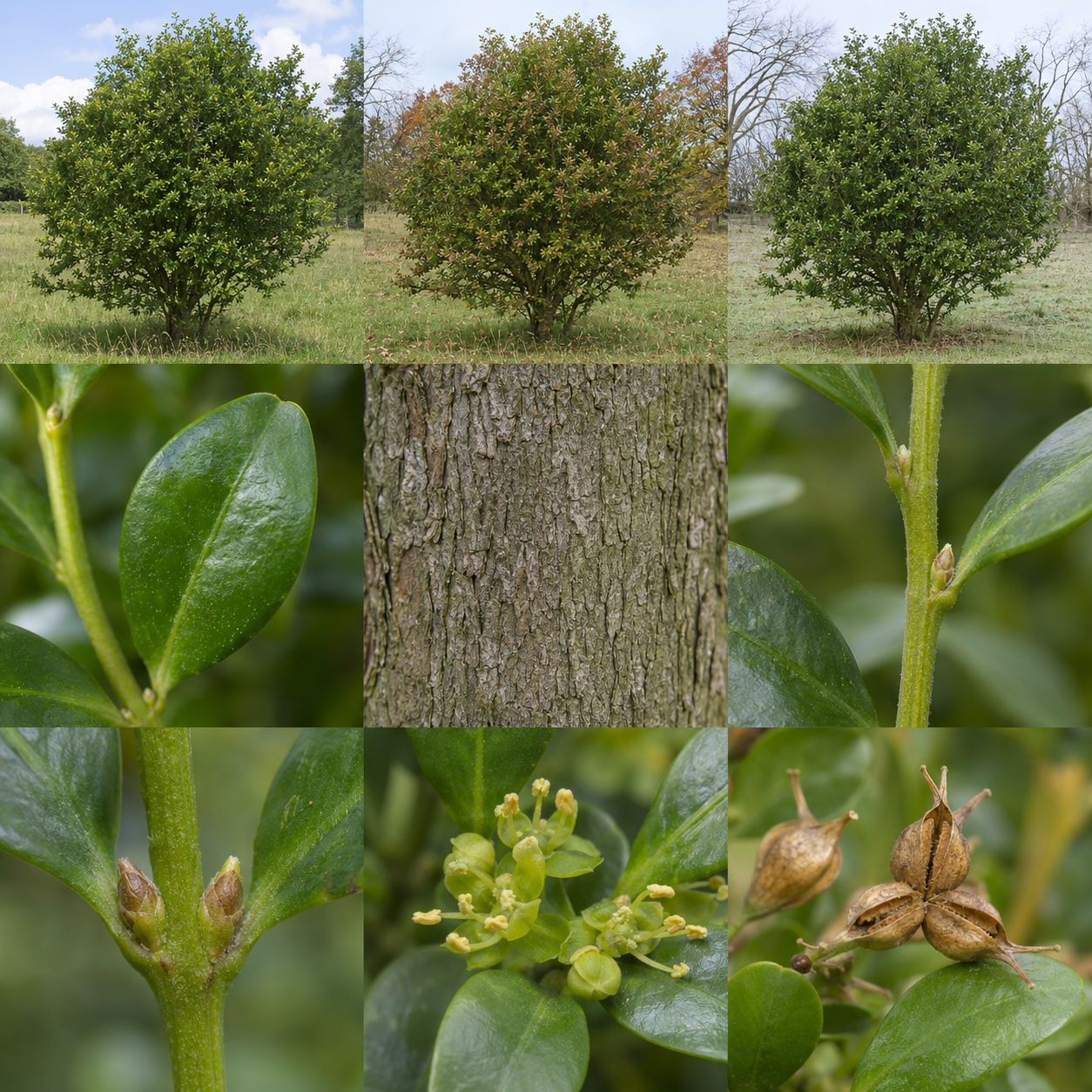
A dense, compact evergreen shrub or small rounded tree.
Usually stays green; some leaves may bronze in cold or exposed conditions.
A dense outline of small opposite evergreen leaves.
Typical open-grown form. This tree keeps foliage in winter, shedding older leaves or needles gradually. Pruned, sheltered and young trees can look different.
LOOK A LITTLE CLOSER
Small, oval, glossy leaves with smooth edges, usually 1–2.5 cm long, arranged in opposite pairs.
Pale grey, smooth when young and finely fissured with age.
Green young shoots, often finely hairy; branches become densely interwoven.
Tiny pointed green-brown buds in opposite pairs among the evergreen leaves.
Tiny greenish-yellow flowers sit in leaf axils, with little visual show.
Small green capsules become dry, brown, three-horned seed cases.
Typical flowering: Mar, Apr, May. Weather and location change timing.
Images show typical features and are not to scale. Confirm several features using the reference sources below.
CARE WITH PURPOSE
Needs drainage and air movement. Water at the roots, avoid prolonged wet foliage and monitor for box blight and box-tree caterpillars.
Trim lightly during the growing season, in dry, mild weather. Clean tools and remove diseased material; avoid clipping stressed plants.
May–August for light trimming
Highlighted months are an indicative window for the work described, not a reason to prune every year. An unshaded month is not an absolute ban.
Timing must suit the tree's health, weather, wildlife and legal protection. Avoid severe frost, drought and vulnerable new leaf growth. Mature trees, major branches and suspected defects need professional assessment.
All parts are poisonous; inspect regularly for blight and caterpillar damage.
Guide researched November 2026. Identification remains provisional until several features agree. UK native means native in some part of the UK, not necessarily your area.
Before work in England, check tree preservation orders, conservation-area restrictions and wildlife protection. Official tree protection guidance ↗