

Leaves & needles
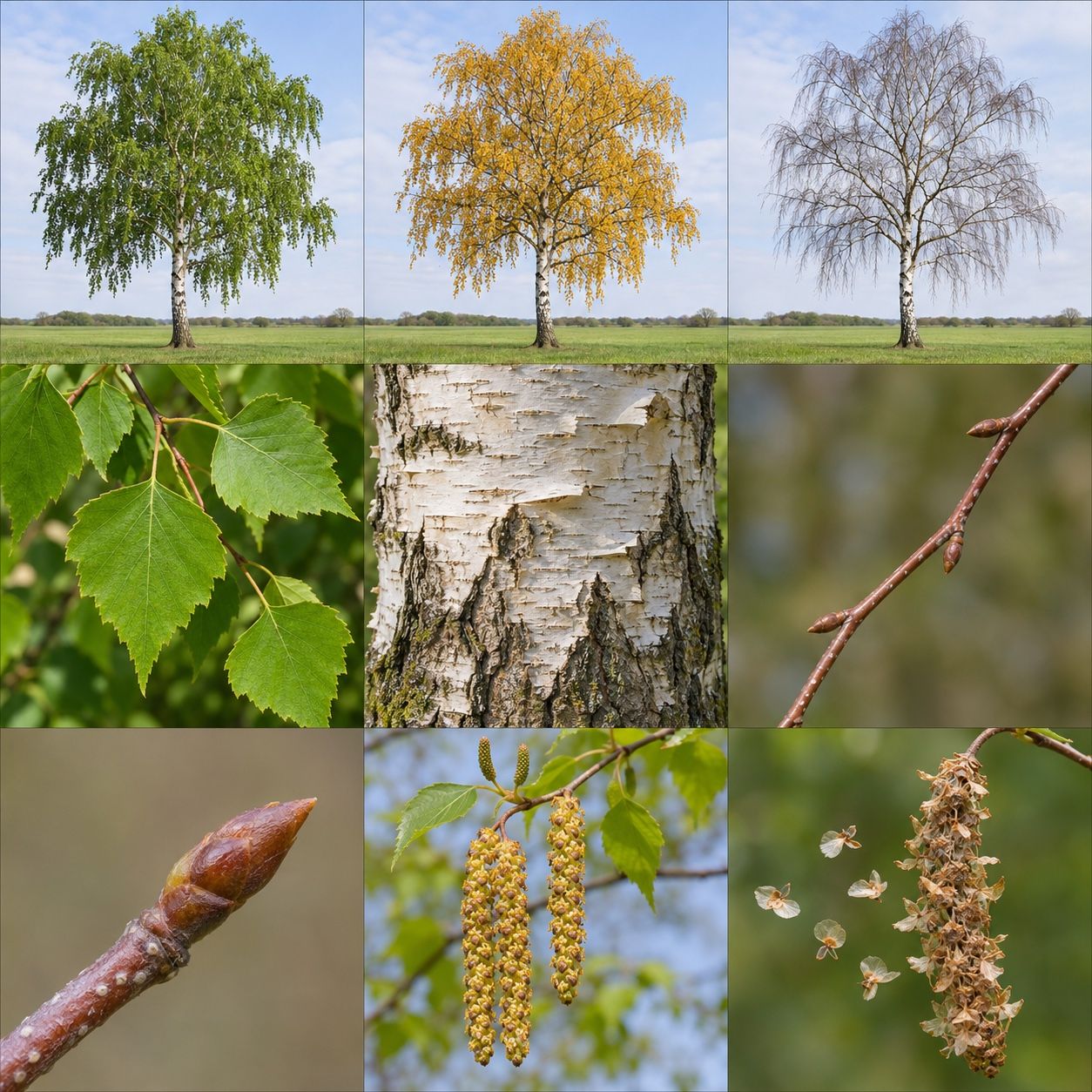
Triangular to diamond-shaped with a pointed tip and double-toothed edges; mostly hairless.
Betula pendula
A light, airy native tree, recognised by white bark, triangular leaves and elegantly hanging fine twigs.
THROUGH THE YEAR
An airy crown, with foliage hanging from slender arching branches.
Fine foliage turns clear yellow, briefly lighting the open canopy.
White trunk and drooping outer twigs remain striking.
Typical open-grown form. Leaf fall varies with weather and location; young or clipped trees may retain dead leaves. Pruned, sheltered and young trees can look different.
LOOK A LITTLE CLOSER
Triangular to diamond-shaped with a pointed tip and double-toothed edges; mostly hairless.
Papery silver-white above, with dark diamond-shaped cracks developing near the base.
Fine, hairless and often pendulous; small pale wart-like dots on young shoots.
Small, pointed brown buds arranged alternately along the slender twig.
Hanging yellow-brown male catkins; smaller female catkins are initially upright.
Small winged seeds shed as the cylindrical fruiting catkins break apart.
Typical flowering: Apr, May. Weather and location change timing.
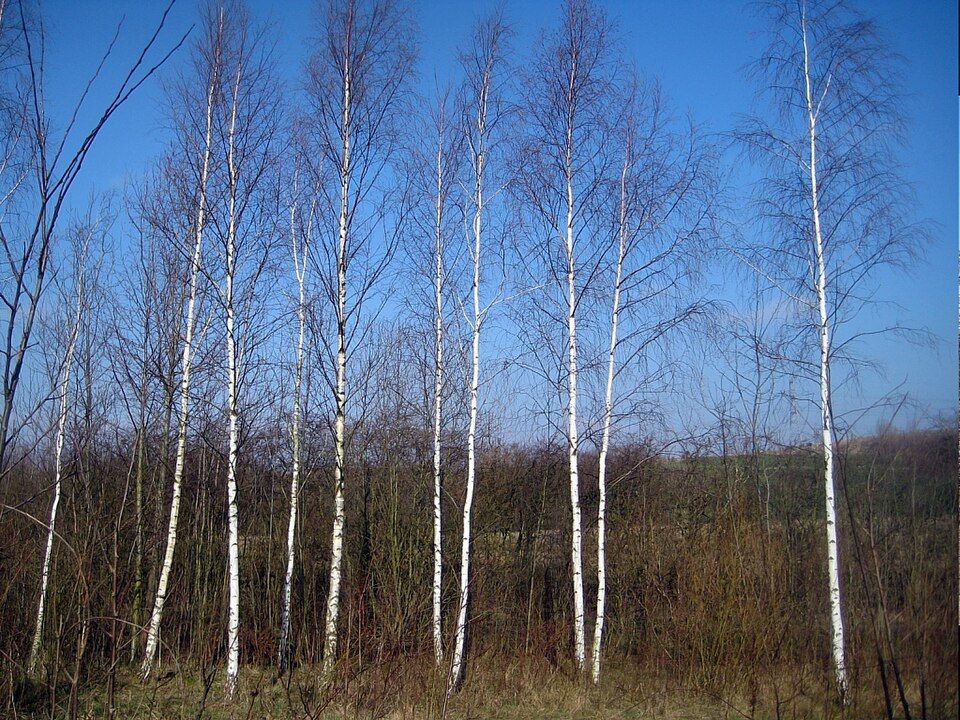
Lofthouse Colliery Nature Park, Lofthouse Gate, Wakefield, West Yorkshire, England, United Kingdom
Silver birch trunks and fine bare branches at Lofthouse Colliery Nature Park.
Silver birch, Betula pendula — Mike Kirby / Geograph, via Wikimedia Commons · CC BY-SA 2.0 · Original photograph ↗Images show typical features and are not to scale. Confirm several features using the reference sources below.
CARE WITH PURPOSE
Provide sun and avoid waterlogged soil. Mulch the root area and water young trees during dry spells; birch roots dislike disturbance.
Usually best left alone. Remove only necessary small branches; heavy reduction spoils the form and creates decay-prone wounds.
October–December, only if needed
Highlighted months are an indicative window for the work described, not a reason to prune every year. An unshaded month is not an absolute ban.
Timing must suit the tree's health, weather, wildlife and legal protection. Avoid severe frost, drought and vulnerable new leaf growth. Mature trees, major branches and suspected defects need professional assessment.
Avoid late-winter and spring pruning because sap may bleed heavily.
Guide researched November 2026. Identification remains provisional until several features agree. UK native means native in some part of the UK, not necessarily your area.
Before work in England, check tree preservation orders, conservation-area restrictions and wildlife protection. Official tree protection guidance ↗