

Leaves & needles
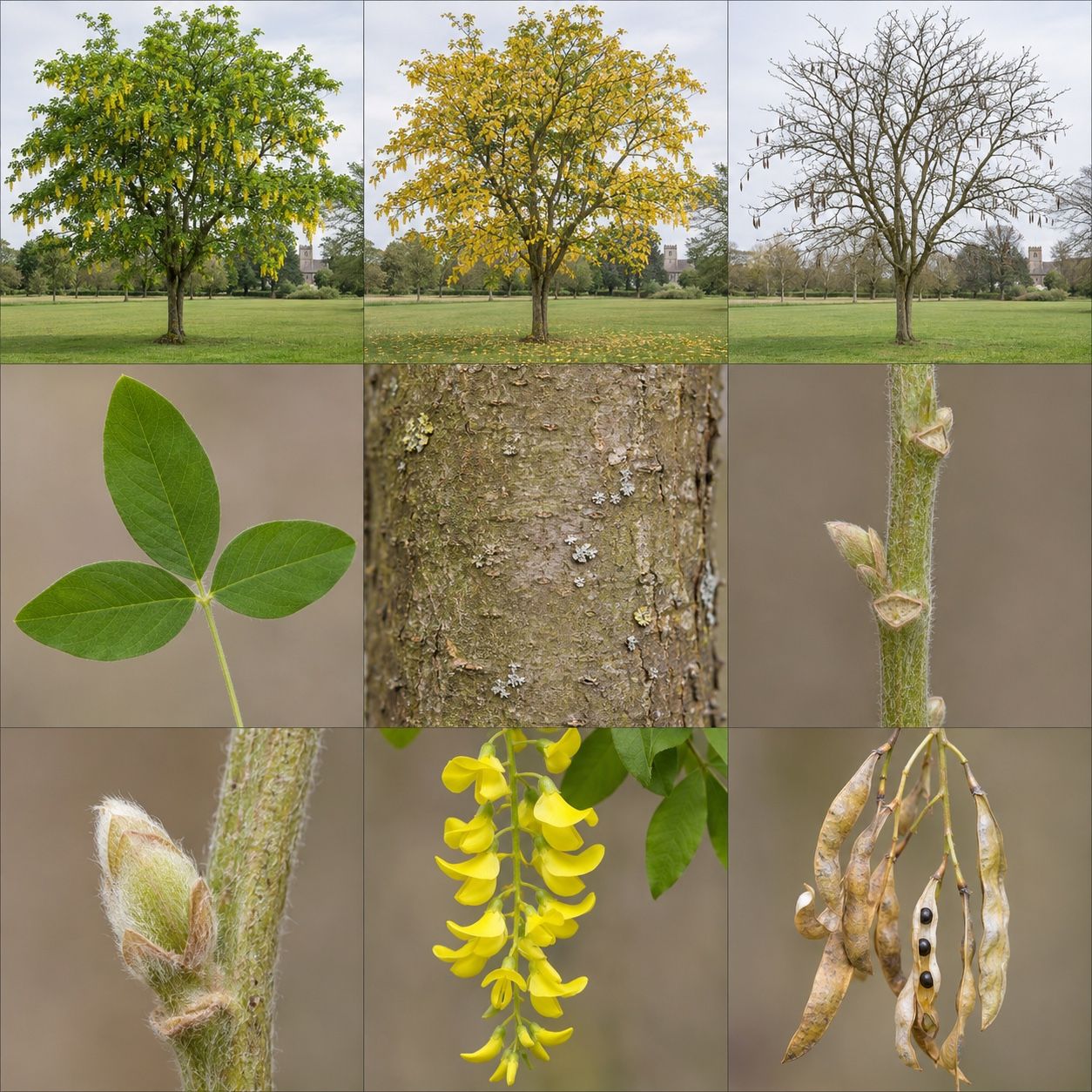
Three oval, smooth-edged leaflets join at the end of each stalk; the undersides are softly hairy.
Laburnum anagyroides
A small tree with hanging golden flower chains. Many garden laburnums are related hybrids rather than this species.
THROUGH THE YEAR
Airy spreading crown; golden flower chains give way to dangling pods.
Three-part leaves turn yellow before dropping.
Open branching and slender hanging pods may remain.
Typical open-grown form. Leaf fall varies with weather and location; young or clipped trees may retain dead leaves. Pruned, sheltered and young trees can look different.
LOOK A LITTLE CLOSER
Three oval, smooth-edged leaflets join at the end of each stalk; the undersides are softly hairy.
Thin, relatively smooth bark, greenish-brown becoming light brown-grey.
Young green to grey-green shoots carry fine hairs; buds alternate.
Small alternate buds are partly obscured by pale, silky hairs.
Long hanging clusters of golden-yellow pea-shaped flowers in late spring and early summer.
Slender seed pods hang after flowering, turning brown and splitting to release seeds.
Images show typical features and are not to scale. Confirm several features using the reference sources below.
CARE WITH PURPOSE
Choose sun and well-drained soil. Leave room for its spreading branches; avoid persistently wet roots. Keep clippings and fallen pods away from children and pets.
Usually needs very little pruning. Remove selected small damaged or crossing shoots, preserving natural shape; avoid heavy reductions and large wounds.
Late summer, usually August–September
Highlighted months are an indicative window for the work described, not a reason to prune every year. An unshaded month is not an absolute ban.
Timing must suit the tree's health, weather, wildlife and legal protection. Avoid severe frost, drought and vulnerable new leaf growth. Mature trees, major branches and suspected defects need professional assessment.
All parts are poisonous if eaten, especially seeds. Wear gloves when handling.
Guide researched November 2026. Identification remains provisional until several features agree. UK native means native in some part of the UK, not necessarily your area.
Before work in England, check tree preservation orders, conservation-area restrictions and wildlife protection. Official tree protection guidance ↗