

Leaves & needles
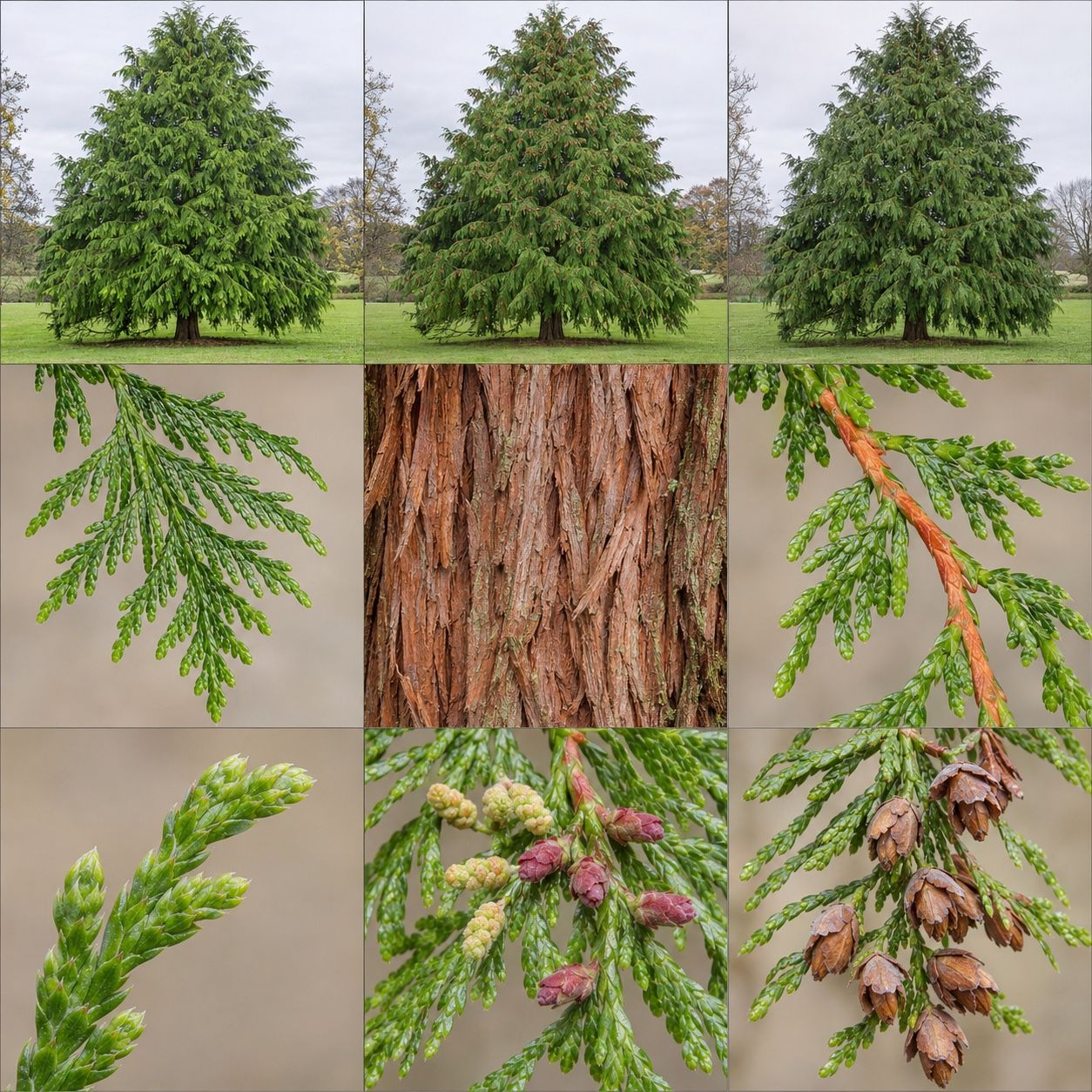
Tiny overlapping scales form flat sprays, glossy dark green above with pale markings below.
Thuja plicata
A North American conifer often planted as hedging; untrimmed specimens become large, broadly conical trees.
THROUGH THE YEAR
Dense broad cone with drooping, fern-like green sprays.
Stays green; small oval cones may be visible.
Evergreen outline remains; low branches can sweep towards the ground.
Typical open-grown form. This tree keeps foliage in winter, shedding older leaves or needles gradually. Pruned, sheltered and young trees can look different.
LOOK A LITTLE CLOSER
Tiny overlapping scales form flat sprays, glossy dark green above with pale markings below.
Reddish-brown fibrous bark forms long ridges and strips.
Fine flattened branches are hidden by scale leaves; sprays commonly curve or hang at the tips.
Growing points are covered by tiny leaves rather than obvious exposed winter buds.
No true flowers: tiny pollen cones and reddish-purple young seed cones develop near shoot tips.
Small, slender oval cones turn brown; their thin scales separate to release winged seeds.
Images show typical features and are not to scale. Confirm several features using the reference sources below.
CARE WITH PURPOSE
Likes moisture-retentive, drained soil and tolerates shade. Water new hedges well; ensure a tree-form specimen has enough long-term space.
Trim hedges lightly, retaining green foliage. Some regrowth from older wood is possible but unreliable; assess a neglected hedge before a hard reduction.
April–August for planned trimming
Highlighted months are an indicative window for the work described, not a reason to prune every year. An unshaded month is not an absolute ban.
Timing must suit the tree's health, weather, wildlife and legal protection. Avoid severe frost, drought and vulnerable new leaf growth. Mature trees, major branches and suspected defects need professional assessment.
A clipped hedge and a mature tree have very different size and maintenance needs.
Guide researched November 2026. Identification remains provisional until several features agree. UK native means native in some part of the UK, not necessarily your area.
Before work in England, check tree preservation orders, conservation-area restrictions and wildlife protection. Official tree protection guidance ↗