

Leaves & needles
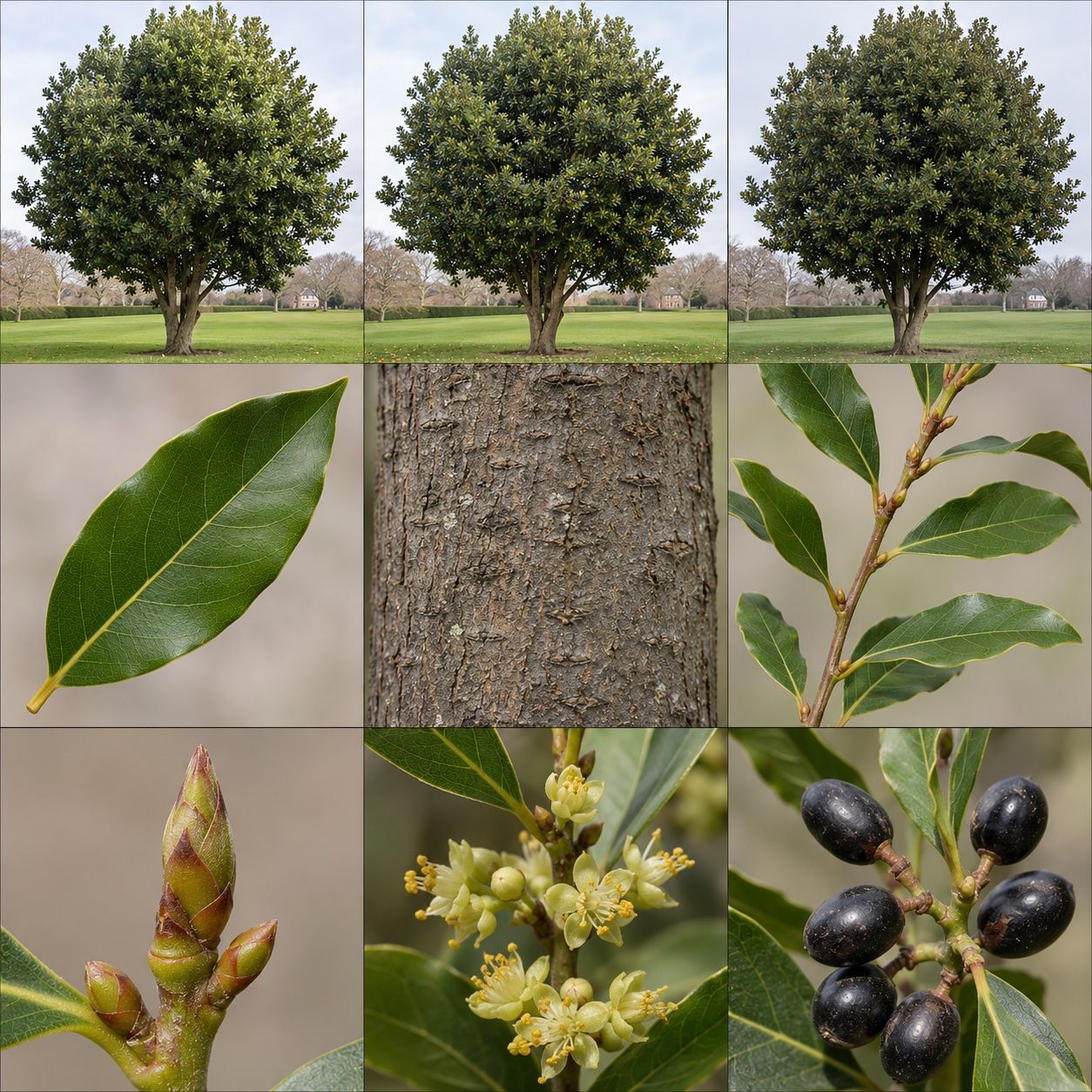
Leathery, lance-shaped to oval leaves with smooth, often wavy margins; aromatic when rubbed.
Laurus nobilis
A Mediterranean evergreen commonly clipped as a lollipop, cone or hedge, but capable of becoming a small tree.
THROUGH THE YEAR
Dense dark green foliage, often clipped into a formal shape.
Remains green; female plants may carry dark fruits.
Evergreen outline persists, though exposed foliage can suffer cold damage.
Typical open-grown form. This tree keeps foliage in winter, shedding older leaves or needles gradually. Pruned, sheltered and young trees can look different.
LOOK A LITTLE CLOSER
Leathery, lance-shaped to oval leaves with smooth, often wavy margins; aromatic when rubbed.
Smooth grey-brown bark, becoming rougher on older trunks.
Green young shoots turn brown; leaves and buds alternate along the stem.
Small pointed leaf buds; rounded flower buds form in the leaf axils.
Small pale yellow-green flowers occur in clusters in spring; male and female flowers usually grow on separate plants.
Pollinated female plants can produce oval black berry-like fruits containing one seed.
Images show typical features and are not to scale. Confirm several features using the reference sources below.
CARE WITH PURPOSE
Give shelter and good drainage. Container plants need regular watering and occasional repotting; protect pots and roots during severe cold.
Trim topiary with secateurs in summer. Keep an informal specimen lightly shaped. Plan major renovation for spring, after frost risk, with watering during recovery.
June–August for routine clipping; spring for renovation
Highlighted months are an indicative window for the work described, not a reason to prune every year. An unshaded month is not an absolute ban.
Timing must suit the tree's health, weather, wildlife and legal protection. Avoid severe frost, drought and vulnerable new leaf growth. Mature trees, major branches and suspected defects need professional assessment.
Do not confuse culinary bay with cherry or Portugal laurel; a resemblance is insufficient for edible identification.
Guide researched November 2026. Identification remains provisional until several features agree. UK native means native in some part of the UK, not necessarily your area.
Before work in England, check tree preservation orders, conservation-area restrictions and wildlife protection. Official tree protection guidance ↗