

Leaves & needles
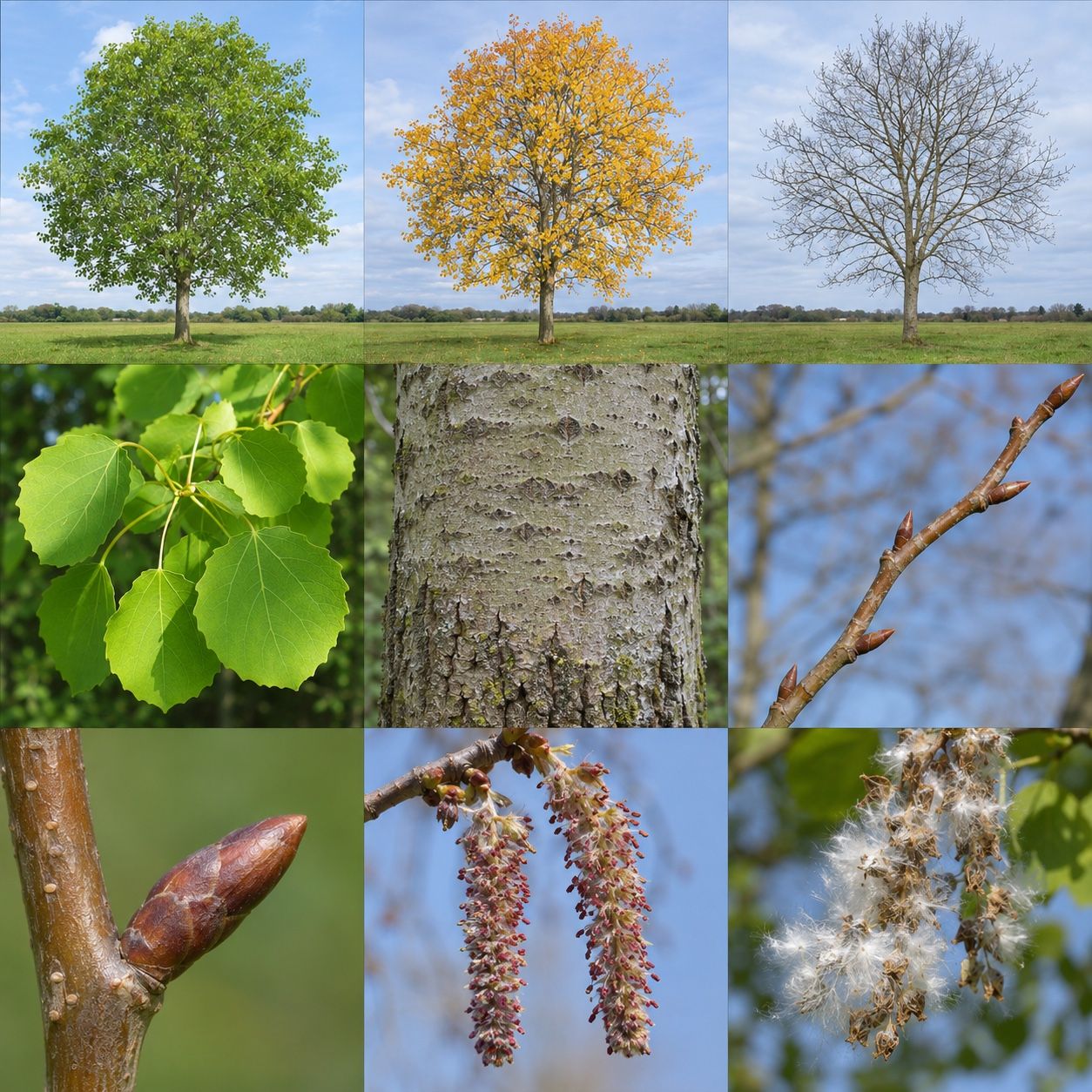
Round leaves with broad, blunt teeth; flattened stalks allow them to flutter readily.
Populus tremula
A light-crowned native poplar whose rounded leaves tremble on flattened stalks, even in a slight breeze.
THROUGH THE YEAR
An airy crown of constantly trembling, rounded leaves.
Leaves turn bright yellow, sometimes tinged orange or red.
Slender crown with knobbly shoots and appressed buds.
Typical open-grown form. Leaf fall varies with weather and location; young or clipped trees may retain dead leaves. Pruned, sheltered and young trees can look different.
LOOK A LITTLE CLOSER
Round leaves with broad, blunt teeth; flattened stalks allow them to flutter readily.
Smooth pale-grey to greenish bark, with dark diamond-shaped markings; rougher towards old trunk bases.
Slender, shiny brown shoots, becoming conspicuously knobbly on older short branches.
Alternate brown, pointed buds press closely against the twig.
Male and female catkins grow on separate trees before the leaves appear.
Female catkins release tiny seeds surrounded by soft white hairs.
Typical flowering: Mar, Apr. Weather and location change timing.
Images show typical features and are not to scale. Confirm several features using the reference sources below.
CARE WITH PURPOSE
Needs sunlight and room for root suckers. Favour moist, well-drained ground and avoid planting too close to restricted structures.
Avoid repeatedly cutting back the crown to control size. Manage unwanted suckers and structural problems with a considered long-term plan.
December–January while dormant
Highlighted months are an indicative window for the work described, not a reason to prune every year. An unshaded month is not an absolute ban.
Timing must suit the tree's health, weather, wildlife and legal protection. Avoid severe frost, drought and vulnerable new leaf growth. Mature trees, major branches and suspected defects need professional assessment.
Guide researched November 2026. Identification remains provisional until several features agree. UK native means native in some part of the UK, not necessarily your area.
Before work in England, check tree preservation orders, conservation-area restrictions and wildlife protection. Official tree protection guidance ↗