
Leaves & needles
Rounded, toothed and often notched at the tip; young leaves feel sticky.
Alnus glutinosa
A native of wet ground, with rounded leaves and tiny woody cones that remain after the leaves fall.
THROUGH THE YEAR
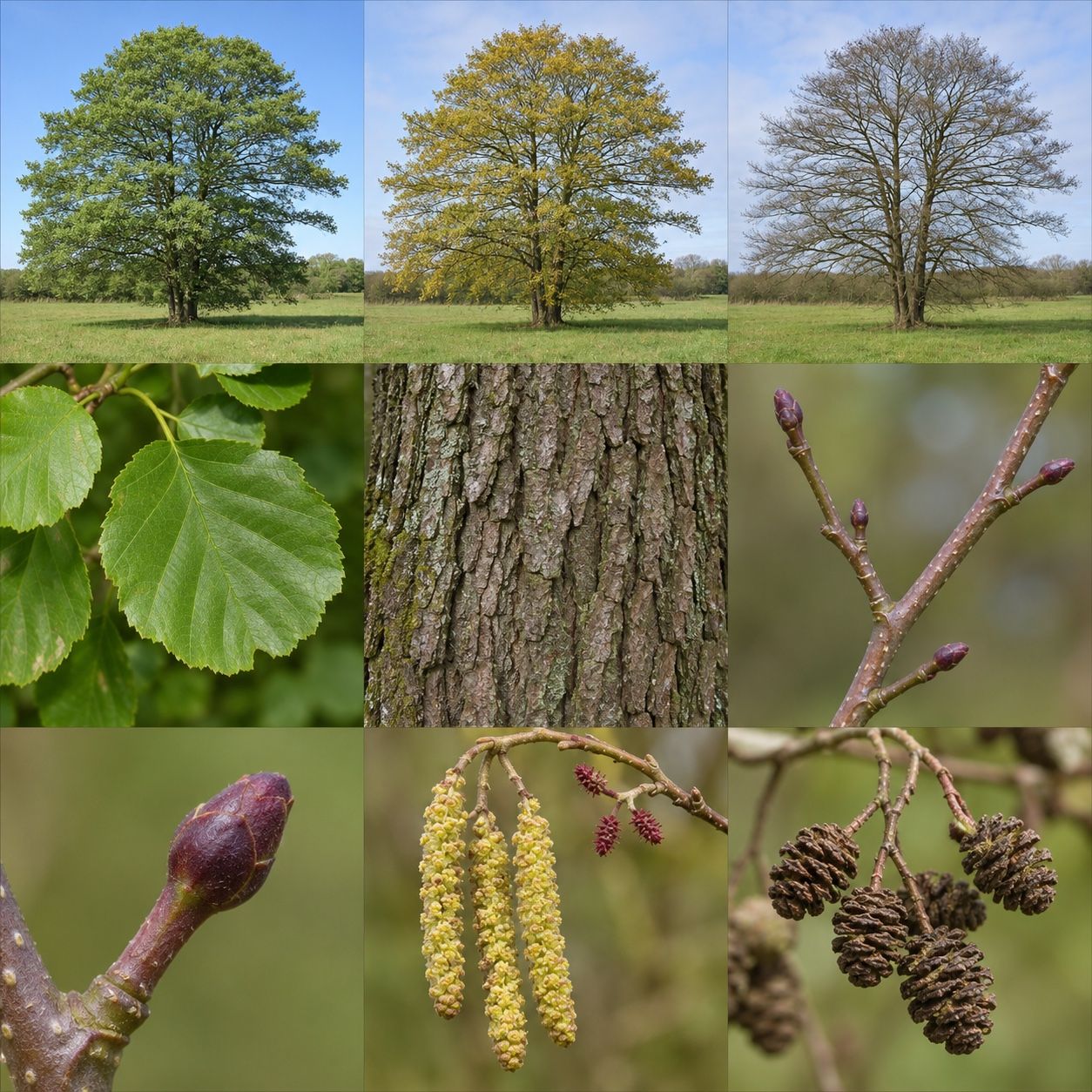
A fairly conical crown with dense, rounded leaves.
Leaves often fall green or dull yellow; small brown cones remain.
Stalked purple buds, hanging catkins and tiny woody cones.
Typical open-grown form. Leaf fall varies with weather and location; young or clipped trees may retain dead leaves. Pruned, sheltered and young trees can look different.
LOOK A LITTLE CLOSER
Rounded, toothed and often notched at the tip; young leaves feel sticky.
Dark grey-brown, becoming fissured and ridged with maturity.
Brown to purplish shoots with pale lenticels; young growth can be sticky.
Purple, club-shaped buds stand out on short stalks rather than sitting directly against the twig.
Long male catkins release yellow pollen; tiny reddish female catkins stand nearby.
Small woody cone-like fruits release seeds and can remain on branches for a year.
Typical flowering: Feb, Mar, Apr. Weather and location change timing.
Images show typical features and are not to scale. Confirm several features using the reference sources below.
CARE WITH PURPOSE
A good match for reliably moist ground. Keep new trees watered and avoid suddenly draining an established tree’s root zone.
Maintain a sound branch framework with selective cuts. Riverbank trees need site-specific advice before structural work.
June–August after leaf expansion
Highlighted months are an indicative window for the work described, not a reason to prune every year. An unshaded month is not an absolute ban.
Timing must suit the tree's health, weather, wildlife and legal protection. Avoid severe frost, drought and vulnerable new leaf growth. Mature trees, major branches and suspected defects need professional assessment.
Crown thinning and bleeding trunk lesions warrant assessment for alder Phytophthora disease.
Guide researched November 2026. Identification remains provisional until several features agree. UK native means native in some part of the UK, not necessarily your area.
Before work in England, check tree preservation orders, conservation-area restrictions and wildlife protection. Official tree protection guidance ↗