
Leaves & needles
Oval, sharply double-toothed and strongly ribbed, with a pointed tip.
Carpinus betulus
A native of southern Britain, hornbeam combines finely pleated leaves with a distinctive, muscular-looking trunk.
THROUGH THE YEAR
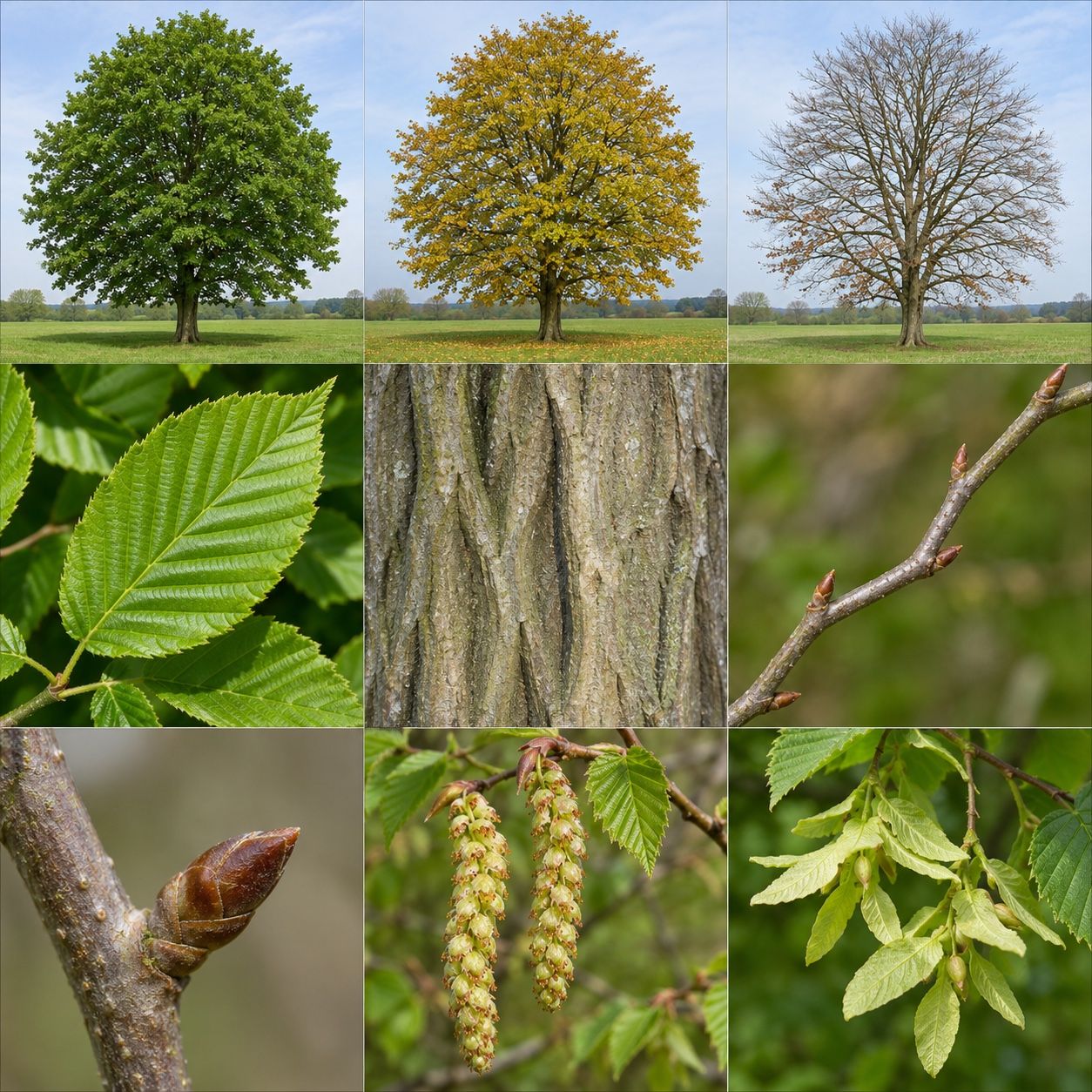
An oval-to-rounded dense canopy with prominently veined leaves.
Leaves turn yellow, then brown; clipped juvenile growth may retain leaves.
Fine branching above a fluted trunk; some brown leaves may remain.
Typical open-grown form. Leaf fall varies with weather and location; young or clipped trees may retain dead leaves. Pruned, sheltered and young trees can look different.
LOOK A LITTLE CLOSER
Oval, sharply double-toothed and strongly ribbed, with a pointed tip.
Smooth grey bark over irregular vertical flutes, giving older trunks a sinewy appearance.
Fine grey-brown, slightly zigzag shoots; alternate buds sit close to the twig.
Small, pointed, brown buds hug the shoot, shorter and less projecting than beech buds.
Male catkins hang down; female catkins develop on the same tree.
Small nuts hang below distinctive three-lobed leafy bracts in loose clusters.
Typical flowering: Apr, May. Weather and location change timing.
Images show typical features and are not to scale. Confirm several features using the reference sources below.
CARE WITH PURPOSE
Tolerates heavier soils better than beech. Provide sufficient rooting space, and keep young trees watered until established.
Keep the natural crown balanced and cuts modest. Hedge trimming is usually a late-summer task; major tree work requires assessment.
June–August for light tree pruning
Highlighted months are an indicative window for the work described, not a reason to prune every year. An unshaded month is not an absolute ban.
Timing must suit the tree's health, weather, wildlife and legal protection. Avoid severe frost, drought and vulnerable new leaf growth. Mature trees, major branches and suspected defects need professional assessment.
Guide researched November 2026. Identification remains provisional until several features agree. UK native means native in some part of the UK, not necessarily your area.
Before work in England, check tree preservation orders, conservation-area restrictions and wildlife protection. Official tree protection guidance ↗