

Leaves & needles
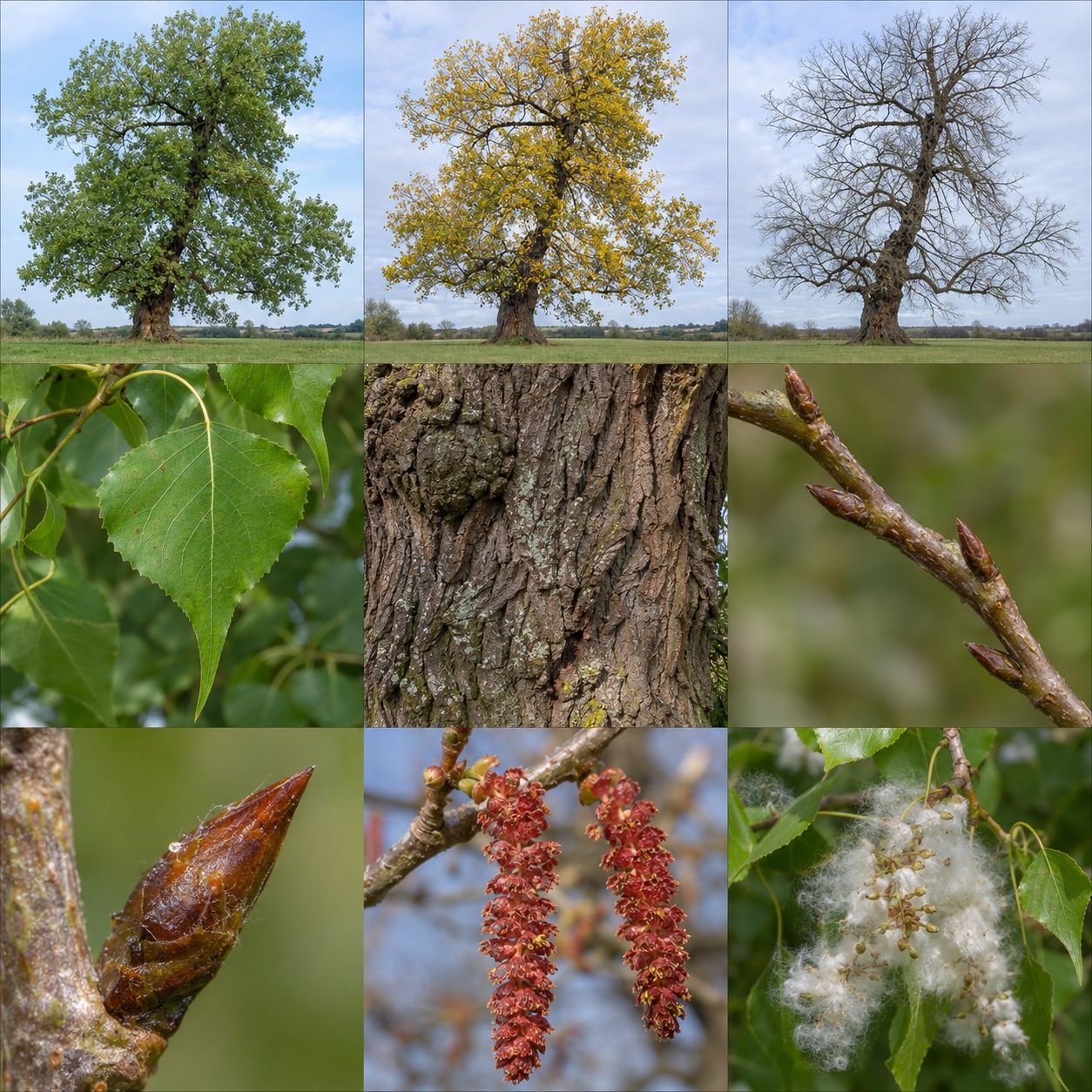
Triangular to diamond-shaped, finely toothed and tapering to a long point; young leaves and stalks may be hairy.
Populus nigra subsp. betulifolia
A rare native floodplain tree with a massive, often burred trunk and a broad, leaning crown.
THROUGH THE YEAR
A broad, irregular crown, sometimes with sweeping lower limbs.
Leaves yellow before falling; the massive trunk becomes more visible.
Heavy branches and a burred, deeply furrowed trunk.
Typical open-grown form. Leaf fall varies with weather and location; young or clipped trees may retain dead leaves. Pruned, sheltered and young trees can look different.
LOOK A LITTLE CLOSER
Triangular to diamond-shaped, finely toothed and tapering to a long point; young leaves and stalks may be hairy.
Dark, deeply fissured bark, often with large rounded swellings or burrs.
Brown, knobbly shoots; buds alternate and lie close to the twig.
Pointed, brown, often sticky buds press against the shoot.
Red male catkins and greenish female catkins grow on separate trees.
Female trees produce masses of small seeds surrounded by cottony white hairs.
Typical flowering: Mar, Apr. Weather and location change timing.
Images show typical features and are not to scale. Confirm several features using the reference sources below.
CARE WITH PURPOSE
Thrives with ample moisture and space. Existing native black poplars deserve conservation-minded care and root protection.
Confirm identification first. Retain its character and manage old pollards or structural defects through a specialist tree-management plan.
December–January for planned routine cuts
Highlighted months are an indicative window for the work described, not a reason to prune every year. An unshaded month is not an absolute ban.
Timing must suit the tree's health, weather, wildlife and legal protection. Avoid severe frost, drought and vulnerable new leaf growth. Mature trees, major branches and suspected defects need professional assessment.
Hybrid poplars are far more common; native black poplar identification may need expert confirmation.
Guide researched November 2026. Identification remains provisional until several features agree. UK native means native in some part of the UK, not necessarily your area.
Before work in England, check tree preservation orders, conservation-area restrictions and wildlife protection. Official tree protection guidance ↗