

Leaves & needles
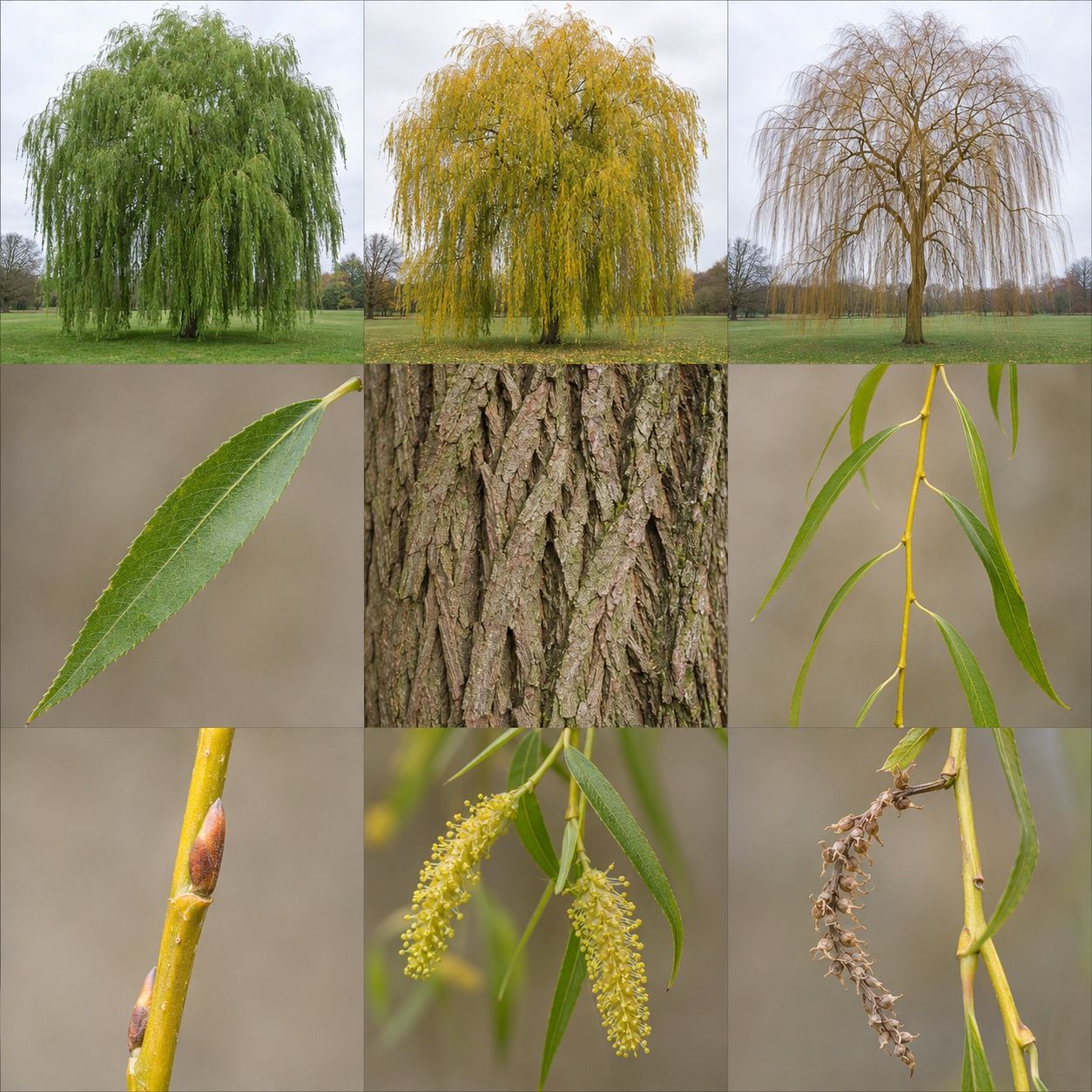
Long, narrow, finely toothed leaves, green above and paler below.
Salix × sepulcralis 'Chrysocoma'
A large waterside tree with long golden shoots hanging in curtains.
THROUGH THE YEAR
A broad dome surrounded by long leafy curtains.
Foliage turns yellow; golden hanging shoots become more visible.
Bare golden twigs retain a strong weeping outline.
Typical open-grown form. Leaf fall varies with weather and location; young or clipped trees may retain dead leaves. Pruned, sheltered and young trees can look different.
LOOK A LITTLE CLOSER
Long, narrow, finely toothed leaves, green above and paler below.
Grey-brown bark becomes deeply furrowed.
Slender, flexible, yellow-green to golden twigs hang downwards.
Small narrow buds sit against the twig, each covered by a single cap-like scale.
Slender catkins appear with the emerging leaves in spring.
Golden weeping willow commonly produces little or no viable seed. The image shows a spent catkin; other willow hybrids can release cottony seeds.
Images show typical features and are not to scale. Confirm several features using the reference sources below. The fruit panel shows a spent catkin, rather than a crop of seeds.
CARE WITH PURPOSE
Needs sun, moisture and extensive space. Position with mature roots, buildings, drains and water features in mind.
Retain its natural weeping outline. Remove selected defective or obstructing branches; any substantial reduction or pollarding needs a site-specific professional plan.
Dormant season, generally November–February
Highlighted months are an indicative window for the work described, not a reason to prune every year. An unshaded month is not an absolute ban.
Timing must suit the tree's health, weather, wildlife and legal protection. Avoid severe frost, drought and vulnerable new leaf growth. Mature trees, major branches and suspected defects need professional assessment.
Willows can develop weak limbs and decay; do not make major cuts solely to match a calendar.
Guide researched November 2026. Identification remains provisional until several features agree. UK native means native in some part of the UK, not necessarily your area.
Before work in England, check tree preservation orders, conservation-area restrictions and wildlife protection. Official tree protection guidance ↗