

Leaves & needles
Oval pointed leaves with fine sharp teeth; young foliage is often bronze.
Prunus serrulata and related garden cultivars
A group of ornamental cherries, selected for spring blossom and varied garden forms.
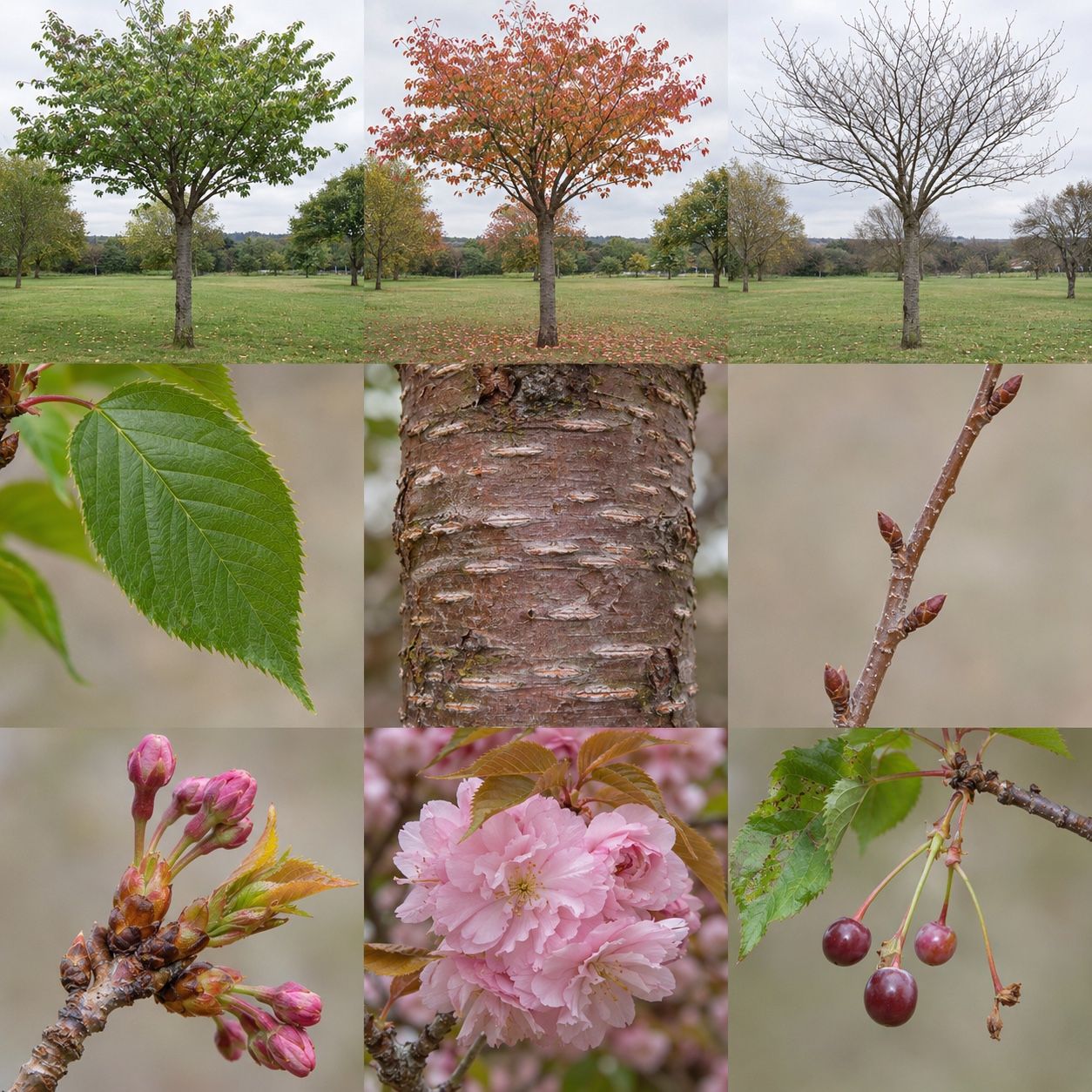
THROUGH THE YEAR
Green crown; habit may be upright, spreading or weeping.
Often orange, red or bronze, depending on cultivar.
Branch shape varies; horizontal bark marks and budded spurs remain.
Typical open-grown form. Leaf fall varies with weather and location; young or clipped trees may retain dead leaves. Pruned, sheltered and young trees can look different.
LOOK A LITTLE CLOSER
Oval pointed leaves with fine sharp teeth; young foliage is often bronze.
Brown to reddish bark with prominent horizontal pale lenticels.
Slender brown shoots with alternate buds; short flower-bearing spurs are common.
Brown buds cluster on short spurs; rounded flower buds contrast with narrower leaf buds.
Spring blossom varies from white to deep pink and from single to densely double flowers.
Some cultivars form small cherries; many heavily double-flowered types produce little or no fruit.
Images show typical features and are not to scale. Confirm several features using the reference sources below. Images illustrate a garden flowering cherry; flower form, fruiting and crown shape vary substantially between cultivars.
CARE WITH PURPOSE
Choose drained soil and enough space for the cultivar. Water young trees in dry spells and keep the graft union above soil.
Prune sparingly in dry weather. Remove crossing or damaged small branches and rootstock shoots; avoid large cuts and heavy reductions.
Summer, normally June–July after flowering
Highlighted months are an indicative window for the work described, not a reason to prune every year. An unshaded month is not an absolute ban.
Timing must suit the tree's health, weather, wildlife and legal protection. Avoid severe frost, drought and vulnerable new leaf growth. Mature trees, major branches and suspected defects need professional assessment.
Autumn and winter pruning increases silver-leaf infection risk.
Guide researched November 2026. Identification remains provisional until several features agree. UK native means native in some part of the UK, not necessarily your area.
Before work in England, check tree preservation orders, conservation-area restrictions and wildlife protection. Official tree protection guidance ↗