

Leaves & needles
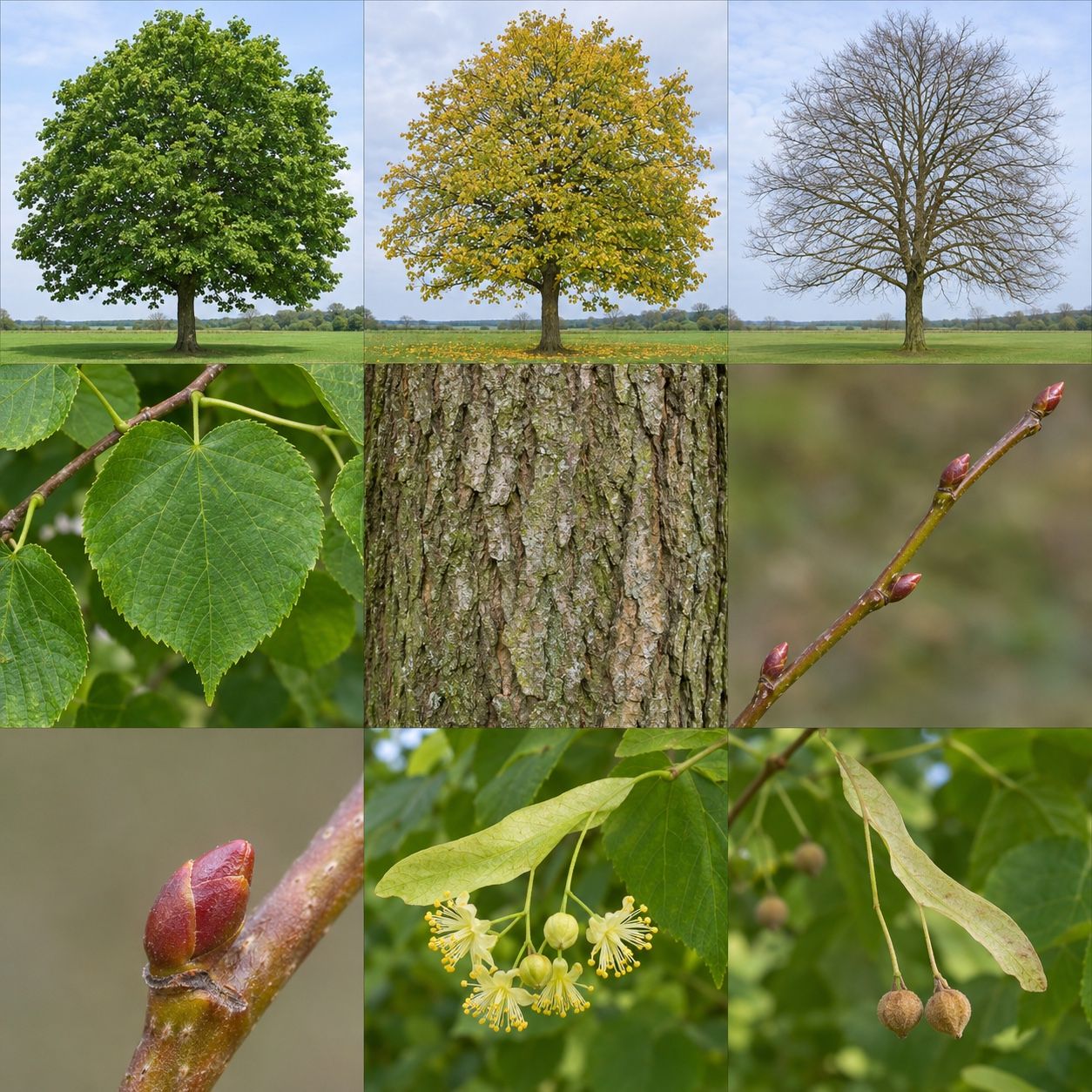
Heart-shaped, usually 3–8 cm long; rusty-brown hair tufts sit in vein junctions underneath.
Tilia cordata
A native woodland lime with small heart-shaped leaves and sweetly scented summer flowers.
THROUGH THE YEAR
A rounded-to-oval canopy with fragrant flowers hanging below pale bracts.
Small heart-shaped leaves turn soft yellow.
Fine twigs and alternate reddish buds outline the rounded crown.
Typical open-grown form. Leaf fall varies with weather and location; young or clipped trees may retain dead leaves. Pruned, sheltered and young trees can look different.
LOOK A LITTLE CLOSER
Heart-shaped, usually 3–8 cm long; rusty-brown hair tufts sit in vein junctions underneath.
Grey-brown, initially smooth, becoming ridged and plate-like with age.
Slender reddish-brown shoots, often greener underneath, with alternate buds.
Small, smooth reddish buds with two or three visible scales, usually under 4 mm long.
Fragrant pale yellow flowers hang in small clusters from an elongated, pale green bract.
Small rounded fruits are carried beneath a strap-shaped bract that helps them spin away.
Typical flowering: Jun, Jul. Weather and location change timing.
Images show typical features and are not to scale. Confirm several features using the reference sources below.
CARE WITH PURPOSE
Favour moist, fertile, well-drained soil. Keep the root area aerated and give this eventual large tree generous space.
Remove basal suckers selectively where necessary. Established pollards and crown reductions need an appropriate professional management cycle.
June–August after leaves harden
Highlighted months are an indicative window for the work described, not a reason to prune every year. An unshaded month is not an absolute ban.
Timing must suit the tree's health, weather, wildlife and legal protection. Avoid severe frost, drought and vulnerable new leaf growth. Mature trees, major branches and suspected defects need professional assessment.
Guide researched November 2026. Identification remains provisional until several features agree. UK native means native in some part of the UK, not necessarily your area.
Before work in England, check tree preservation orders, conservation-area restrictions and wildlife protection. Official tree protection guidance ↗