

Leaves & needles
Oval, generally at least twice as long as wide; rusty hairs may occur beneath the veins.
Salix cinerea subsp. oleifolia
A native, often multi-stemmed willow of wet places, with silvery-backed leaves and early catkins.
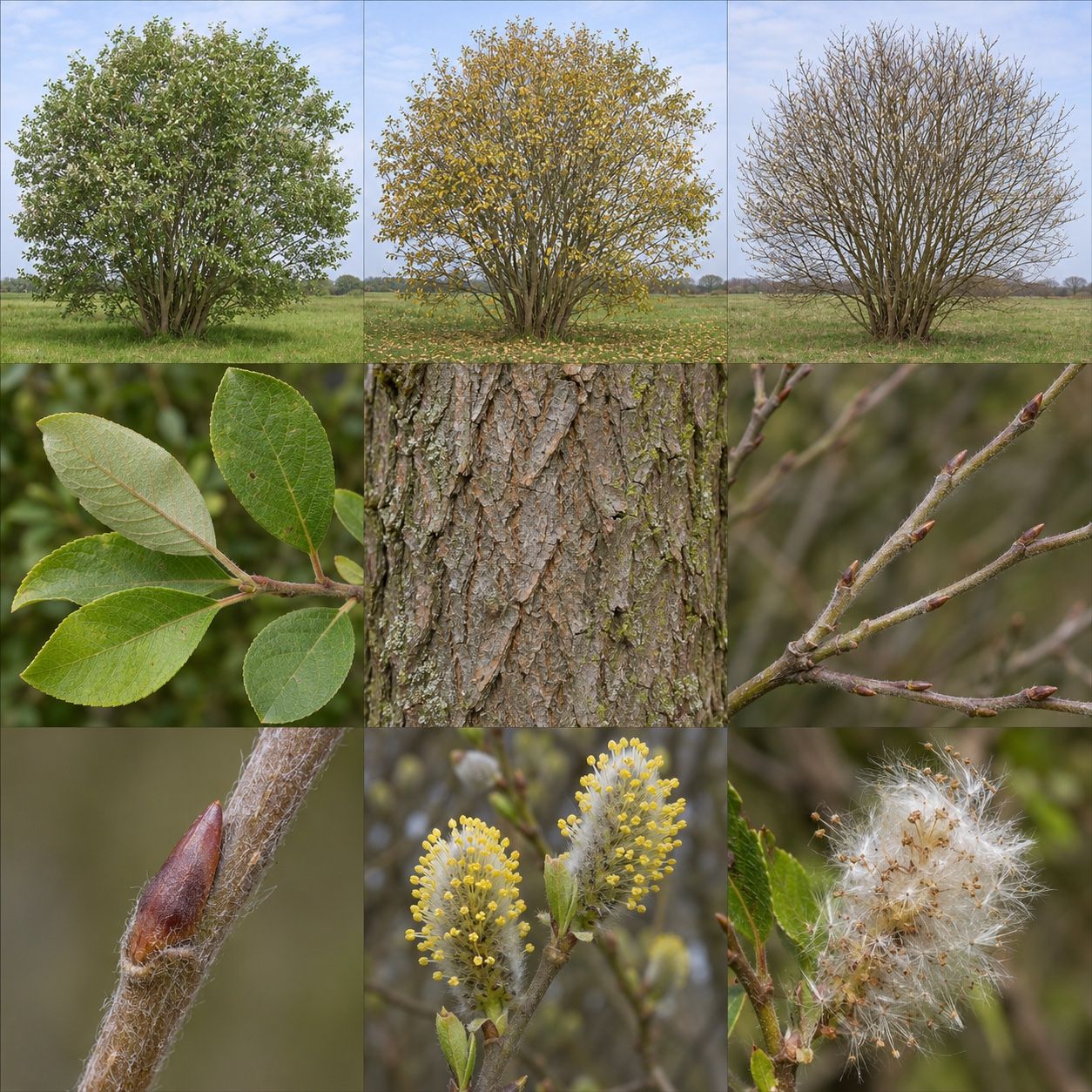
THROUGH THE YEAR
A spreading, shrubby crown with pale-backed foliage.
Dull yellow leaves drop from its many stems.
A dense tangle of stems with closely appressed buds and early catkins.
Typical open-grown form. Leaf fall varies with weather and location; young or clipped trees may retain dead leaves. Pruned, sheltered and young trees can look different.
LOOK A LITTLE CLOSER
Oval, generally at least twice as long as wide; rusty hairs may occur beneath the veins.
Grey-brown, developing diamond-patterned fissures on older stems.
Young shoots are hairy, becoming smoother with age; bushy branching is common.
Narrow, reddish, hairless buds lie tightly against the twig beneath a single scale.
Upright silvery male catkins turn yellow; green female catkins occur on separate plants.
Ripening female catkins release many tiny seeds with silky white hairs.
Typical flowering: Mar, Apr. Weather and location change timing.
Images show typical features and are not to scale. Confirm several features using the reference sources below.
CARE WITH PURPOSE
Well suited to moist ground. Retain it as a habitat-rich shrub where space allows; avoid unnecessary drainage changes.
Thin selected stems if space is restricted. Coppice or pollard management should follow an agreed cycle, with wildlife checks before work.
June–August for selective tree pruning
Highlighted months are an indicative window for the work described, not a reason to prune every year. An unshaded month is not an absolute ban.
Timing must suit the tree's health, weather, wildlife and legal protection. Avoid severe frost, drought and vulnerable new leaf growth. Mature trees, major branches and suspected defects need professional assessment.
Guide researched November 2026. Identification remains provisional until several features agree. UK native means native in some part of the UK, not necessarily your area.
Before work in England, check tree preservation orders, conservation-area restrictions and wildlife protection. Official tree protection guidance ↗