

Leaves & needles
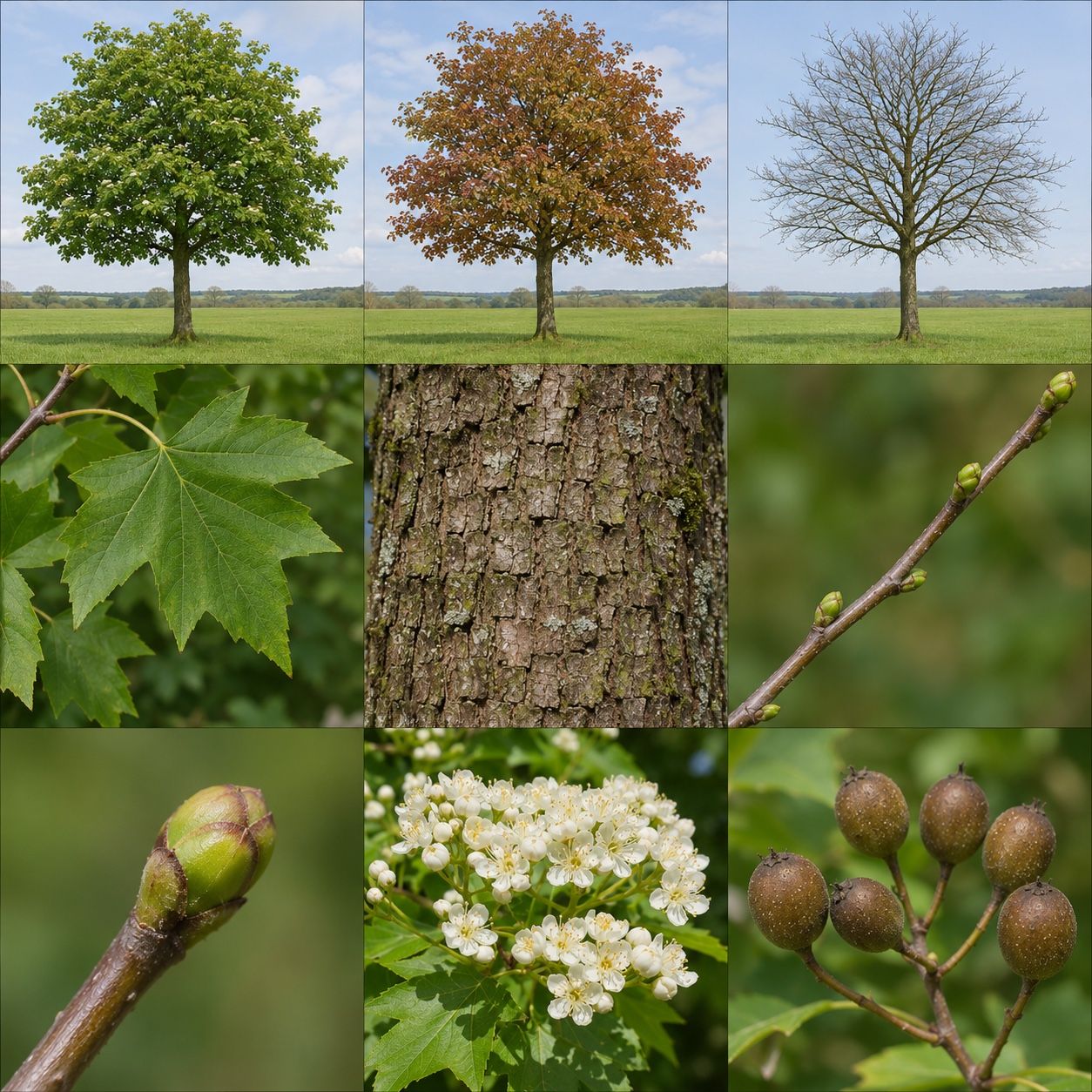
Triangular lobes, with the lowest pair often spreading strongly; leaves alternate rather than forming opposite pairs.
Sorbus torminalis
A scarce native tree associated with old woodland, known for sharply lobed leaves and rich autumn colour.
THROUGH THE YEAR
An oval-to-rounded crown with distinctly angular leaves.
Leaves turn coppery red; small brown fruits may persist.
Fine branching, square-plated bark and round green buds.
Typical open-grown form. Leaf fall varies with weather and location; young or clipped trees may retain dead leaves. Pruned, sheltered and young trees can look different.
LOOK A LITTLE CLOSER
Triangular lobes, with the lowest pair often spreading strongly; leaves alternate rather than forming opposite pairs.
Brown-grey, breaking into small, roughly square plates.
Slender, straight, shiny brown-grey shoots with alternate buds.
Rounded green buds resemble small peas and carry several overlapping scales.
Small white flowers form branching clusters in late spring.
Small oval brown fruits, dotted with pale marks, ripen in autumn.
Typical flowering: May, Jun. Weather and location change timing.
Images show typical features and are not to scale. Confirm several features using the reference sources below.
CARE WITH PURPOSE
Allow space on fertile, well-drained ground, including clay and chalky soils. Protect its roots and conserve naturally established trees.
Keep intervention minimal. Retain the natural crown and ask for a conservation-minded assessment before larger cuts.
June–August for necessary small cuts
Highlighted months are an indicative window for the work described, not a reason to prune every year. An unshaded month is not an absolute ban.
Timing must suit the tree's health, weather, wildlife and legal protection. Avoid severe frost, drought and vulnerable new leaf growth. Mature trees, major branches and suspected defects need professional assessment.
Guide researched November 2026. Identification remains provisional until several features agree. UK native means native in some part of the UK, not necessarily your area.
Before work in England, check tree preservation orders, conservation-area restrictions and wildlife protection. Official tree protection guidance ↗