

Leaves & needles
Usually 11–17 toothed leaflets on one stalk; whole leaves alternate along the shoot.
Sorbus aucuparia
A graceful native garden tree, with feather-like leaves, creamy blossom and bright red autumn fruit.
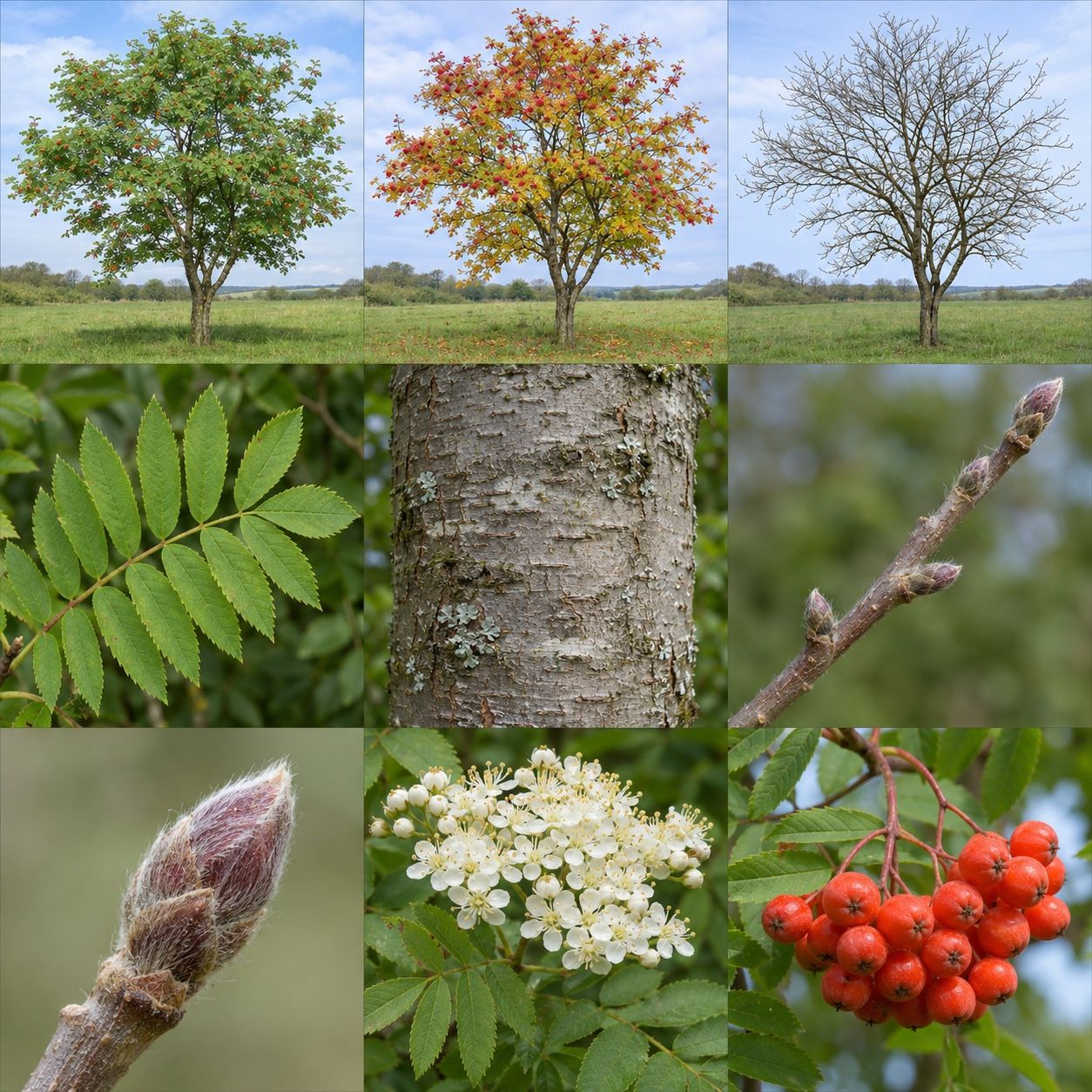
THROUGH THE YEAR
A light oval crown, with clusters of developing berries.
Orange-red fruit contrasts with yellow, orange or reddish leaves.
A fine open crown with distinctly hairy buds.
Typical open-grown form. Leaf fall varies with weather and location; young or clipped trees may retain dead leaves. Pruned, sheltered and young trees can look different.
LOOK A LITTLE CLOSER
Usually 11–17 toothed leaflets on one stalk; whole leaves alternate along the shoot.
Smooth, silvery-grey when young, becoming lightly fissured with age.
Young shoots are downy, later becoming smooth and grey-brown.
Purple-brown pointed buds covered in pale hairs, including the larger terminal bud.
Dense clusters of small creamy-white, five-petalled flowers open at branch tips.
Orange-red berry-like fruits occur in conspicuous clusters and contain several small seeds.
Typical flowering: May, Jun. Weather and location change timing.
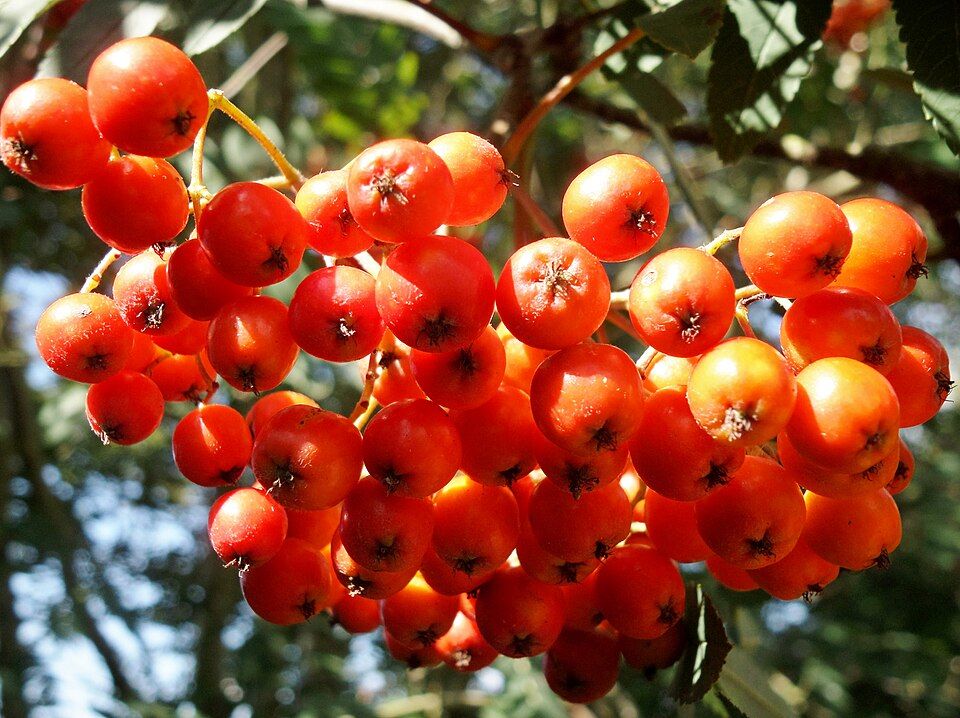
Auchinleck, East Ayrshire, Scotland, UK
A close-up of ripe rowan berries at Auchinleck.
Berries of Rowan (Sorbus aucuparia) at Auchinleck, Scotland — Rosser1954 / Wikimedia Commons · CC BY-SA 4.0 · Original photograph ↗Images show typical features and are not to scale. Confirm several features using the reference sources below.
CARE WITH PURPOSE
Best in well-drained soil with reliable moisture while young. Mulch rather than cultivate beneath the crown; avoid prolonged drought stress.
Often needs little work. Retain its light natural outline, removing only specific crossing or damaged shoots when necessary.
June–August for light routine pruning
Highlighted months are an indicative window for the work described, not a reason to prune every year. An unshaded month is not an absolute ban.
Timing must suit the tree's health, weather, wildlife and legal protection. Avoid severe frost, drought and vulnerable new leaf growth. Mature trees, major branches and suspected defects need professional assessment.
Sudden dieback or scorched-looking shoots should be investigated before further pruning.
Guide researched November 2026. Identification remains provisional until several features agree. UK native means native in some part of the UK, not necessarily your area.
Before work in England, check tree preservation orders, conservation-area restrictions and wildlife protection. Official tree protection guidance ↗