

Leaves & needles
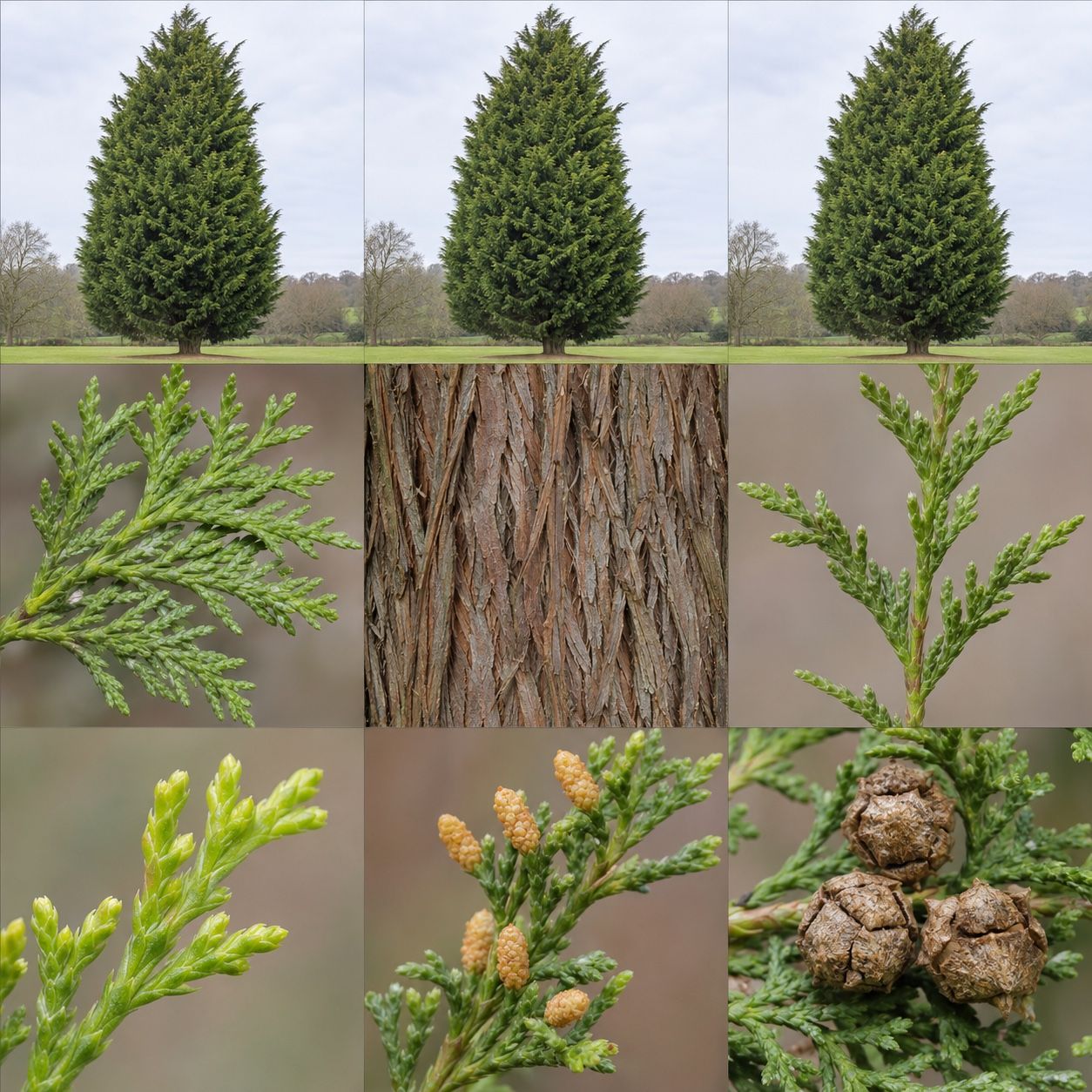
Tiny overlapping scales clothe branching green sprays; foliage often looks three-dimensional rather than flat.
× Cuprocyparis leylandii
A vigorous evergreen hybrid widely used for tall garden hedges and screens.
THROUGH THE YEAR
Dense, upright green screen or tall conical tree.
Stays green; small rounded cones may appear.
Dense evergreen outline remains unchanged.
Typical open-grown form. This tree keeps foliage in winter, shedding older leaves or needles gradually. Pruned, sheltered and young trees can look different.
LOOK A LITTLE CLOSER
Tiny overlapping scales clothe branching green sprays; foliage often looks three-dimensional rather than flat.
Brown-grey bark breaks into long fibrous ridges.
Fine branching shoots are largely hidden by scale leaves.
No obvious broadleaf-style winter buds; growth tips are clothed in tiny scales.
No true flowers: small pollen and seed cones can form at shoot tips.
Rounded brown woody cones; production is often sparse on clipped plants.
Images show typical features and are not to scale. Confirm several features using the reference sources below.
CARE WITH PURPOSE
Plan around its eventual size. Young hedges need consistent moisture; competition beneath established plants can be intense.
Trim little and regularly, leaving green foliage. Cutting sides into bare brown wood usually leaves permanent gaps. Agree a manageable height early.
April–August, with nesting checks before each trim
Highlighted months are an indicative window for the work described, not a reason to prune every year. An unshaded month is not an absolute ban.
Timing must suit the tree's health, weather, wildlife and legal protection. Avoid severe frost, drought and vulnerable new leaf growth. Mature trees, major branches and suspected defects need professional assessment.
A neglected hedge cannot reliably be made narrow by cutting into old wood.
Guide researched November 2026. Identification remains provisional until several features agree. UK native means native in some part of the UK, not necessarily your area.
Before work in England, check tree preservation orders, conservation-area restrictions and wildlife protection. Official tree protection guidance ↗