

Leaves & needles
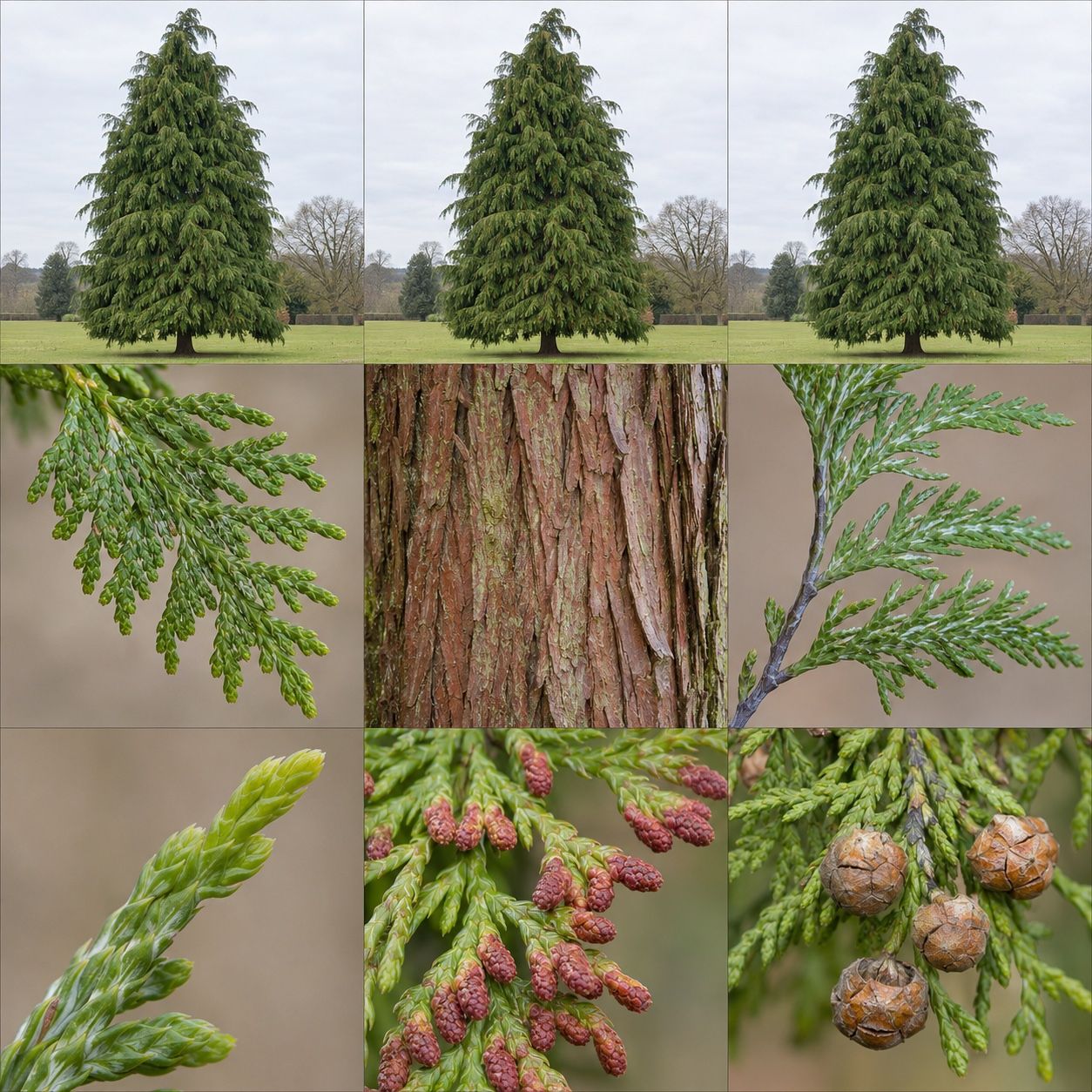
Small overlapping scales make flat, fern-like sprays with pale markings underneath.
Chamaecyparis lawsoniana
A commonly planted conifer with flattened foliage sprays and many compact garden cultivars.
THROUGH THE YEAR
Usually a narrow cone; the leading tip often droops.
Evergreen; pea-sized round cones can turn brown.
A dense conical outline, frequently with a nodding top.
Typical open-grown form. This tree keeps foliage in winter, shedding older leaves or needles gradually. Pruned, sheltered and young trees can look different.
LOOK A LITTLE CLOSER
Small overlapping scales make flat, fern-like sprays with pale markings underneath.
Reddish to grey-brown bark splits into vertical plates or strips.
Dark bluish-grey twigs support distinctly flattened branching sprays.
Leafy shoot tips hide tiny growing points; conspicuous winter buds are absent.
No true flowers: tiny reddish male pollen cones appear at shoot tips, turning yellow as pollen releases.
Pea-sized rounded cones turn from green through pale shades to brown.
Images show typical features and are not to scale. Confirm several features using the reference sources below.
CARE WITH PURPOSE
Choose a cultivar suited to the available space. Provide moisture without stagnant, waterlogged conditions, and avoid burying the base.
Keep trimming within green growth. Maintain the natural outline of specimen trees; hard cuts into leafless wood generally stay bare.
April–August
Highlighted months are an indicative window for the work described, not a reason to prune every year. An unshaded month is not an absolute ban.
Timing must suit the tree's health, weather, wildlife and legal protection. Avoid severe frost, drought and vulnerable new leaf growth. Mature trees, major branches and suspected defects need professional assessment.
Widespread browning can indicate root or foliage problems; diagnose before cutting heavily.
Guide researched November 2026. Identification remains provisional until several features agree. UK native means native in some part of the UK, not necessarily your area.
Before work in England, check tree preservation orders, conservation-area restrictions and wildlife protection. Official tree protection guidance ↗