

Leaves & needles
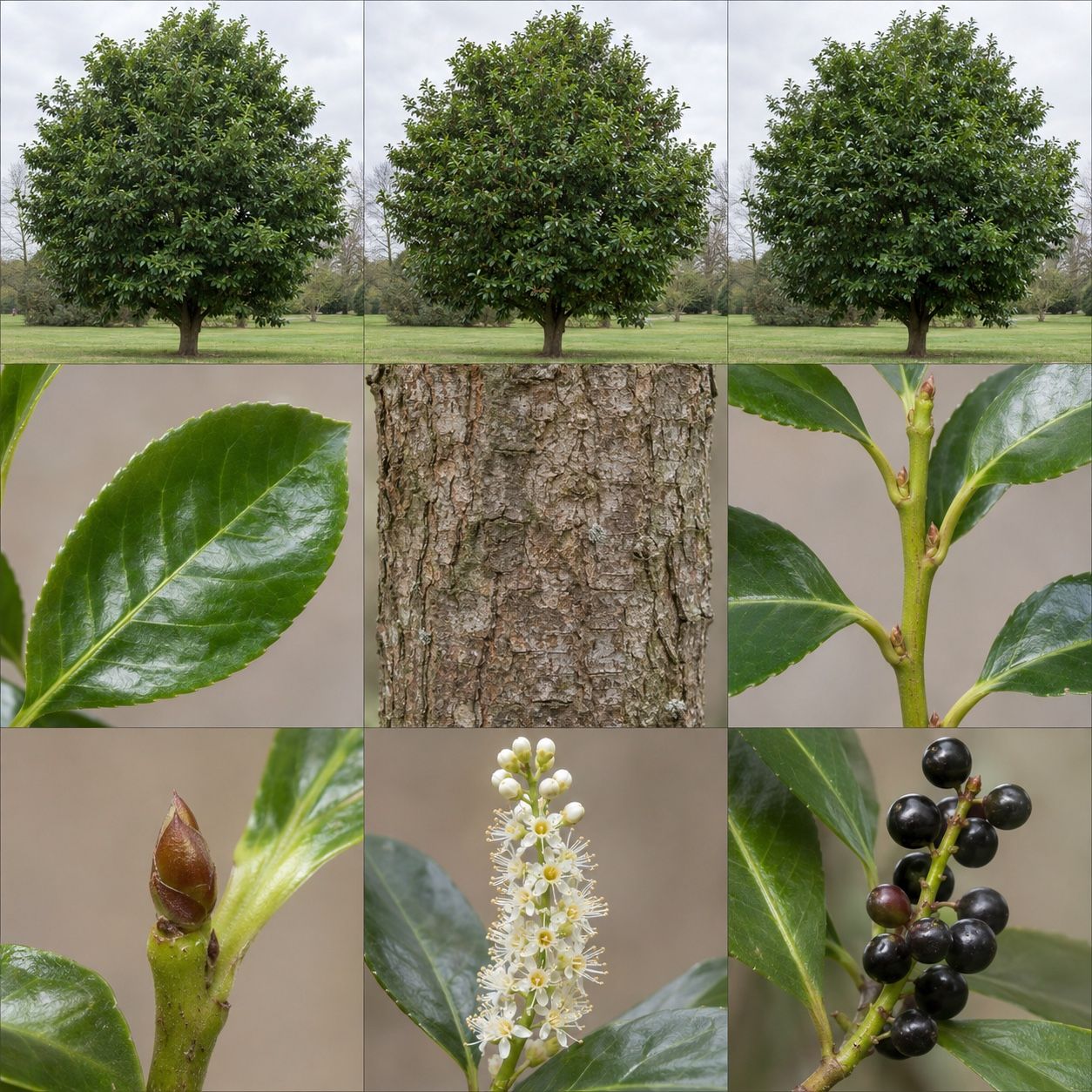
Large, thick, glossy oval leaves with fine teeth; usually much broader than Portugal laurel leaves.
Prunus laurocerasus
A large evergreen shrub or small tree, often forming dense garden hedges.
THROUGH THE YEAR
Dense broad foliage; upright white flower spikes precede dark fruits.
Stays green; berry-like fruits can be black.
Dense evergreen screen retains its large glossy leaves.
Typical open-grown form. This tree keeps foliage in winter, shedding older leaves or needles gradually. Pruned, sheltered and young trees can look different.
LOOK A LITTLE CLOSER
Large, thick, glossy oval leaves with fine teeth; usually much broader than Portugal laurel leaves.
Grey-brown bark, smooth when young, roughening with age.
Stout green young shoots; leaves and buds are alternate.
Small pointed brownish buds close to the leafy shoots.
Small white flowers form upright spikes in spring.
Small cherry-like fruits ripen from green through red to black; these are not culinary cherries.
Images show typical features and are not to scale. Confirm several features using the reference sources below.
CARE WITH PURPOSE
Tolerates sun or shade in moist, drained soil. Keep newly planted hedges watered; prevent spread into adjacent woodland.
Shorten selected shoots with secateurs for an intact leaf finish. Established shrubs can be renovated in stages with suitable aftercare.
Late spring–early summer for routine trimming; spring for renovation
Highlighted months are an indicative window for the work described, not a reason to prune every year. An unshaded month is not an absolute ban.
Timing must suit the tree's health, weather, wildlife and legal protection. Avoid severe frost, drought and vulnerable new leaf growth. Mature trees, major branches and suspected defects need professional assessment.
Not culinary bay. Do not eat leaves, seeds or fruits; handle clippings with care.
Guide researched November 2026. Identification remains provisional until several features agree. UK native means native in some part of the UK, not necessarily your area.
Before work in England, check tree preservation orders, conservation-area restrictions and wildlife protection. Official tree protection guidance ↗