

Leaves & needles
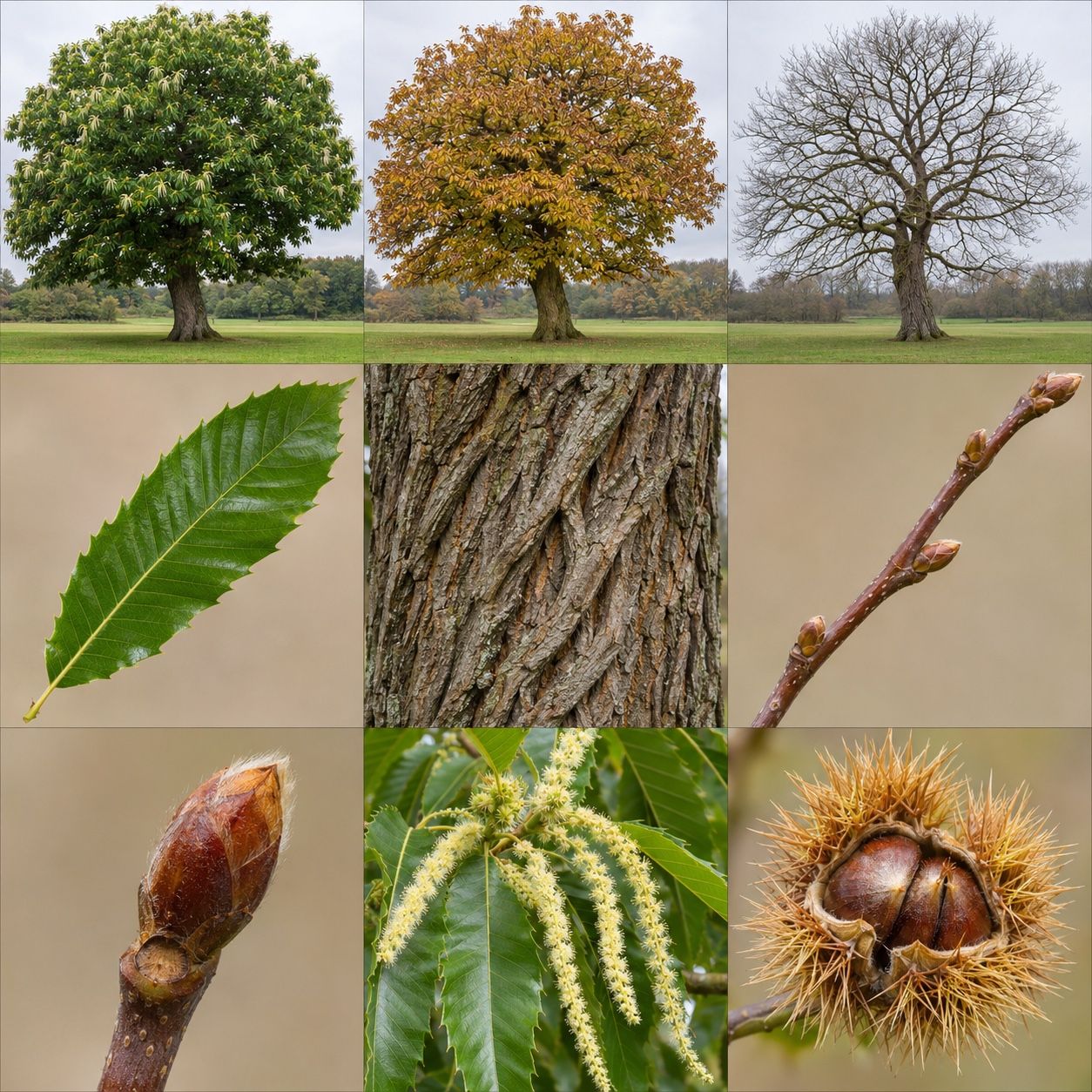
Long, glossy leaves with sharp teeth and many straight, parallel side veins.
Castanea sativa
A long-established introduced tree with strongly toothed leaves and densely prickled nut cases.
THROUGH THE YEAR
A broad crown; long pale catkins hang among glossy foliage.
Golden-brown leaves and densely prickled nut cases.
A spreading framework and twisting bark furrows are conspicuous.
Typical open-grown form. Leaf fall varies with weather and location; young or clipped trees may retain dead leaves. Pruned, sheltered and young trees can look different.
LOOK A LITTLE CLOSER
Long, glossy leaves with sharp teeth and many straight, parallel side veins.
Grey-brown bark develops deep, often spiralling fissures.
Purple-brown twigs with alternate buds.
Rounded to oval, reddish-brown buds pressed near the twig.
Long pale yellow male catkins; small female flowers occur near their bases in early summer.
Brown nuts are enclosed in round husks covered with numerous slender, sharp spines.
Images show typical features and are not to scale. Confirm several features using the reference sources below.
CARE WITH PURPOSE
Best in open sun and freely draining, acid to neutral soil. Leave generous rooting space and protect old trunks and roots from disturbance.
Use light formative pruning when young. Mature trees need an individual plan; established coppice management is a separate specialist practice.
Dormant season, commonly November–February
Highlighted months are an indicative window for the work described, not a reason to prune every year. An unshaded month is not an absolute ban.
Timing must suit the tree's health, weather, wildlife and legal protection. Avoid severe frost, drought and vulnerable new leaf growth. Mature trees, major branches and suspected defects need professional assessment.
Report unusual bark cankers or dieback for diagnosis before pruning.
Guide researched November 2026. Identification remains provisional until several features agree. UK native means native in some part of the UK, not necessarily your area.
Before work in England, check tree preservation orders, conservation-area restrictions and wildlife protection. Official tree protection guidance ↗