

Leaves & needles
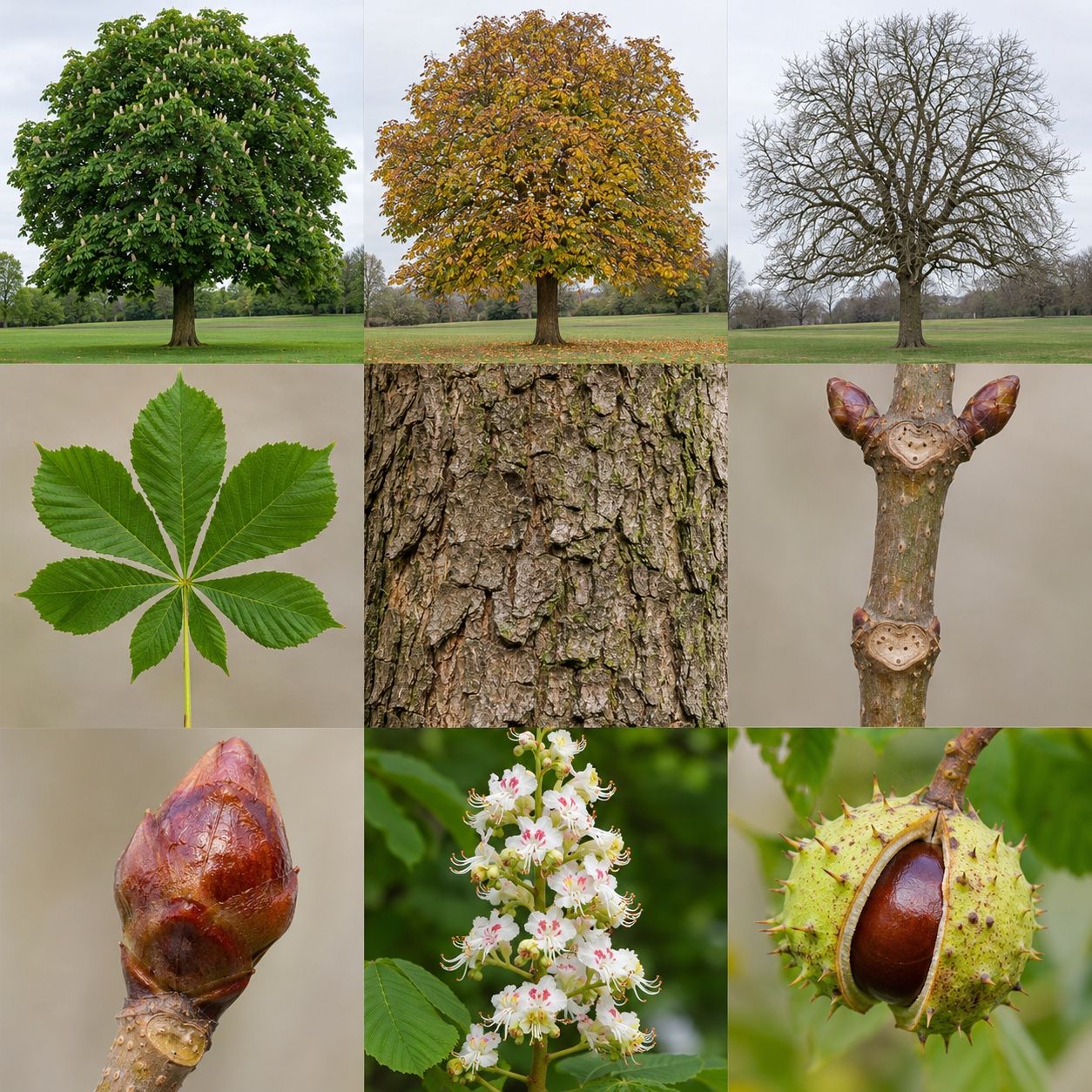
Five to seven toothed leaflets radiate from one point, like fingers on a hand.
Aesculus hippocastanum
The familiar conker tree with large hand-shaped leaves and upright spring flower candles.
THROUGH THE YEAR
A heavy, domed crown with big leaves.
Leaves become yellow-brown; conkers fall from prickly husks.
Coarse branching, large leaf scars and sticky buds remain.
Typical open-grown form. Leaf fall varies with weather and location; young or clipped trees may retain dead leaves. Pruned, sheltered and young trees can look different.
LOOK A LITTLE CLOSER
Five to seven toothed leaflets radiate from one point, like fingers on a hand.
Grey-brown bark develops rough, scaly plates.
Thick twigs have opposite buds and large horseshoe-shaped leaf scars.
Very large, reddish-brown, resin-sticky buds; terminal buds are especially prominent.
Upright candle-shaped clusters of white flowers with pink or yellow markings, usually in May.
Shiny brown conkers develop in green husks with widely spaced prickles.
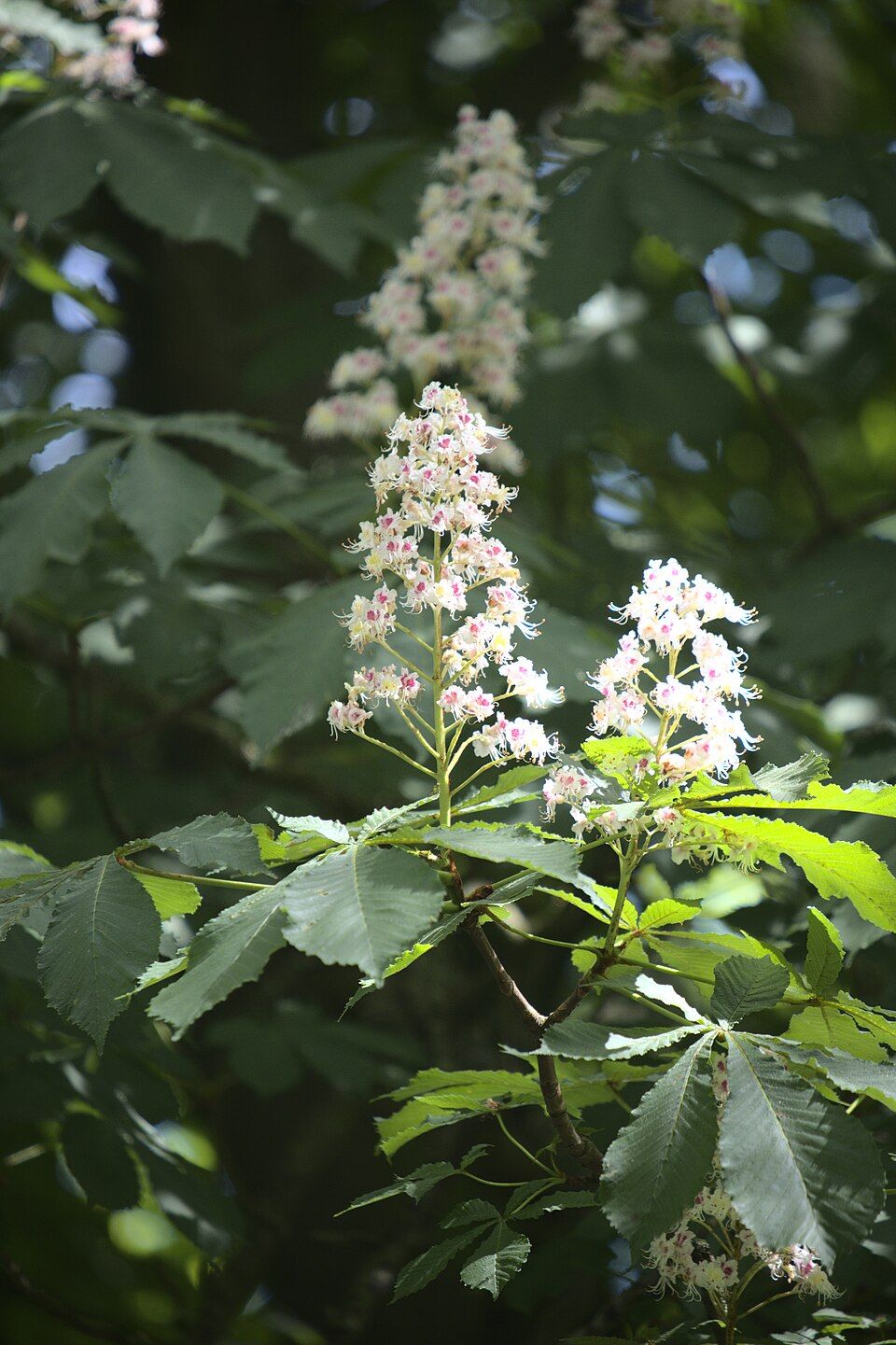
Bourne, Lincolnshire, England, United Kingdom
Horse chestnut flower candles and palmate leaves at Bourne.
Aesculus hippocastanum — Aesculus hippocastanum by Bob Harvey / Geograph · CC BY-SA 2.0 · Original photograph ↗Images show typical features and are not to scale. Confirm several features using the reference sources below.
CARE WITH PURPOSE
Needs substantial space and soil that retains moisture without remaining waterlogged. Protect roots from compaction and help young trees through dry spells.
Keep intervention modest and retain sound major limbs. Arrange an assessment before reducing an older tree or removing large branches.
Dormant season, usually November–February, for planned light work
Highlighted months are an indicative window for the work described, not a reason to prune every year. An unshaded month is not an absolute ban.
Timing must suit the tree's health, weather, wildlife and legal protection. Avoid severe frost, drought and vulnerable new leaf growth. Mature trees, major branches and suspected defects need professional assessment.
Bleeding patches, loose bark or crown dieback merit professional inspection.
Guide researched November 2026. Identification remains provisional until several features agree. UK native means native in some part of the UK, not necessarily your area.
Before work in England, check tree preservation orders, conservation-area restrictions and wildlife protection. Official tree protection guidance ↗