

Leaves & needles
Oval and finely toothed, with pointed tips; stalk glands and hair tufts under vein junctions help identification.
Prunus padus
A native cherry of wetter woodland, carrying scented white flowers in hanging racemes and small dark fruits.
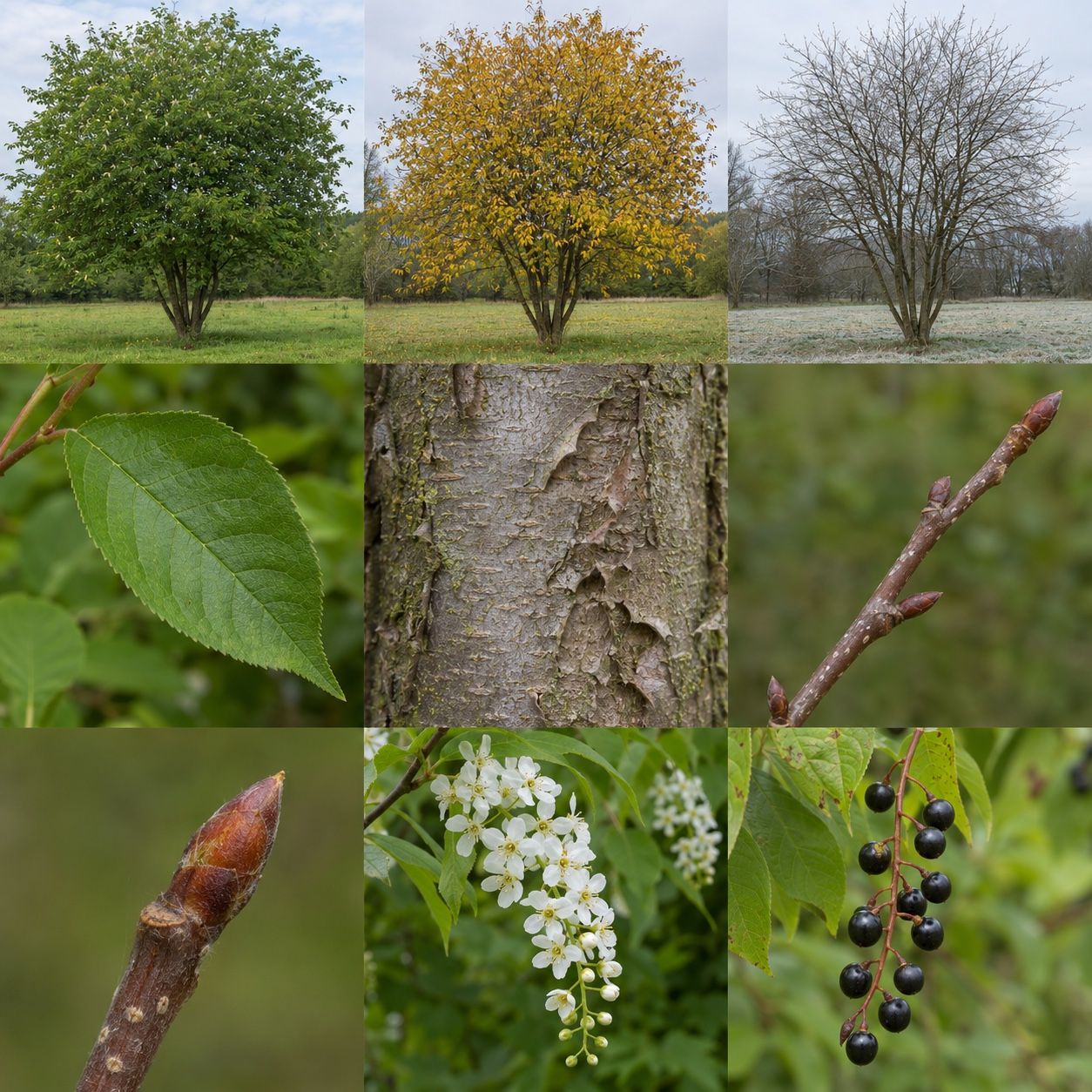
THROUGH THE YEAR
An oval or spreading crown with small dark cherries.
Yellow-to-orange foliage reveals dark fruit stalks and fine branching.
Grey-brown framework with alternate buds and short clustered shoots.
Typical open-grown form. Leaf fall varies with weather and location; young or clipped trees may retain dead leaves. Pruned, sheltered and young trees can look different.
LOOK A LITTLE CLOSER
Oval and finely toothed, with pointed tips; stalk glands and hair tufts under vein junctions help identification.
Grey-brown, smooth when young and peeling with age; less shiny than wild cherry.
Dull brown with pale markings; young shoots may be hairy.
Brown pointed-to-oval buds, sometimes grouped on short lateral shoots.
Strongly scented white flowers form long hanging racemes, unlike wild cherry’s small bunches.
Small bitter black cherries occur along hanging stems, each with a single stone.
Typical flowering: Apr, May. Weather and location change timing.
Images show typical features and are not to scale. Confirm several features using the reference sources below.
CARE WITH PURPOSE
Choose reliably moist, fertile ground with reasonable drainage. It suits cooler sites better than a hot, drought-prone paved garden.
Keep its natural outline and remove only necessary small branches. Make cuts during dry summer weather to limit disease risk.
June–August in dry weather
Highlighted months are an indicative window for the work described, not a reason to prune every year. An unshaded month is not an absolute ban.
Timing must suit the tree's health, weather, wildlife and legal protection. Avoid severe frost, drought and vulnerable new leaf growth. Mature trees, major branches and suspected defects need professional assessment.
Guide researched November 2026. Identification remains provisional until several features agree. UK native means native in some part of the UK, not necessarily your area.
Before work in England, check tree preservation orders, conservation-area restrictions and wildlife protection. Official tree protection guidance ↗