
Leaves & needles
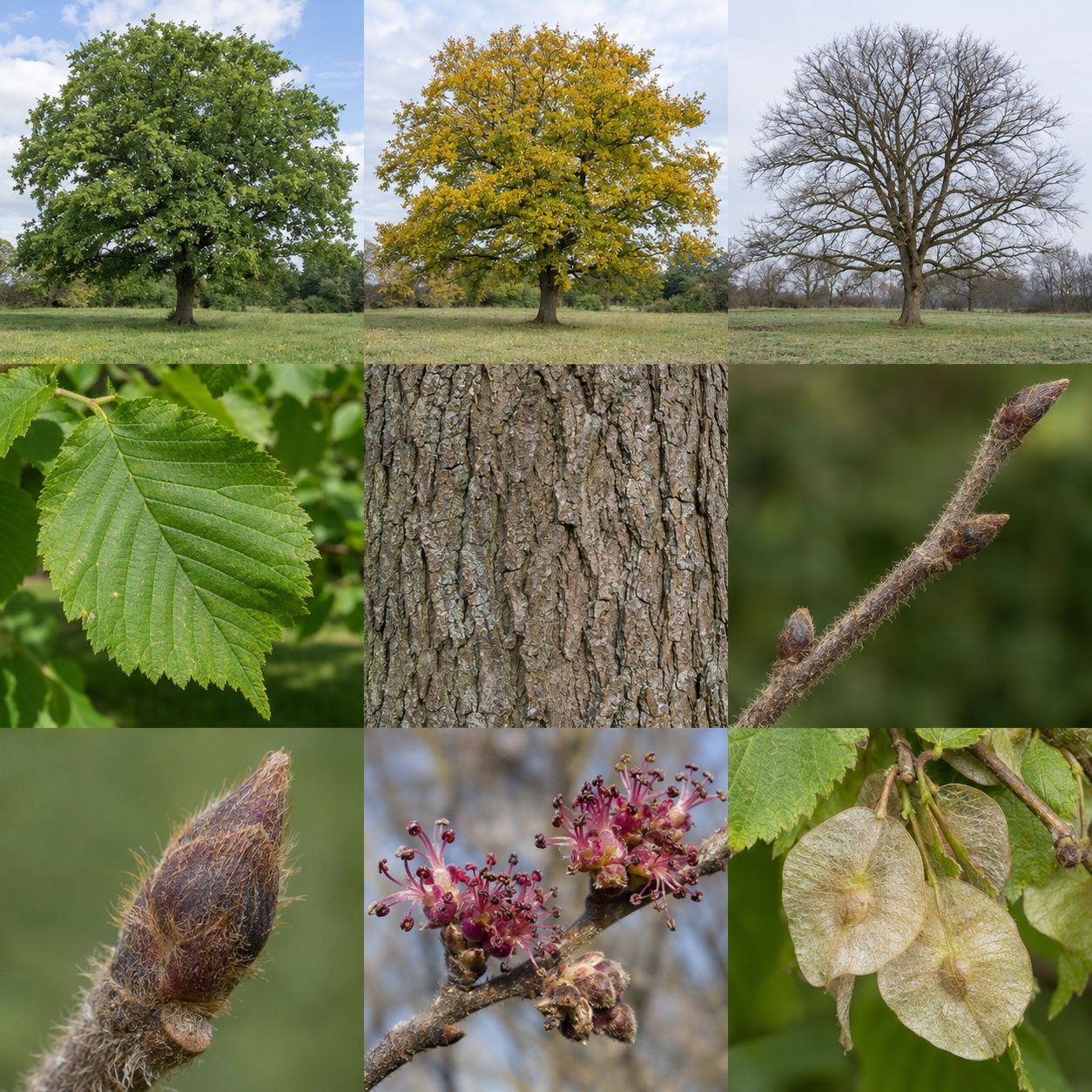
Large, rough, double-toothed leaves with an uneven base and sudden pointed tip; some have additional tip lobes.
Ulmus glabra
A broad-crowned native elm with large, rough leaves; mature specimens have become scarce through Dutch elm disease.
THROUGH THE YEAR
A broad, sweeping crown of large, rough leaves.
Foliage turns yellow before dropping.
A spreading framework with hairy shoots and dark, hairy buds.
Typical open-grown form. Leaf fall varies with weather and location; young or clipped trees may retain dead leaves. Pruned, sheltered and young trees can look different.
LOOK A LITTLE CLOSER
Large, rough, double-toothed leaves with an uneven base and sudden pointed tip; some have additional tip lobes.
Grey and smooth when young, becoming grey-brown with deep fissures.
Stout dark shoots densely covered in coarse hairs when young.
Squat, dark purple-brown buds covered in rusty hairs; flower buds are rounder.
Small reddish-purple flower clusters open before the leaves.
Round papery winged fruits have a single seed near the centre.
Typical flowering: Feb, Mar, Apr. Weather and location change timing.
Images show typical features and are not to scale. Confirm several features using the reference sources below.
CARE WITH PURPOSE
Prefers fertile, moist but drained soil. Retain healthy trees and seek prompt advice if foliage yellows or wilts suddenly in summer.
Avoid unnecessary wounds. Suspected Dutch elm disease needs diagnosis and a specific management plan, rather than routine crown trimming.
December–February, after local disease advice
Highlighted months are an indicative window for the work described, not a reason to prune every year. An unshaded month is not an absolute ban.
Timing must suit the tree's health, weather, wildlife and legal protection. Avoid severe frost, drought and vulnerable new leaf growth. Mature trees, major branches and suspected defects need professional assessment.
Sudden summer wilting can indicate Dutch elm disease; do not move suspect elm wood without advice.
Guide researched November 2026. Identification remains provisional until several features agree. UK native means native in some part of the UK, not necessarily your area.
Before work in England, check tree preservation orders, conservation-area restrictions and wildlife protection. Official tree protection guidance ↗