
Leaves & needles
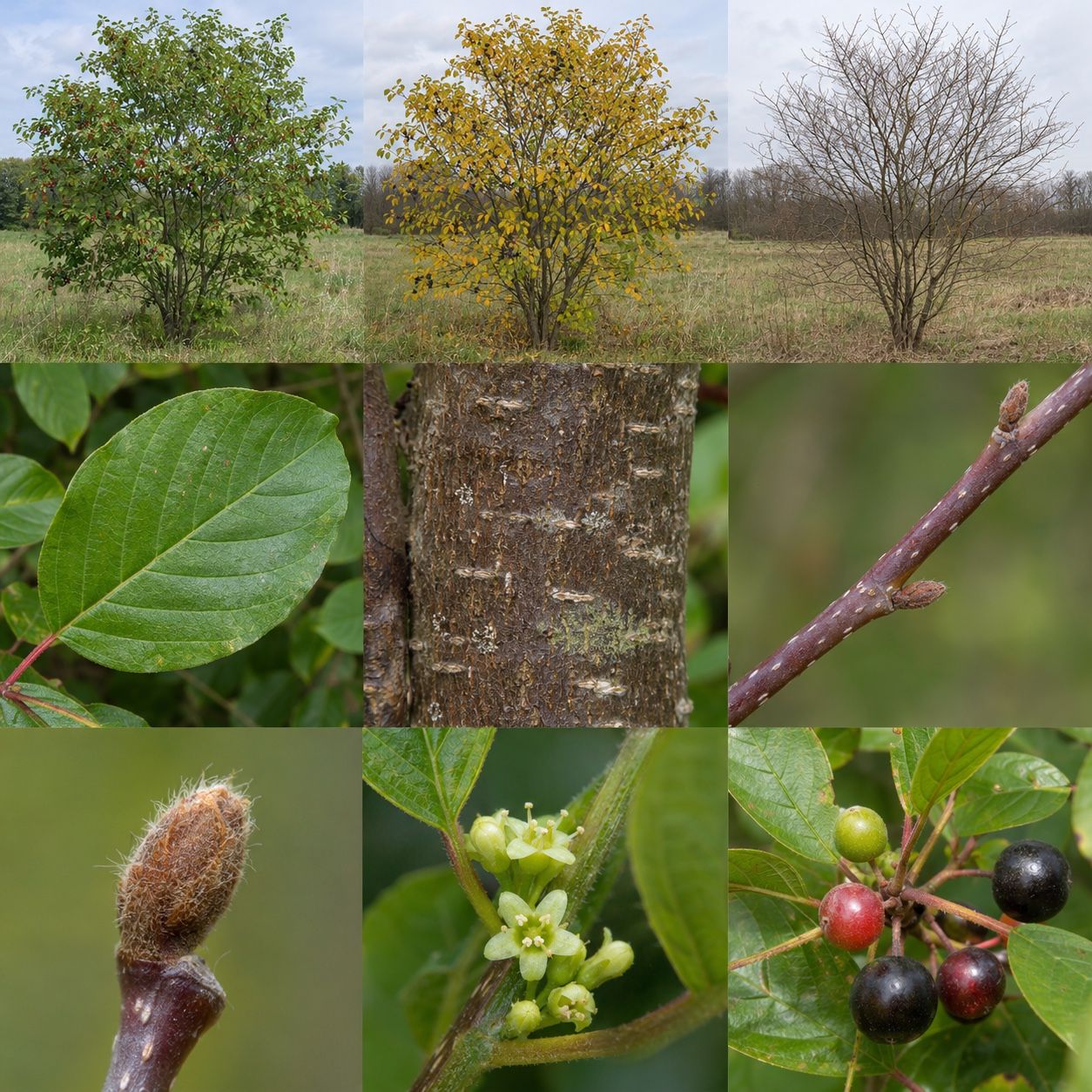
Alternate oval leaves with smooth margins and several pairs of relatively straight side veins.
Frangula alnus
A native, thornless shrub or small tree of damp places, important as a food plant for brimstone caterpillars.
THROUGH THE YEAR
An open, upright shrub with green, red and dark fruits at different stages.
Leaves turn yellow as ripe fruits become black.
Slender thornless shoots with conspicuously unscaled, hairy buds.
Typical open-grown form. Leaf fall varies with weather and location; young or clipped trees may retain dead leaves. Pruned, sheltered and young trees can look different.
LOOK A LITTLE CLOSER
Alternate oval leaves with smooth margins and several pairs of relatively straight side veins.
Dark brown with pale markings; the underlying bark is yellow, but do not strip it for identification.
Smooth purple-brown shoots with pale streak-like lenticels; no thorns.
Small naked buds lack protective scales and are covered in fine hairs.
Tiny greenish-white, five-petalled flowers occur in leaf axils.
Small fruits ripen from green through red to black; several colours can appear together.
Typical flowering: May, Jun. Weather and location change timing.
Images show typical features and are not to scale. Confirm several features using the reference sources below.
CARE WITH PURPOSE
Favour moist, acidic to neutral soil. Keep roots from drying during establishment and leave space for an open, natural habit.
Usually needs little intervention. Remove selected crowded or damaged stems, preserving flowering and fruiting growth.
November–February for light shaping
Highlighted months are an indicative window for the work described, not a reason to prune every year. An unshaded month is not an absolute ban.
Timing must suit the tree's health, weather, wildlife and legal protection. Avoid severe frost, drought and vulnerable new leaf growth. Mature trees, major branches and suspected defects need professional assessment.
Fruit is not suitable for eating; use visual clues rather than tasting.
Guide researched November 2026. Identification remains provisional until several features agree. UK native means native in some part of the UK, not necessarily your area.
Before work in England, check tree preservation orders, conservation-area restrictions and wildlife protection. Official tree protection guidance ↗