

Leaves & needles
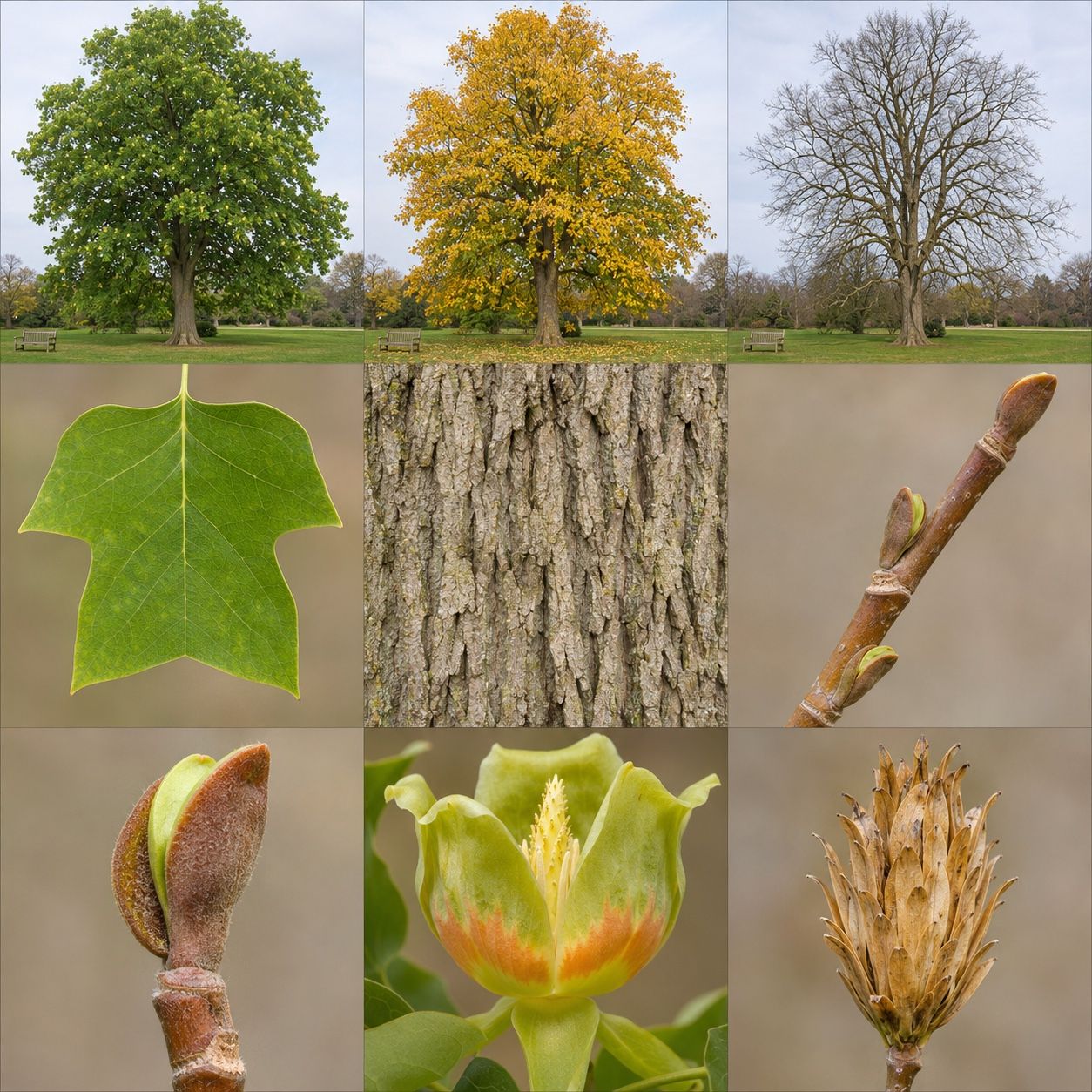
Four main lobes and a broad, notched or almost flat tip; leaves resemble a cut-off maple leaf.
Liriodendron tulipifera
A large ornamental tree recognised by its unusually squared-off leaf tips.
THROUGH THE YEAR
Tall oval crown; green-yellow, orange-marked tulip-like flowers on mature trees.
Leaves often turn clear golden yellow.
Tall framework with distinctive flattened buds; seed-cone remains may persist.
Typical open-grown form. Leaf fall varies with weather and location; young or clipped trees may retain dead leaves. Pruned, sheltered and young trees can look different.
LOOK A LITTLE CLOSER
Four main lobes and a broad, notched or almost flat tip; leaves resemble a cut-off maple leaf.
Light grey bark develops vertical, corky ridges.
Smooth brownish twigs with alternate buds and ring-like stipule scars.
Flattened buds with two scales resemble a small duck’s bill.
Green-yellow cup-shaped flowers with orange markings on mature trees, often hidden high in the summer canopy.
Upright cone-like clusters contain numerous narrow winged seeds.
Images show typical features and are not to scale. Confirm several features using the reference sources below.
CARE WITH PURPOSE
Needs deep, moist, fertile soil and a large open site. Avoid compaction and prolonged drought around the root zone.
Maintain a well-spaced framework while young. Mature specimens usually need little pruning; use selective cuts rather than topping.
Dormant season, generally November–February
Highlighted months are an indicative window for the work described, not a reason to prune every year. An unshaded month is not an absolute ban.
Timing must suit the tree's health, weather, wildlife and legal protection. Avoid severe frost, drought and vulnerable new leaf growth. Mature trees, major branches and suspected defects need professional assessment.
Its eventual height and broad root area demand generous space.
Guide researched November 2026. Identification remains provisional until several features agree. UK native means native in some part of the UK, not necessarily your area.
Before work in England, check tree preservation orders, conservation-area restrictions and wildlife protection. Official tree protection guidance ↗