

Leaves & needles
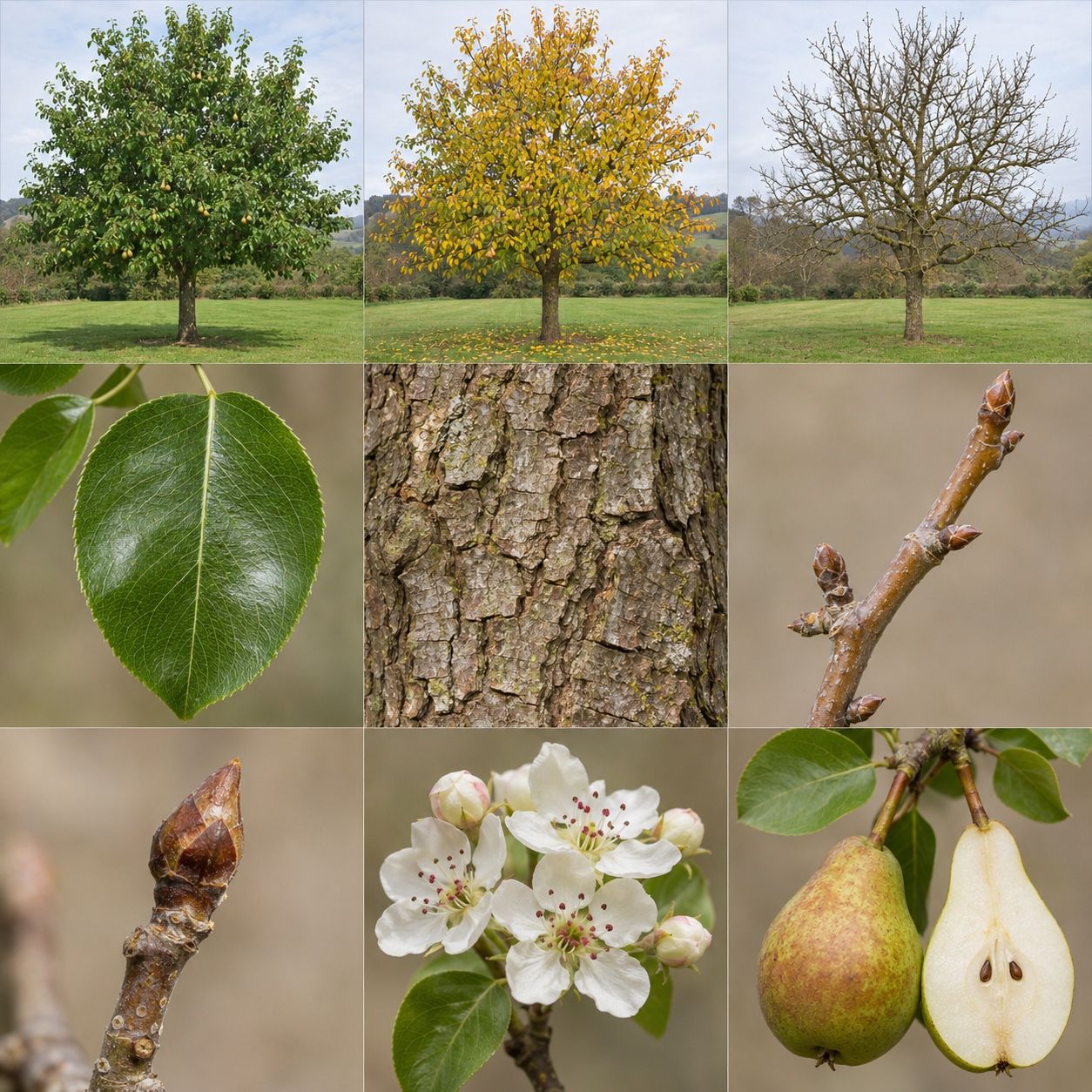
Rounded to oval, pointed leaves, usually glossy with fine teeth and long stalks.
Pyrus communis
A garden fruit tree often with upright growth, glossy leaves and prominent fruiting spurs.
THROUGH THE YEAR
Often upright crown with glossy foliage and hanging developing pears.
Yellow foliage, sometimes orange-red; fruit shape varies.
Upright framework and knobbly spur systems remain visible.
Typical open-grown form. Leaf fall varies with weather and location; young or clipped trees may retain dead leaves. Pruned, sheltered and young trees can look different.
LOOK A LITTLE CLOSER
Rounded to oval, pointed leaves, usually glossy with fine teeth and long stalks.
Grey-brown bark becomes cracked and blocky on older trunks.
Smooth brown shoots with alternate buds and short fruiting spurs.
Pointed brown leaf buds; flower buds are larger and fuller, usually on short spurs.
Usually white spring blossom in clusters, with dark anthers.
Pears vary from rounded to elongated; seeds sit in a central core.
Images show typical features and are not to scale. Confirm several features using the reference sources below.
CARE WITH PURPOSE
Give a sunny, sheltered, well-drained site. Water through establishment and dry fruit-swelling periods; check support and pollination requirements of the cultivar.
Thin congested growth while retaining productive spurs. Winter pruning suits free-standing trees; trained pears generally need summer pruning once shoot growth firms.
November–February for free-standing trees; trained forms late July–August
Highlighted months are an indicative window for the work described, not a reason to prune every year. An unshaded month is not an absolute ban.
Timing must suit the tree's health, weather, wildlife and legal protection. Avoid severe frost, drought and vulnerable new leaf growth. Mature trees, major branches and suspected defects need professional assessment.
Sudden blackened shoots or blossom should be diagnosed before routine pruning.
Guide researched November 2026. Identification remains provisional until several features agree. UK native means native in some part of the UK, not necessarily your area.
Before work in England, check tree preservation orders, conservation-area restrictions and wildlife protection. Official tree protection guidance ↗