

Leaves & needles
Narrow leaves with fine silky hairs, especially on the underside, producing a silvery appearance.
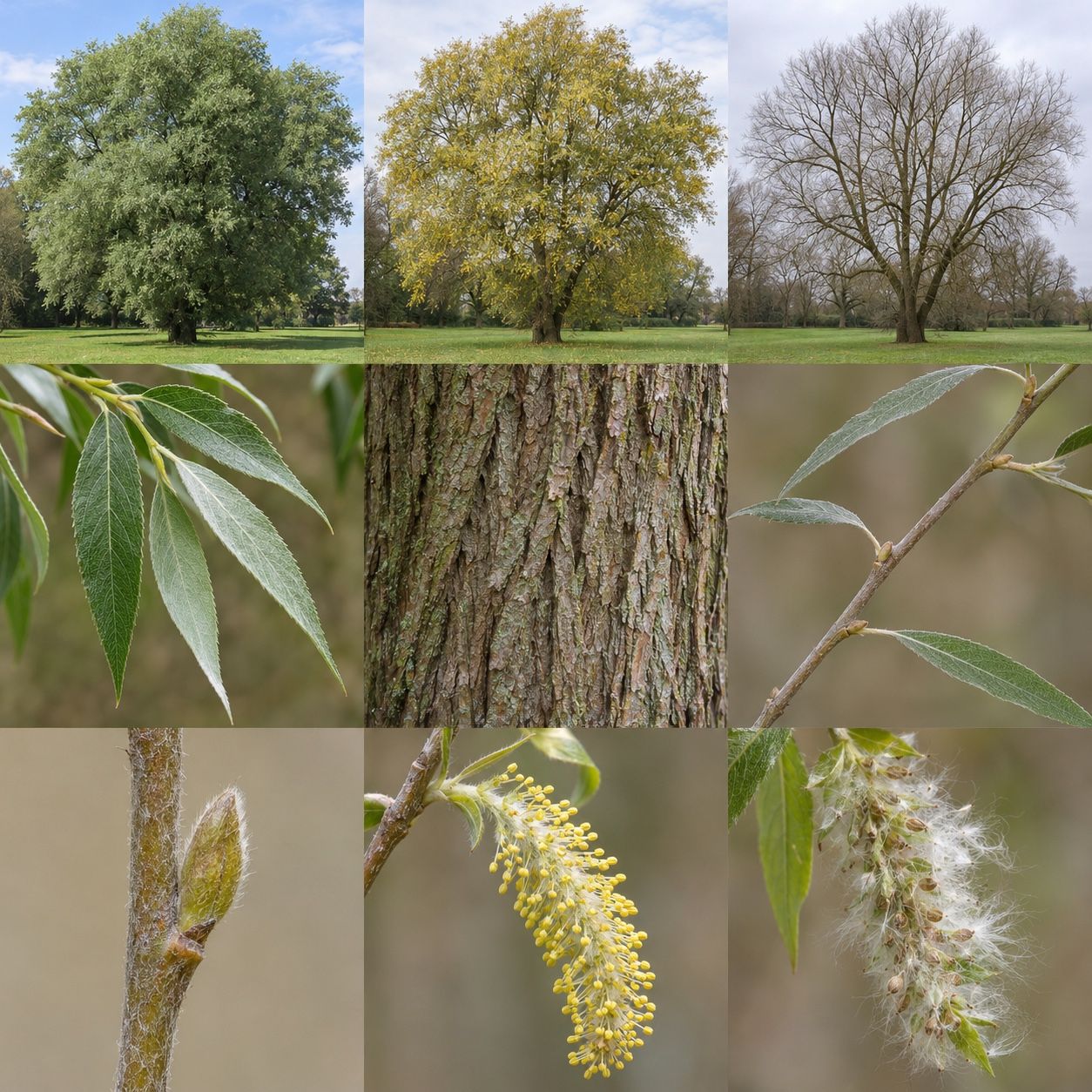
Salix alba
A silvery-leaved waterside tree whose UK native status is treated differently by botanical sources.
THROUGH THE YEAR
Broad, often irregular crown with silvery foliage in the breeze.
Yellowing leaves reveal a spreading framework.
Irregular branching and slender close-budded shoots.
Typical open-grown form. Leaf fall varies with weather and location; young or clipped trees may retain dead leaves. Pruned, sheltered and young trees can look different.
LOOK A LITTLE CLOSER
Narrow leaves with fine silky hairs, especially on the underside, producing a silvery appearance.
Grey-brown bark develops deep vertical fissures.
Slender flexible grey-brown shoots; young growth may be hairy.
Narrow green to yellow-brown hairy buds lie against the twig under a single scale.
Male or female catkins occur on separate trees in spring.
Female catkins develop small capsules releasing tiny seeds with cottony hairs.
Images show typical features and are not to scale. Confirm several features using the reference sources below.
CARE WITH PURPOSE
Suited to moist ground and large open sites. Allow for a substantial crown and root system; maintain water supply during establishment.
Keep routine cuts small. Existing pollards need an agreed cycle; a large unpollarded tree should not be abruptly cut back without assessment.
Dormant season, generally November–February
Highlighted months are an indicative window for the work described, not a reason to prune every year. An unshaded month is not an absolute ban.
Timing must suit the tree's health, weather, wildlife and legal protection. Avoid severe frost, drought and vulnerable new leaf growth. Mature trees, major branches and suspected defects need professional assessment.
Willows hybridise readily, so intermediate trees may need expert identification.
Guide researched November 2026. Identification remains provisional until several features agree. UK native means native in some part of the UK, not necessarily your area.
Before work in England, check tree preservation orders, conservation-area restrictions and wildlife protection. Official tree protection guidance ↗